Have you ever noticed a lock symbol 🔒 next to a text message, conversation, profile, or chat and wondered what it actually means?
You are not alone. The lock icon can be confusing because its meaning depends heavily on where you see it and which messaging app or device you are using.
In most cases, a lock symbol represents security, privacy, protection, or restricted access. In a messaging context, it may indicate that a conversation or message is protected, encrypted, private, or otherwise secured.
However, a lock does not always mean exactly the same thing. On one platform, it may refer to encrypted messaging. On another, it can indicate a private conversation, locked chat, secure connection, or a message that cannot be accessed without authentication.
Understanding the context is therefore more important than simply knowing what the 🔒 emoji means.
What Does Lock Symbol Mean on Text? Quick Meaning
The lock symbol on text generally means that something is private, protected, secure, or restricted.
Depending on the app or situation, it may mean:
- 🔒 Private: The conversation or information is not publicly accessible.
- 🔒 Secure: The app is indicating additional protection.
- 🔒 Encrypted: Messages may be protected during transmission.
- 🔒 Locked: A chat, message, or feature may require authentication.
- 🔒 Restricted access: Only certain people can view or interact with it.
- 🔒 Confidential: The sender may be emphasizing privacy.
For example:
“I sent it in the locked chat 🔒.”
This usually suggests that the conversation is private or protected.
Another example:
“Keep this between us 🔒.”
Here, the lock is being used figuratively to mean “keep this private.”
And:
“Our messages are secure 🔒.”
In this case, the symbol reinforces the idea of security.
The important point is that the lock symbol itself does not automatically tell you exactly what technical security feature is being used. The surrounding app or message provides the real clue.
Origin & Background of the Lock Symbol
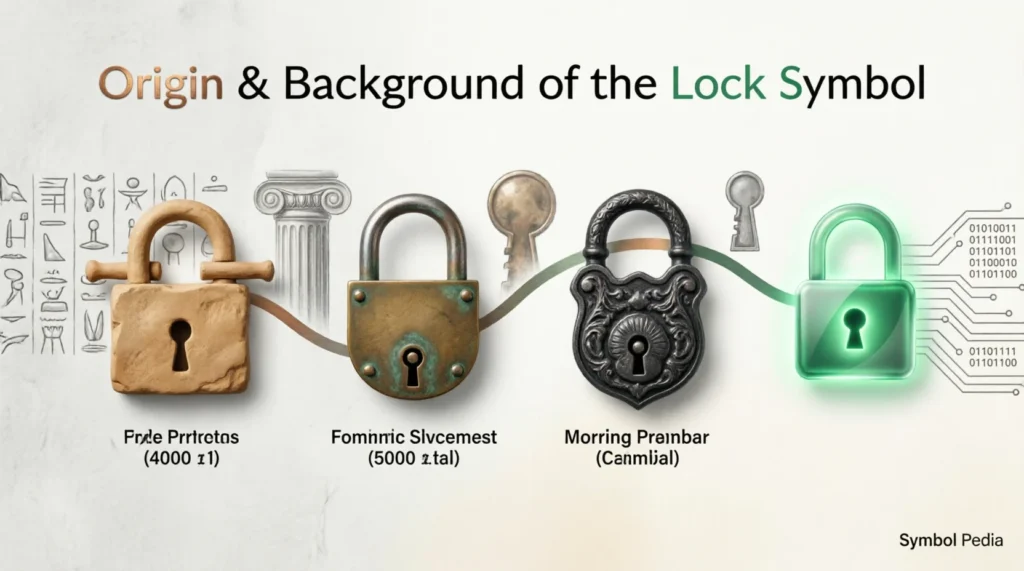
The lock has represented security and protection for centuries.
Long before smartphones existed, physical locks were used to protect homes, valuables, documents, and personal belongings. Because of that history, the image of a lock naturally became associated with ideas such as privacy, safety, secrecy, and restricted access.
As computers and the internet developed, the same visual language moved into digital communication.
A padlock began appearing in browsers, security interfaces, websites, password systems, and private accounts. Users quickly learned to associate the symbol with something being protected.
Messaging platforms later adopted similar visual language.
Today, a lock may appear beside a chat, message, website address, account, or privacy setting. The basic idea remains the same:
“This information has some form of protection or restricted access.”
Social media also helped turn the lock into a conversational symbol.
People began using 🔒 in captions, comments, bios, and private messages to communicate ideas such as:
- “This is private.”
- “Don’t tell anyone.”
- “This relationship is exclusive.”
- “This information is confidential.”
- “I’m keeping this to myself.”
The meaning gradually became both technical and emotional.
That is why seeing 🔒 in a message does not necessarily mean that the sender is talking about encryption. Sometimes they are simply expressing trust or secrecy.
Real-Life Conversations
The easiest way to understand the lock symbol is to see how people actually use it.
1. WhatsApp Conversation
Person A:
“Did you tell Sarah what I said?”
Person B:
“No way 😂 🔒”
Person A:
“Good. Seriously, don’t let it get around.”
Person B:
“Your secret is safe with me 🔒.”
Here, the lock is not necessarily describing a technical feature. It represents confidentiality and trust.
2. Instagram DM
Person A:
“Wait, are you two actually dating?”
Person B:
“Maybe 👀”
Person A:
“Tell me!”
Person B:
“Not public yet 🔒❤️”
In this conversation, the lock suggests that the relationship is private or exclusive.
It gives the message a playful feeling without directly saying, “We’re keeping this secret.”
3. TikTok Comment
Person A:
“This song is seriously underrated.”
Person B:
“Fr 🔒 nobody needs to know about this one.”
Here, the lock creates a sense of shared secrecy.
The person is jokingly suggesting that they have discovered something special and want to keep it within their small group.
4. Text Message
Person A:
“I need to tell you something about what happened at work.”
Person B:
“Go ahead.”
Person A:
“But please don’t repeat it.”
Person B:
“Of course. 🔒”
In this situation, 🔒 communicates “I will keep it private.”
The symbol replaces a longer explanation and adds a reassuring tone.
Emotional & Psychological Meaning of the Lock Symbol
The lock symbol has an interesting emotional side because people often use it to communicate more than simple privacy.
At an emotional level, 🔒 can represent trust, loyalty, exclusivity, secrecy, protection, or commitment.
When someone sends a lock after sharing personal information, they may be signaling:
“I trust you with this.”
When someone uses it in a romantic conversation, it can suggest:
“This is just between us.”
In a friendship, it can create a feeling of belonging:
“We’re keeping this within our circle.”
This is one reason emojis have become so important in digital communication. Text messages do not contain facial expressions, gestures, or voice tone, so a small symbol can help communicate the emotional atmosphere.
I have seen this kind of usage become especially common when people want to keep a message light. Saying “Don’t tell anyone” can sound serious. Adding 🔒 can make the same idea feel friendlier or more playful.
Still, context matters.
A lock can express genuine confidentiality, playful secrecy, romantic exclusivity, or simply digital security.
Lock Symbol Usage in Different Contexts
On Social Media
On Instagram, TikTok, Snapchat, Facebook, and other platforms, 🔒 is often used to communicate privacy or exclusivity.
Someone might write:
“Private life 🔒”
This can mean they do not want to share personal details publicly.
A person might also use:
“My people 🔒❤️”
This can suggest loyalty toward a close group of friends or loved ones.
In captions, the symbol is often emotional rather than technical.
Between Friends
Among friends, the lock usually means:
“This stays between us.”
It can also suggest that someone is protecting a shared joke, personal story, plan, or piece of gossip.
For example:
“Don’t tell anyone about Friday 🔒😂”
The lock reinforces the idea of keeping the plan quiet.
In Romantic Relationships
In romantic communication, the symbol can take on a stronger meaning.
A person might use 🔒 to suggest:
- commitment
- loyalty
- exclusivity
- privacy
- emotional closeness
- “taken” status
For example:
“You and me 🔒❤️”
This may imply that the relationship feels private, exclusive, or emotionally secure.
However, it does not automatically mean that two people are officially dating. You need to consider the rest of the conversation.
At Work or in Professional Communication
This is where caution becomes important.
A lock symbol can sometimes be appropriate when discussing confidentiality:
“I’ll send the private document separately 🔒.”
But emojis are generally less appropriate in formal workplace communication, especially when discussing legal, financial, security, or sensitive matters.
If confidentiality genuinely matters, clear professional language is better than relying on an emoji.
Casual vs. Serious Tone
The same symbol can have completely different emotional weight depending on the message.
Casual:
“Our weekend plans 🔒😂”
This sounds playful.
Serious:
“Please keep this information confidential 🔒.”
Here, the meaning is much more serious.
The words surrounding the symbol determine its tone.
When NOT to Use the Lock Symbol
Although 🔒 is harmless in most casual conversations, there are situations where relying on it can create confusion.
1. Important Professional Information
Do not use a lock emoji as a substitute for actual security procedures.
If a document contains confidential company information, simply adding 🔒 to a message does not make the information secure.
2. Legal or Financial Matters
When dealing with contracts, financial information, legal documents, or sensitive personal data, use clear language and appropriate security measures.
A symbol cannot guarantee confidentiality.
3. When the Other Person May Misunderstand
Not everyone interprets emojis in the same way.
Someone may understand 🔒 as “private,” while another person may interpret it as “relationship locked down” or simply “secure.”
If precision matters, explain what you mean.
4. Sensitive Cultural Situations
Privacy and secrecy can carry different social meanings across cultures.
In some situations, saying “keep this locked” can sound playful. In others, secrecy may sound suspicious or inappropriate.
When the subject is sensitive, direct wording is safer.
Common Misunderstandings About the Lock Symbol
One of the biggest mistakes people make is assuming that every lock icon has exactly the same meaning.
It doesn’t.
“It Always Means Encryption”
Not necessarily.
A lock shown by a messaging application may indicate a particular security or privacy feature, but a 🔒 typed into a message is usually just an emoji.
You should not assume that the emoji itself proves a message is encrypted.
“It Means the Person Is Hiding Something”
Not necessarily.
Someone may use 🔒 simply to say:
“This is private.”
That does not automatically imply dishonesty.
“It Always Means a Romantic Relationship”
Again, no.
The lock can symbolize romance, but it is also commonly used for friendship, privacy, jokes, confidential information, or online security.
“A Lock Means the Message Cannot Be Read”
Not always.
A lock displayed as part of an app’s interface may have a technical meaning. A lock emoji in a text message generally does not.
Lock Symbol vs. Similar Expressions
| Symbol or Expression | Common Meaning | Typical Context |
|---|---|---|
| 🔒 Lock | Private, protected, secure, exclusive | Texts, social media |
| 🤫 | Keep it secret | Friends, DMs |
| 🤐 | Don’t tell anyone | Private conversations |
| 🗝️ Key | Access, trust, something important | Emotional or symbolic |
| 🔐 | Secure/locked with key | Digital security, privacy |
| ❤️🔒 | Romantic loyalty or exclusivity | Relationships |
| “Keep this between us” | Confidential information | Serious or casual |
| “Private” | Not for public sharing | Social media |
| “Top secret” | Very confidential | Jokes or serious contexts |
Key Insight
The lock symbol is broader than simply “secret.” It can communicate privacy, security, trust, loyalty, or exclusivity. The surrounding words and platform determine which meaning makes the most sense.
How to Respond When Someone Uses the Lock Symbol
Your response should depend on what they mean.
Casual Replies
- “Got you 🔒”
- “Say no more.”
- “Our secret 😂”
- “I won’t tell anyone.”
- “Locked in.”
Funny Replies
- “My lips are sealed 🤐🔒”
- “Classified information 😂”
- “Secret agent mode activated.”
- “Nobody’s getting this information out of me 🔒😂”
Mature Replies
- “Of course. I’ll keep it private.”
- “You can trust me with that.”
- “Understood. I won’t share it.”
- “I respect your privacy.”
Respectful Replies
If someone shares something genuinely personal, avoid making the situation into a joke.
A simple:
“Of course. Thank you for trusting me.”
can be much more meaningful than an emoji.
Regional & Cultural Usage
The lock symbol is fairly universal online, but the emotional interpretation can vary.
Western Culture
In the United States, Canada, the United Kingdom, Australia, and other Western online communities, 🔒 commonly suggests privacy, exclusivity, security, or relationship status.
Social media users frequently use it symbolically rather than technically.
Asian Culture
Across many Asian online communities, the lock can similarly communicate privacy and secrecy.
However, communication styles vary significantly between countries and generations. In some contexts, indirect communication through emojis is preferred because it feels softer than making a direct statement.
Middle Eastern Culture
In Middle Eastern online communication, 🔒 may be used for privacy, personal boundaries, relationships, or keeping something within a trusted circle.
As everywhere else, the exact interpretation depends on the relationship between the people communicating.
Global Internet Usage
Because emojis cross language barriers, 🔒 has developed into a broadly recognizable visual shorthand.
Even when people speak different languages, a lock is usually understood as something involving privacy, protection, or restricted access.
Gen Z vs. Millennials
Younger users often use the lock more creatively.
For Gen Z, something like:
“We’re locked in 🔒”
may mean “We’re committed,” “We’re close,” or “We’re sticking together.”
Millennials may be more likely to interpret the same symbol literally as privacy or security, although there is plenty of overlap.
Neither interpretation is automatically correct. Context decides.
Is the Lock Symbol Safe for Kids?
Yes, the 🔒 emoji itself is harmless.
However, children should understand that putting a lock emoji on a message does not actually make private information secure.
For example:
“Don’t tell anyone 🔒”
is only a social request. It does not prevent someone from taking a screenshot, forwarding the message, or sharing it elsewhere.
Parents and educators can use the symbol as an opportunity to explain an important digital-safety lesson:
An emoji can communicate privacy, but it cannot guarantee privacy.
Children should be encouraged to think carefully before sending personal photographs, passwords, addresses, financial information, or other sensitive details.
FAQs About the Lock Symbol on Text
What does the lock symbol mean in a text message?
The lock symbol 🔒 usually means private, secure, protected, secret, or exclusive. Its exact meaning depends on the conversation and platform.
Does 🔒 mean the message is encrypted?
Not necessarily. A typed lock emoji does not prove encryption. If a messaging app displays a lock as part of its interface, its technical meaning depends on that particular app.
What does 🔒 mean from a girl?
It can mean privacy, secrecy, trust, exclusivity, or romantic commitment. The symbol alone does not reveal her exact intention.
What does 🔒 mean from a guy?
It can similarly mean “keep this private,” “we are exclusive,” “I trust you,” or “we are locked in.” Context is essential.
What does 🔒 mean in a relationship?
In relationship conversations, it can symbolize loyalty, commitment, exclusivity, or keeping the relationship private.
What does “locked in 🔒” mean?
“Locked in” can mean someone is committed, focused, determined, or strongly connected. In romantic or friendship contexts, it can suggest loyalty or commitment.
Is 🔒 the same as saying “secret”?
Not exactly. A lock can mean “secret,” but it can also represent security, privacy, protection, trust, or exclusivity.
Conclusion
So, what does lock symbol mean on text?
In simple terms, 🔒 usually communicates the idea of privacy, security, protection, secrecy, or exclusivity. But the meaning changes with the situation.
If a friend sends “Don’t tell anyone 🔒,” they probably mean “keep this private.”
If someone writes “You and me 🔒❤️,” it may suggest romantic commitment or exclusivity.
If a messaging app displays a lock icon beside a conversation, it may have a more specific technical meaning related to security or privacy.
That distinction is important.
The best way to understand a lock symbol is not to look at the icon alone. Look at where it appears, what words surround it, who sent it, and what was being discussed.
Digital communication is full of tiny symbols that carry surprisingly large emotional meanings. 🔒 is a perfect example: sometimes it protects information, sometimes it protects a relationship, and sometimes it simply says, “This stays between us.”
descover more post
What Does the Satellite Symbol Mean on iPhone Meaning …
Statistical Symbol for Mean What It Means How to Use It and …
What Does the Infinity Symbol Mean in Apple Music Complete …