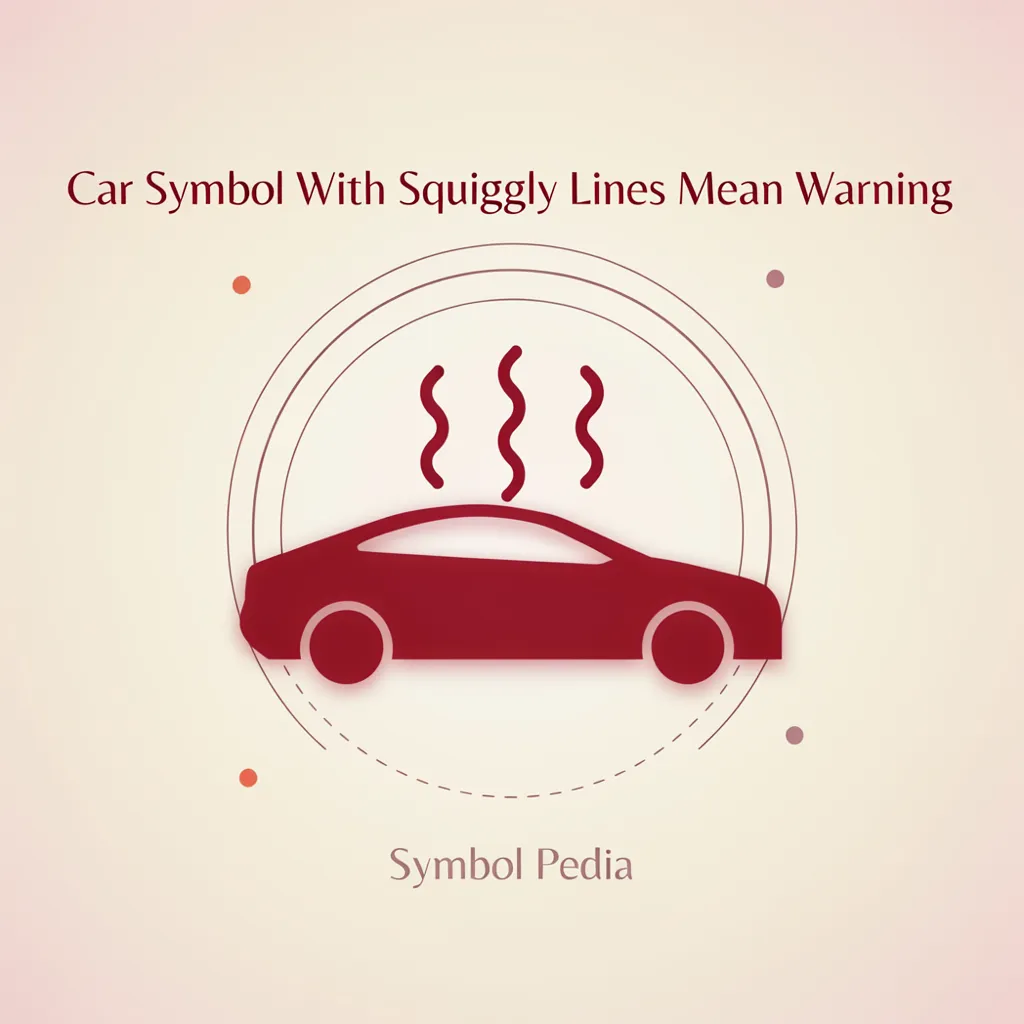
If you have ever looked at your dashboard and suddenly noticed a little car with squiggly lines underneath it, you may have wondered whether your vehicle was warning you about a serious problem.
The symbol can look almost playful, but it has an important job. In most vehicles, the car-with-squiggly-lines symbol is connected to the electronic stability control (ESC), traction control, or vehicle stability system.
The exact meaning depends on the vehicle and whether the light is flashing or staying on.
A flashing symbol usually means the system is actively working to help prevent the vehicle from losing traction. A light that stays illuminated may indicate that the system has been switched off or that the vehicle has detected a fault.
Understanding the difference matters because this dashboard symbol can appear during completely normal driving, especially on wet, snowy, icy, or loose roads.
So, what does the car symbol with squiggly lines mean, and should you keep driving when it appears? Let’s break it down in simple terms.
What Does the Car Symbol With Squiggly Lines Mean? Quick Meaning
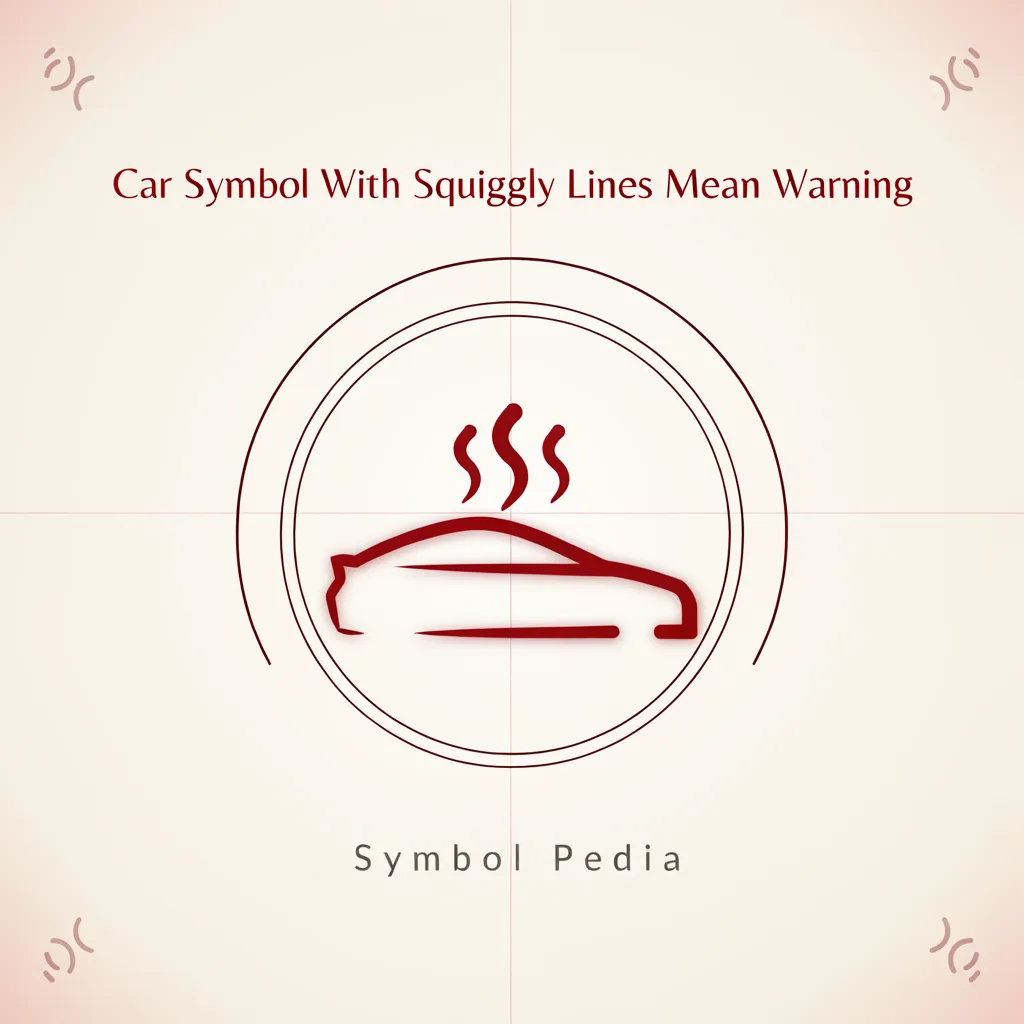
The car symbol with squiggly lines usually represents your vehicle’s stability control or traction control system.
It often looks like:
- A small car viewed from behind or above
- Two or more curved or squiggly lines beneath the car
- Sometimes the word ESC, ESP, TCS, or TRAC appears nearby
- The symbol may be yellow, amber, or occasionally another dashboard color depending on the manufacturer
In simple language, the symbol means your car is monitoring wheel traction and vehicle stability.
For example:
“The light flashed when I drove over the wet road.”
This generally means the stability or traction system detected wheel slip and intervened.
“The squiggly car light stayed on after I started the engine.”
That can mean the system has been turned off or there may be a malfunction.
“The light came on when I pressed the traction-control button.”
In that situation, the system may simply have been intentionally disabled.
The most important difference
Flashing: The system is usually actively helping control wheel slip or stability.
Steady: The system may be switched off, or a fault may have been detected.
Because dashboard symbols differ between manufacturers, your owner’s manual is the final authority for your particular vehicle.
Origin & Background of the Squiggly Car Symbol
The symbol comes from the development of modern electronic vehicle safety systems.
Older vehicles relied heavily on the driver’s steering, braking, and throttle control. Modern cars can use sensors and computers to detect when individual wheels are losing grip or when the vehicle is beginning to behave differently from the driver’s steering input.
This technology became increasingly common as manufacturers introduced traction control and electronic stability control systems.
The squiggly lines are a visual representation of slipping or unstable movement. Instead of showing a complicated technical diagram, manufacturers use a simple car and curved lines to communicate the idea of a vehicle sliding or losing grip.
That’s why the icon is so recognizable.
Why different cars use different names
You may see several names for essentially related systems:
- ESC — Electronic Stability Control
- ESP — Electronic Stability Program
- TCS — Traction Control System
- TRAC — Traction Control
- DSC — Dynamic Stability Control
- VSC — Vehicle Stability Control
The terminology varies by manufacturer, but these systems generally work toward the same broad goal: helping the driver maintain control when traction or stability becomes compromised.
How the symbol became familiar
As electronic safety features became standard across more vehicles, dashboard warning symbols became increasingly important.
Today, drivers often recognize the squiggly car icon from everyday experiences such as driving through heavy rain, accelerating on snow, or encountering gravel.
It has also become common in online automotive discussions, where people post dashboard photos asking what a mysterious symbol means.
That social-media exposure has made the symbol familiar even to people who have never learned the technical name of the system.
Real-Life Conversations About the Squiggly Car Symbol
1. WhatsApp Conversation
Person A:
My dashboard just showed a car with squiggly lines underneath it. 😳
Person B:
Was it flashing or staying on?
Person A:
It flashed when I turned on a wet road, then disappeared.
Person B:
That’s usually traction or stability control working. The car probably detected some wheel slip.
Person A:
So I don’t need to panic?
Person B:
Probably not. Just drive smoothly, especially if the road is slippery.
2. Instagram DM
Person A:
Do you know what this dashboard symbol means? It looks like my car is driving on waves 😂
Person B:
Haha, that’s probably the stability control symbol.
Person A:
Why would it suddenly appear?
Person B:
If it flashed while you were accelerating or turning, the system may have been correcting wheel slip.
Person A:
Ohhh. It happened when I pulled away quickly in the rain.
Person B:
That makes sense.
3. TikTok Comments
Person A:
What does the little car with squiggly lines mean? Mine came on today.
Person B:
If it’s flashing, your traction/stability system is probably kicking in.
Person C:
Mine stays on all the time. Is that different?
Person B:
Yes. If it stays on, check whether traction control was switched off. If it wasn’t, get the system checked.
4. Text Message
Person A:
My car has the squiggly car light on.
Person B:
Did you turn traction control off?
Person A:
No.
Person B:
Then don’t ignore it if it stays on. Check your owner’s manual and have the car inspected if necessary.
Person A:
I’ll do that before driving far.
Person B:
Good idea.
Emotional & Psychological Meaning
A dashboard warning can create an instant emotional reaction.
Most drivers don’t think about electronic stability systems during normal driving. When an unfamiliar symbol suddenly appears, the brain naturally interprets it as a possible threat.
That’s why people often search the exact appearance of the symbol rather than its technical name.
They don’t necessarily know what “electronic stability control” means. They know only that there is a car, there are squiggly lines, and something has changed.
That simple description is often enough to find the answer.
From a communication perspective, this is an interesting example of how humans describe unfamiliar information. Instead of saying, “My ESC indicator is illuminated,” someone is much more likely to say, “What does the car symbol with squiggly lines mean?”
And honestly, that’s a perfectly reasonable way to describe it.
Imagine noticing the light while driving home in heavy rain. You may immediately wonder whether you should stop, slow down, or call a mechanic.
Understanding the symbol removes much of that uncertainty.
How the Symbol Is Used in Different Contexts
On Social Media
People frequently post photos of dashboard lights on Facebook groups, Reddit communities, Instagram, TikTok, and automotive forums.
The squiggly car symbol is especially easy to describe visually, which makes it a common subject of questions.
A person might write:
“Anyone know what this car with wavy lines means?”
Usually, they are asking whether the light represents normal system operation or a mechanical problem.
With Friends and Relationships
Drivers often ask friends or family members before contacting a professional.
A quick message such as “What does this squiggly car light mean?” can be enough to start a conversation.
This is particularly common when someone has recently purchased a used car or is driving a vehicle with dashboard symbols they haven’t encountered before.
In Work or Professional Settings
The symbol itself is not something you would normally discuss in professional communication unless driving is part of your job.
For example, a delivery driver, fleet employee, or company vehicle operator may need to report a persistent warning light.
In that setting, use clearer language such as:
“The electronic stability control warning light remains illuminated.”
That’s more useful than simply saying “the squiggly car light.”
Casual vs. Serious Tone
“Squiggly car light” is perfectly understandable in casual conversation.
For a mechanic, dealership, fleet manager, or roadside assistance provider, however, it is better to describe the exact symbol, whether it is flashing or steady, and what happened immediately before it appeared.
Those details can make diagnosis much easier.
When NOT to Ignore the Squiggly Car Symbol
A flashing stability-control light during slippery conditions is often normal.
However, a steady warning light that remains on deserves attention, particularly if you did not intentionally disable the system.
Don’t assume every illuminated dashboard symbol is harmless.
You should be more cautious when:
- The light stays on continuously
- The vehicle behaves unusually
- Steering feels different
- Braking feels abnormal
- Several warning lights appear at once
- The light appeared after an accident or impact
- The vehicle loses traction unexpectedly
- The owner’s manual indicates a system fault
Cultural sensitivity and communication
There isn’t a major cultural difference in the technical purpose of this dashboard symbol.
However, people describe it differently depending on their language, driving experience, and familiarity with automotive terminology.
Someone may call it the “slippery road light,” “skidding car light,” “traction light,” “sliding car symbol,” or “wavy lines warning.”
These expressions can refer to the same or closely related dashboard indicator.
Common Misunderstandings
Misunderstanding 1: “It means my tires are bad.”
Not necessarily.
The system can activate because your tires are slipping on a wet, icy, snowy, sandy, or loose surface.
A persistent light, however, can sometimes be related to wheel-speed sensors or other components involved in the stability system.
Misunderstanding 2: “If it flashes, something is broken.”
Usually, no.
A flashing light commonly indicates that the traction or stability system is actively intervening.
For example, you might see it when accelerating too quickly on a slippery road.
Misunderstanding 3: “A steady light always means the engine is damaged.”
No.
The squiggly car symbol generally relates to traction or stability control rather than the engine itself.
The exact fault can vary, though, so a persistent warning should not simply be ignored.
Misunderstanding 4: “Traction control and stability control are exactly the same thing.”
They are closely related but not identical.
Traction control primarily helps manage wheel spin.
Electronic stability control has a broader role in helping the vehicle maintain its intended direction when the car begins to deviate from the driver’s steering input.
Misunderstanding 5: “I should turn the system off whenever the light appears.”
Not automatically.
If the system activates during slippery conditions, it is usually doing exactly what it was designed to do.
Comparison Table: Squiggly Car Symbol vs. Related Dashboard Lights
| Symbol / Term | Typical Meaning | What You May Notice |
|---|---|---|
| Car with squiggly lines | Stability or traction control | May flash when wheels lose grip |
| ESC light | Electronic stability control | Indicates system activity or possible fault |
| TCS/TRAC light | Traction control | Related to wheel slip |
| ABS light | Anti-lock braking system | Braking-system warning |
| Tire-pressure light | Low tire pressure or monitoring issue | Often shaped like a tire with an exclamation mark |
| Check-engine light | Engine/emissions-related fault | Requires separate diagnosis |
| Brake warning light | Brake-system or parking-brake warning | Can require immediate attention |
| Slippery-road symbol | Traction/stability activity or warning | Indicates potential loss of grip |
Key Insight
The most important clue is not simply that the squiggly car symbol appeared. Pay attention to whether it is flashing or staying illuminated, what road conditions you were experiencing, and whether the vehicle feels normal.
How to Respond When Someone Uses the Term
If someone asks you, “What does the car symbol with squiggly lines mean?” your response can depend on the situation.
Casual Reply
“That’s usually the traction or stability-control light.”
Funny Reply
“Your car is basically saying, ‘Whoa, hold on!’ 😂”
Mature Reply
“It usually relates to electronic stability or traction control. If it was flashing, the system may have been helping with wheel slip. If it stays on, check the manual.”
Respectful Reply
“It’s generally the traction/stability-control indicator. If you tell me whether it’s flashing or staying on, I can explain what that usually means.”
The last response is particularly useful because it doesn’t jump to a conclusion without knowing the circumstances.
Regional & Cultural Usage
The technical meaning of the symbol is broadly international, but the way people describe it can vary.
Western Culture
In the United States, Canada, the United Kingdom, Australia, and other English-speaking regions, you may hear terms such as:
- Traction-control light
- Stability-control light
- Skidding-car light
- Slippery-road light
- ESC light
Drivers who are familiar with automotive terminology may immediately recognize “ESC.”
Asian Culture
In many Asian markets, drivers may use manufacturer-specific terms such as VSC, TCS, or ESP.
People who are less familiar with automotive abbreviations may describe the graphic visually instead.
That’s why searches based on appearance remain common.
Middle Eastern Culture
The same dashboard symbol is used across many vehicles sold in Middle Eastern markets.
Because hot weather, dust, sand, and changing road surfaces can affect traction, drivers may encounter traction-control activation in situations that aren’t related to rain or snow.
A vehicle traveling over loose sand, for example, can experience wheel slip.
Global Internet Usage
The internet has created a shared vocabulary around dashboard symbols.
Someone in one country may call it a “skidding car symbol,” while another person calls it “ESC.”
Both may be referring to the same familiar graphic.
Gen Z vs. Millennials
Younger drivers may be more likely to search using descriptive phrases such as:
“What does the car with squiggly lines mean?”
Older or more experienced drivers may simply say:
“My traction control light is on.”
This isn’t a strict rule, but it reflects how people search for information.
Someone unfamiliar with a technical term describes what they can actually see.
Is the Squiggly Car Symbol Safe for Kids?
Yes, the symbol itself is simply a vehicle dashboard indicator and is not inherently unsafe or inappropriate for children.
However, children should understand that dashboard warning lights are not toys or decorations.
If a young driver or child notices the symbol, they should tell a responsible adult rather than attempting to diagnose or repair the vehicle themselves.
The safest lesson is simple: recognize the warning, stay calm, and ask an experienced driver or qualified professional when necessary.
FAQs
What does the car symbol with squiggly lines mean?
It usually indicates the vehicle’s traction-control or electronic stability-control system. The system helps manage wheel slip and vehicle stability.
Why is my car with squiggly lines light flashing?
A flashing symbol commonly means the traction or stability system is actively working because the vehicle has detected wheel slip or reduced traction.
What if the squiggly car light stays on?
A steady light may mean the system has been switched off or has detected a fault. Check whether traction control was intentionally disabled and consult your owner’s manual.
Can I drive with the squiggly car light on?
It depends on why the light is illuminated. If it flashes briefly during slippery conditions and then goes away, that can be normal. A persistent light should be investigated.
Is the squiggly car symbol the same as traction control?
Not always exactly. Traction control and electronic stability control are related systems, and manufacturers may use different names or icons for them.
Why does the symbol appear when it rains?
Wet roads reduce tire grip, making wheel slip more likely. The traction or stability system may activate to help maintain control.
Should I turn traction control off?
Usually, you should leave it enabled during normal driving. Some situations, such as getting unstuck from deep snow or loose surfaces, may call for temporarily disabling it, depending on the vehicle manufacturer’s instructions.
Conclusion
The car symbol with squiggly lines may look mysterious, but its purpose is fairly straightforward: it generally relates to your vehicle’s traction or stability-control system.
If the symbol flashes briefly while you’re driving on a slippery surface, your car may simply be doing its job. It has detected wheel slip and is attempting to help maintain traction and stability.
A light that remains on is different. It could mean the system has been turned off, or it could indicate a problem that needs attention.
The best habit is to avoid guessing. Notice whether the light is flashing or steady, consider the road conditions, pay attention to how the vehicle feels, and check your owner’s manual for the exact meaning on your model.
Once you understand what the little car and squiggly lines are telling you, that once-alarming dashboard symbol becomes much easier to interpret.
And that’s really the purpose of dashboard warnings: not to frighten you, but to give you information when your vehicle needs your attention.
descover more post
What Does the Lock Symbol Mean on Snapchat Everything …
What Does the Swirl Symbol Mean A Complete Guide to Its …
What Does the Cadillac Symbol Mean History Hidden …