If someone sends you a message saying “ATP, I’m going to sleep” or comments “ATP, just move on,” you might wonder what those three letters actually mean. Is it a new slang term, an abbreviation for something technical, or a way to express frustration?
In texting and on social media, ATP usually means “at this point.” People use it to describe how they feel about a situation, what they think should happen next, or how their attitude has changed over time.
For example, someone might write, “ATP, I don’t even care anymore.” They are saying that after everything that has happened, they have reached a stage where they no longer feel invested in the situation.
The abbreviation appears in text messages, WhatsApp chats, Instagram comments, TikTok videos, and everyday online conversations. It can sound funny, frustrated, serious, or completely casual depending on the context.
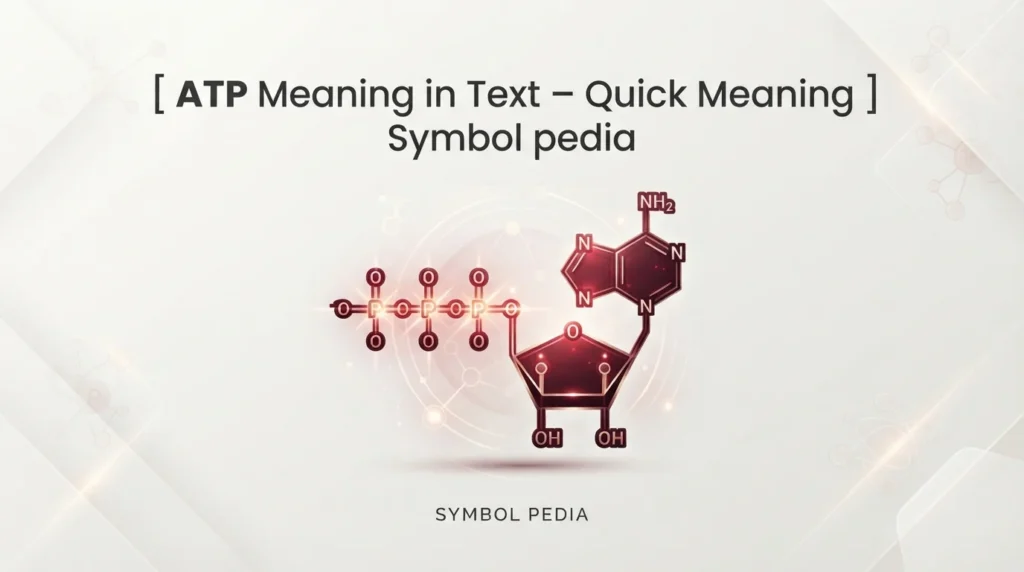
However, ATP has other meanings, too. In biology, it stands for adenosine triphosphate, a molecule that supplies energy to cells. In sports, ATP can refer to the Association of Tennis Professionals.
So, how do you know which meaning someone intends?
This guide explains what ATP means in text, how people use it, what emotions it can express, and how you can respond naturally when someone sends it to you.
ATP Meaning in Text – Quick Meaning
ATP means “at this point” in texting, messaging, and most casual social media conversations.
It helps people describe their current feelings, opinions, or decisions after something has happened.
Here are a few examples:
- “ATP, I just want to go home.” — The person is tired of the situation and wants to leave.
- “ATP, she knows the truth.” — The speaker believes that the truth is already clear.
- “ATP, we should stop arguing.” — The speaker thinks continuing the argument is pointless.
The phrase can communicate several different attitudes:
- Frustration: “ATP, I’m done explaining myself.”
- Acceptance: “ATP, it is what it is.”
- Humor: “ATP, my phone deserves a vacation.”
- Determination: “ATP, I’m focusing on myself.”
- Disbelief: “ATP, you have to be joking.”
The important thing to remember is that ATP refers to the current stage of a situation. It often suggests that something has happened repeatedly or that enough time has passed for the speaker to reach a conclusion.
Origin and Background of ATP
ATP is an example of how everyday language changes when people communicate through phones and social media.
The full expression, “at this point,” existed long before texting became popular. People have used it in spoken English to describe a particular stage in a process, an ongoing discussion, or a decision that has become necessary.
For example, someone might say, “At this point, we need a different plan.” The phrase communicates that circumstances have developed enough to make a new decision appropriate.
As text messaging became more common, people started shortening familiar expressions to make messages quicker and easier to type. Abbreviations such as BTW, IDK, IMO, and ATP became part of informal digital communication.
ATP fits naturally into this pattern because it preserves the main idea while removing unnecessary words.
Social media helped the abbreviation spread further. Short captions, reaction posts, memes, and comment threads reward quick expressions that communicate a complete attitude in just a few letters.
On TikTok, for example, someone might describe a frustrating experience and add “ATP” to show that they have reached their limit. On Instagram, the same abbreviation might appear in a caption about relationships, school, work, or personal growth.
The meaning has not fundamentally changed. Instead, the tone surrounding it has expanded. ATP can now function as a serious statement, an exaggerated complaint, or a humorous reaction to an everyday inconvenience.
It is also worth remembering that abbreviations depend on context. ATP does not always mean “at this point,” particularly in scientific discussions or conversations about professional tennis.
Real-Life Conversations: How ATP Is Used
The easiest way to understand ATP is to see how it works in ordinary conversations.
1. WhatsApp: When Someone Feels Frustrated
Person A: I’ve told him three times that I’m busy today.
Person B: And he keeps asking you to come out?
Person A: Yes 😭 ATP, I’m turning my phone off.
Here, ATP means “at this point.” Person A has become frustrated because the same situation keeps happening.
The abbreviation emphasizes that the repeated behavior has pushed the speaker toward a decision.
2. Instagram DMs: Moving On From a Relationship
Person A: Do you still think she’ll text you again?
Person B: Honestly, I don’t know.
Person A: What are you going to do?
Person B: ATP, I’m choosing my peace. I can’t keep waiting.
In this conversation, ATP introduces a change in attitude. The person is no longer willing to spend all their energy waiting for someone else.
The tone is reflective rather than angry. It suggests acceptance and a decision to move forward.
3. TikTok Comments: A Funny Reaction
Person A: Bro studied for eight hours and still forgot everything during the exam 💀
Person B: ATP, I’d just become a farmer.
Person A: SAME 😭
This example shows the humorous side of ATP. The commenter is exaggerating their reaction to a frustrating experience.
They are not necessarily serious about changing careers. The abbreviation helps introduce a dramatic, joking conclusion.
4. Text Messages: Setting a Boundary
Person A: Are you still going to help him after what happened?
Person B: I was thinking about it, but he keeps doing the same thing.
Person A: So what’s the decision?
Person B: ATP, I need to put myself first.
Here, ATP communicates a personal decision that has developed after repeated experiences.
It does not automatically mean the person is angry. They may simply feel that they have reached a point where their own needs must come first.
Emotional and Psychological Meaning of ATP
Although ATP is only three letters, it can communicate a surprisingly wide range of emotions.
Its emotional meaning comes mainly from the situation surrounding it.
Frustration and Emotional Exhaustion
One of the most common uses of ATP involves situations that have become tiring.
Someone might say, “ATP, I’m tired of trying.” This can suggest that they have made repeated efforts without seeing the results they wanted.
The phrase gives the message a sense of finality, even when the person has not explicitly said they are giving up.
Acceptance and Letting Go
ATP can also signal acceptance.
Consider the message, “ATP, there’s nothing I can do about it.” The person recognizes that the situation may be beyond their control.
This meaning is not necessarily negative. Sometimes accepting reality is a healthy way to stop worrying about something that cannot be changed.
Humor and Exaggeration
Online conversations often use dramatic language for comic effect.
A student might write, “ATP, my homework is my full-time job.” The statement exaggerates how much work they have to do.
Friends usually understand this kind of humor because the context makes the intended meaning clear.
Confidence and Decision-Making
ATP can introduce a firm decision, too.
For example, “ATP, I’m done chasing people who don’t make an effort.”
The person is emphasizing that their experiences have changed their priorities. Depending on the context, the message can sound confident, disappointed, or both.
A Personal-Style Example
Imagine a student who keeps asking a friend for help with an assignment but receives no response. After several attempts, the student texts another friend, “ATP, I’ll just do it myself.”
The words are simple, but the message communicates a shift from expectation to action. The student has decided not to keep waiting.
This is what makes ATP useful: it connects what has happened before with how someone feels or what they intend to do now.
Still, it is important not to assume that every ATP message signals emotional distress. Sometimes the person is simply making a quick observation.
Usage of ATP in Different Contexts
ATP is most natural in informal communication, but its meaning can shift depending on the audience and situation.
ATP on Social Media
On Instagram, TikTok, Snapchat, and similar platforms, ATP often appears in captions, comments, memes, and short reactions.
Examples include:
- “ATP, I need a three-month vacation.”
- “ATP, this drama is getting ridiculous.”
- “ATP, we’re all just trying our best.”
The abbreviation makes the message concise and conversational. It is particularly effective when the audience already understands the situation.
ATP Between Friends and in Relationships
Friends may use ATP when talking about dating, misunderstandings, personal problems, or everyday decisions.
For example:
“ATP, I just want someone who communicates honestly.”
This sentence expresses a current preference, possibly shaped by earlier experiences.
In relationship conversations, however, the abbreviation does not automatically indicate a breakup, rejection, or loss of interest. The remaining words and the surrounding conversation determine what the person means.
ATP in Professional Settings
ATP is generally better suited to informal workplace chats than formal business writing.
Coworkers who communicate casually might say, “ATP, let’s move the meeting to tomorrow.”
However, in an email to a client or a formal report, writing “at this point” is usually clearer and more professional.
For example:
Informal: “ATP, we need another solution.”
Professional: “At this stage, we should consider an alternative solution.”
The full phrase sounds more polished without changing the meaning.
Casual Versus Serious Tone
The same abbreviation can communicate different feelings.
Casual: “ATP, I’m ordering pizza.”
Frustrated: “ATP, I’ve explained this enough times.”
Serious: “ATP, we need to make a decision.”
Funny: “ATP, my bed is my best friend.”
Therefore, never judge the emotional tone from the abbreviation alone. Read the whole message and consider your relationship with the sender.
When NOT to Use ATP
Although ATP is widely understood online, it is not appropriate for every situation.
Formal Emails and Official Documents
Avoid using ATP in formal applications, academic papers, business proposals, or official correspondence unless the abbreviation has a specific technical meaning relevant to the subject.
Writing “at this point” makes your meaning clearer to readers who may not recognize internet slang.
Sensitive Conversations
If someone is sharing a serious personal problem, using ATP casually may sound dismissive.
For example, responding to a friend’s painful experience with “ATP, just forget about it” might make them feel that you are minimizing their emotions.
A more thoughtful response would acknowledge their feelings before offering advice.
Messages That Require Precision
If you are communicating with someone unfamiliar with texting abbreviations, spell out the phrase.
This is especially helpful when language differences or unfamiliarity with internet slang could create confusion.
Scientific or Technical Discussions
ATP has a well-established scientific meaning: adenosine triphosphate, a molecule involved in transferring energy within cells.
In a biology class or medical research discussion, assuming that ATP means “at this point” would be incorrect.
Always interpret the abbreviation according to the subject being discussed.
Common Misunderstandings About ATP
Several misunderstandings can arise when people encounter ATP in messages.
1. Thinking ATP Always Means Frustration
ATP often appears in frustrated messages, but frustration is not part of its literal definition.
Someone saying “ATP, I’m ready for the weekend” may simply be excited or looking forward to relaxing.
2. Assuming It Means the Person Has Given Up
A message such as “ATP, I’m doing it myself” can indicate independence rather than defeat.
The speaker may be making a practical decision instead of expressing hopelessness.
3. Confusing It With Scientific ATP
In biology, ATP means adenosine triphosphate. In casual internet slang, it usually means “at this point.”
The surrounding topic is the most useful clue.
4. Assuming It Has a Hidden Romantic Meaning
ATP does not inherently mean “I don’t love you,” “I’m breaking up with you,” or “I’m losing interest.”
Those interpretations may be possible in a particular conversation, but they are not built into the abbreviation itself.
5. Reading Too Much Into Capital Letters
ATP is commonly written in capital letters because it is an abbreviation. Its capitalization alone does not mean the sender is shouting or angry.
Look at the entire message before deciding how it sounds.
Comparison Table: ATP and Similar Texting Slang
| Slang | Meaning | How It Differs From ATP |
|---|---|---|
| ATP | At this point | Describes the current stage of a situation |
| TBH | To be honest | Introduces an honest opinion |
| NGL | Not gonna lie | Signals a candid or direct statement |
| IDK | I don’t know | Expresses uncertainty |
| IDC | I don’t care | Expresses a lack of concern or interest |
| IMO | In my opinion | Marks a personal viewpoint |
| FR | For real | Emphasizes agreement or sincerity |
| RN | Right now | Refers to the present moment |
| ASAP | As soon as possible | Expresses urgency about timing |
| BRB | Be right back | Indicates a temporary absence |
Key Insight
ATP is primarily about the stage a situation has reached, while expressions such as TBH and NGL introduce honesty, and RN identifies the present moment. These abbreviations may appear together, but they do not mean the same thing.
For example, “ATP, NGL, I’m tired” means that, given the current circumstances, the speaker honestly feels tired.
How to Respond When Someone Uses ATP
Your response should depend on what the person is trying to communicate.
You do not need to make a big deal out of the abbreviation. Usually, responding to the actual message is enough.
Casual Replies
If your friend is talking about an everyday situation, try:
- “Honestly, same.”
- “I get you.”
- “Yeah, that makes sense.”
- “Fair enough.”
- “I know exactly what you mean.”
These replies work well when you understand the person’s feelings or agree with their point.
Funny Replies
If the conversation is lighthearted, you could say:
- “ATP, we need a group vacation.”
- “That’s actually so real 😂”
- “ATP, even the universe is confused.”
- “I’m crying, not you saying that 😭”
- “ATP, let’s disappear for a weekend.”
Use playful responses when the other person is clearly joking. If they sound genuinely upset, humor may not be the best first response.
Mature Replies
When someone expresses frustration or describes a difficult decision, consider:
- “I understand why you feel that way.”
- “Maybe it’s time to try something different.”
- “You’ve given it a fair chance.”
- “What do you think would help now?”
- “It sounds like you’ve thought about this carefully.”
These responses show that you are listening instead of dismissing the person’s experience.
Respectful Replies
If you are unsure what the person means, you can ask:
- “What happened?”
- “Do you want to talk about it?”
- “Are you saying you want to stop trying?”
- “I hear you. What would you like to do next?”
A direct question is often better than guessing at someone’s emotional state.
Regional and Cultural Usage of ATP
ATP is used across many online communities, but familiarity with the abbreviation varies by language, age, platform, and social group.
It is best to distinguish the generally understood slang meaning from cultural assumptions that may not apply to everyone.
Western Culture
In English-speaking communities in the United States, Canada, the United Kingdom, and other Western countries, ATP commonly appears in casual texting and social media.
It is often used in humorous complaints, relationship discussions, and comments about frustrating situations.
However, usage varies between individuals and online communities. Not every English speaker uses or recognizes the abbreviation.
Asian Culture
In Asian countries where English-language social media is popular, ATP may appear in conversations among people who use English online.
Its familiarity depends on the person’s language background, age, education, and social circles.
People who primarily communicate in other languages may use local abbreviations or expressions instead.
Middle Eastern Culture
In Middle Eastern online communities, English slang may appear alongside Arabic, Urdu, and other languages, particularly in multilingual conversations.
Some users may write ATP in English-language chats, while others may prefer local expressions or transliterated language.
The abbreviation does not have one universal regional meaning, and it should not be assumed that everyone in the region understands it.
Global Internet Usage
Social platforms allow slang to cross borders quickly. Someone can encounter ATP in a TikTok comment, learn its meaning, and start using it in conversations with friends.
Memes, short videos, and screenshots help abbreviations spread beyond their original communities.
Even so, context remains important because internet slang can have multiple meanings in different subjects.
Gen Z Versus Millennials
Gen Z users may encounter ATP frequently in short-form social media content, memes, and casual messaging.
Millennials may also use it, particularly in online conversations and group chats. Familiarity depends more on individual habits and communities than on generation alone.
Neither generation has exclusive ownership of the expression. People of different ages can use the same abbreviation naturally.
Is ATP Safe for Kids?
Yes, ATP is generally harmless as a texting abbreviation when it means “at this point.”
The phrase itself is not inherently offensive, sexually explicit, or dangerous. Children and teenagers may encounter it in messages, comments, and online videos.
However, the meaning of the complete message still matters. A sentence containing ATP could discuss bullying, relationship problems, frustration, or other sensitive subjects.
Parents and educators can explain the abbreviation while encouraging children to consider tone, context, and respectful communication.
It is also useful to teach children that online slang can have multiple meanings. In a science lesson, for example, ATP refers to adenosine triphosphate rather than the texting expression.
Frequently Asked Questions About ATP
1. What does ATP mean in text messages?
ATP usually means “at this point.” People use it to express their current feelings, opinions, or decisions about a situation.
2. What does ATP mean on TikTok?
On TikTok, ATP commonly means “at this point.” It often appears in captions and comments about funny, frustrating, relatable, or emotional experiences.
3. What does ATP mean from a girl or a guy?
The meaning is generally the same regardless of who sends it. The surrounding message determines whether the person sounds playful, frustrated, serious, or reflective.
4. Does ATP mean “at the present”?
Not usually as a direct expansion of the abbreviation. In texting slang, ATP stands for “at this point,” although the phrase can sometimes communicate an idea similar to “right now.”
5. What is the difference between ATP and RN?
ATP means “at this point” and often refers to how a situation has developed. RN means “right now” and emphasizes the present moment.
For example, “ATP, I’m leaving” can suggest a decision reached after considering the situation, while “I’m leaving RN” emphasizes immediacy.
6. Can ATP have another meaning?
Yes. In biology, ATP stands for adenosine triphosphate, a molecule essential to cellular energy transfer. In professional tennis, ATP refers to the Association of Tennis Professionals.
The correct interpretation depends on context.
7. How should I reply to ATP in a text?
Respond to the message rather than the abbreviation itself. You might say “I get you,” “Honestly, same,” or “What happened?” depending on whether the person is joking, expressing frustration, or asking for support.
Conclusion
Understanding what ATP means in text is simple once you recognize the context. In everyday messaging and online conversations, it usually stands for “at this point.”
People use it to express frustration, acceptance, humor, determination, or a decision that has developed over time. Its tone depends on the words surrounding it, not just the abbreviation itself.
You may see ATP in WhatsApp messages, Instagram DMs, TikTok comments, or conversations with friends. In most casual situations, you can understand it by reading the complete sentence.
Just remember that ATP can also refer to scientific and professional terms in other contexts. If the conversation is about biology, cellular energy, or tennis, the intended meaning may be different.
Once you understand these distinctions, you can recognize ATP naturally, respond with confidence, and avoid confusing a simple texting abbreviation with something more complicated.
discover more post
What Does Hou Mean in Text Meaning Uses 2026
What Does Thi Mean in Text Real Meaning 2026 – Symbl Pedia
What Does OMR Mean in Text Real Meaning 2026

Kavon is a passionate content creator and digital researcher who specializes in decoding symbols, meanings, and modern internet language. With a strong focus on clarity and authenticity, Kavon writes in a way that makes complex ideas simple, relatable, and useful for everyday readers.
Known for a hardworking mindset and attention to detail, Kavon is dedicated to creating content that genuinely helps people understand the deeper meanings behind words, signs, and online expressions. Every article is crafted with care, combining research, real-life insight, and a reader-first approach.
Through Symblpedia, Kavon aims to build a trusted space where curiosity meets clarity—helping users find answers that are not only accurate but also meaningful and easy to understa