Many people notice a crescent moon and star on mosque domes, flags, Islamic artwork, or cultural decorations and immediately assume it is the official symbol of Islam. This often leads to an important question: What does the Islam symbol mean?
The answer is more complex than most people expect.
Unlike some religions that have a universally recognized official symbol, Islam does not have a single symbol established by its sacred texts. However, the crescent moon and star have become widely associated with Islamic cultures around the world.
People search for this topic because they want to understand whether the symbol is religious, cultural, historical, or political. They may also wonder why it appears on mosque architecture, national flags, and Islamic-themed designs.
In this guide, you’ll discover the true meaning behind the Islam symbol, where it originated, how it is used today, and some common misunderstandings surrounding it.
What Does the Islam Symbol Mean? – Quick Meaning
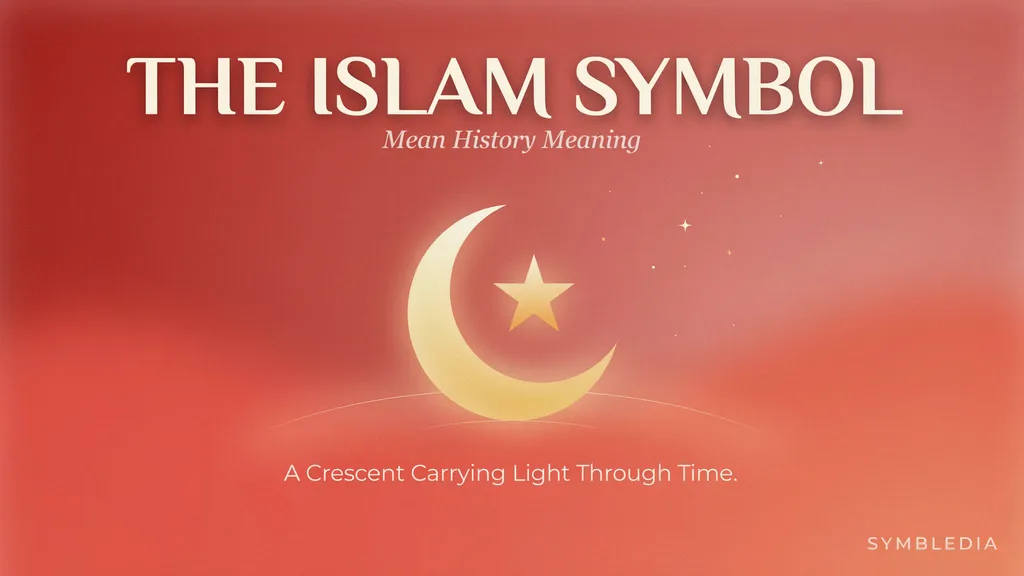
The symbol most commonly associated with Islam is the crescent moon and star.
Quick Definition
The crescent moon and star generally symbolize:
- Islamic heritage and identity
- Guidance and enlightenment
- The lunar calendar used in Islam
- Historical connections to Muslim civilizations
- Cultural unity in many Muslim-majority regions
Simple Examples
“The crescent moon on the mosque reminded visitors of Islamic traditions.”
“Many countries with Muslim populations include the crescent and star on their flags.”
“The symbol is widely recognized, even though it is not an official religious requirement.”
The key point is that the crescent moon and star represent Islamic culture and history more than religious doctrine itself.
Origin & Background
Islam Did Not Begin With an Official Symbol
When Islam emerged in the 7th century, Muslims did not use a specific religious symbol similar to the Christian cross.
The focus of early Islam was on:
- Faith in one God
- Prayer
- Community
- Ethical living
Religious identity was expressed through belief and practice rather than visual symbols.
The Rise of the Crescent Moon
Historians generally trace the crescent moon’s association with Islam to later Muslim empires, particularly the Ottoman Empire.
The crescent symbol existed long before Islam and appeared in:
- Ancient Greece
- Byzantium
- Central Asia
- Various pagan civilizations
When the Ottoman Empire adopted the crescent and star, the symbol gradually became connected with the Muslim world.
Cultural Influence
As Ottoman influence spread across parts of Europe, Asia, Africa, and the Middle East, the crescent became increasingly recognized as a symbol of Islamic civilization.
Social Media Impact
Today, the crescent moon and star are used widely on:
- Social media profiles
- Islamic awareness campaigns
- Ramadan graphics
- Eid greetings
- Digital artwork
Modern internet culture has strengthened the connection between the symbol and Islamic identity, even among people who know it is not an official religious emblem.
Real-Life Conversations
WhatsApp Conversation
Person A: Did you see the crescent moon logo on the mosque?
Person B: Yeah, it’s often associated with Islam.
Person A: Is it actually mentioned in the Quran?
Person B: No, it’s more of a historical and cultural symbol.
Instagram DM
Person A: Why is there a moon and star in your Eid post?
Person B: It represents Islamic culture and the lunar calendar.
Person A: I always thought it was the official symbol of Islam.
Person B: A lot of people do, but it’s more complicated than that.
TikTok Comments
User 1: What does the moon symbol mean?
User 2: It usually represents Islam and Muslim heritage.
User 1: Is it a religious requirement?
User 2: Not really. It’s mostly historical and cultural.
Text Message
Friend 1: Why is the crescent on so many Muslim flags?
Friend 2: It became popular through Muslim empires, especially the Ottomans.
Friend 1: Interesting. I thought it started with Islam itself.
Friend 2: That’s a common misconception.
Emotional & Psychological Meaning
Symbols often carry emotional weight beyond their historical origins.
For many Muslims, the crescent moon and star can evoke feelings of:
- Belonging
- Spiritual connection
- Community pride
- Cultural heritage
- Religious celebration
The crescent moon is especially meaningful because Islamic months are based on lunar observations.
When people see the first crescent marking Ramadan or Eid, it often brings excitement, gratitude, and anticipation.
Personal-Style Scenario
Imagine a family gathering after sunset to look for the new moon that signals Eid. The appearance of the crescent becomes more than an astronomical event—it represents celebration, family unity, and shared faith.
This emotional connection helps explain why the symbol remains meaningful even though it is not officially mandated in Islamic teachings.
Usage in Different Contexts
Social Media
The crescent moon is commonly used in:
- Ramadan posts
- Eid greetings
- Islamic educational content
- Profile pictures
- Awareness campaigns
Friends & Relationships
People may use the symbol to express:
- Religious identity
- Cultural pride
- Celebration of Islamic holidays
Work & Professional Settings
In professional environments, the symbol may appear in:
- Cultural presentations
- Diversity initiatives
- Educational materials
- International organizations
Casual vs Serious Tone
Casual Usage:
🌙 “Ramadan Mubarak to everyone.”
Serious Usage:
“The crescent moon has become a widely recognized symbol associated with Muslim communities worldwide.”
The meaning often depends on context.
When NOT to Use It
Although widely accepted, there are situations where using the symbol may not be appropriate.
Avoid Assuming It Represents All Muslims
Not every Muslim views the crescent moon as a religious symbol.
Avoid Historical Oversimplification
Saying “this is the official symbol of Islam” can be misleading.
Be Careful in Educational Contexts
When teaching about Islam, it is important to explain that the symbol’s connection is historical rather than scripturally mandated.
Respect Cultural Differences
Some communities emphasize religious practices rather than symbolic representations.
Common Misunderstandings
Misunderstanding 1: It Is Mentioned as Islam’s Official Symbol
This is incorrect.
Neither the Quran nor mainstream Islamic teachings designate an official symbol.
Misunderstanding 2: All Muslims Use It
Many Muslims embrace it, while others place little importance on it.
Misunderstanding 3: The Symbol Originated With Islam
The crescent existed centuries before Islam.
Misunderstanding 4: It Has Only Religious Meaning
It can also represent:
- Culture
- Heritage
- History
- National identity
Comparison Table
| Symbol/Expression | Meaning | Relationship to Islam |
|---|---|---|
| Crescent Moon & Star | Cultural and historical Islamic association | Widely recognized |
| Mosque Silhouette | Place of worship | Religious architecture |
| Arabic Calligraphy | Sacred artistic expression | Highly respected |
| Shahada Calligraphy | Declaration of faith | Core religious statement |
| Cross | Christian symbol | Different religion |
| Dharma Wheel | Buddhist symbol | Different religion |
| Star of David | Jewish symbol | Different religion |
Key Insight
The crescent moon and star are best understood as symbols strongly associated with Islamic civilization and culture rather than official religious emblems established by Islamic scripture.
How to Respond When Someone Uses It
Casual Replies
- “Beautiful symbol.”
- “Happy Ramadan!”
- “That’s a meaningful design.”
Funny Replies
- “The moon always steals the spotlight.”
- “Looks like the stars are celebrating too.”
Mature Replies
- “It has a fascinating historical background.”
- “Many people associate it with Islamic heritage.”
Respectful Replies
- “Thank you for sharing its significance.”
- “I appreciate learning more about the tradition.”
Regional & Cultural Usage
Western Culture
Many people recognize the crescent moon as a symbol linked to Islam, even if they do not know its historical origins.
Asian Culture
Usage varies widely. In countries with significant Muslim populations, the symbol often appears in religious celebrations and public spaces.
Middle Eastern Culture
The crescent frequently appears in architecture, decorative art, and cultural events.
Global Internet Usage
Online, the symbol is often used to:
- Celebrate Ramadan
- Mark Eid
- Express Muslim identity
- Share inspirational content
Generational Differences
Gen Z
Often uses crescent emojis and digital artwork in creative ways.
Millennials
Frequently use the symbol in community events, educational content, and holiday greetings.
While both generations recognize the symbol, Gen Z tends to integrate it more naturally into online communication.
Is It Safe for Kids?
Yes.
The crescent moon and star are generally safe for children to learn about as part of religious, cultural, and historical education.
Parents and educators should simply explain that:
- It is commonly associated with Islam.
- It is not officially required by Islamic scripture.
- It has historical and cultural significance.
Understanding these distinctions helps children develop cultural awareness and respect.
FAQs
Is the crescent moon the official symbol of Islam?
No. Islam does not have an officially designated religious symbol in its foundational scriptures.
Why is the crescent moon associated with Islam?
Its association developed largely through historical Muslim empires, especially the Ottoman Empire.
Does the Quran mention the crescent as a symbol?
The Quran discusses the moon in various contexts but does not establish the crescent as Islam’s official symbol.
Why is the symbol on many flags?
Many Muslim-majority nations adopted it as part of their cultural and historical identity.
Do all Muslims accept the symbol?
Not necessarily. Some embrace it strongly, while others consider it mainly cultural.
What does the star represent?
The star is often interpreted as guidance, light, and aspiration, though interpretations vary.
Is the symbol religious or cultural?
For most people, it serves as both a cultural and historical symbol associated with Muslim communities.
Conclusion
When people ask, “What does the Islam symbol mean?”, they are usually referring to the crescent moon and star that appear on flags, mosques, artwork, and celebrations throughout the Muslim world.
While many assume it is Islam’s official religious emblem, history tells a different story. The symbol became associated with Islam through centuries of cultural development, political influence, and shared heritage rather than direct religious instruction.
Today, the crescent moon and star continue to represent identity, tradition, community, and the rhythms of the Islamic lunar calendar. Understanding this distinction helps us appreciate both the richness of Islamic history and the diversity of Muslim perspectives around the world.
The next time you see the crescent and star, you’ll know that its meaning extends far beyond a simple symbol—it reflects centuries of culture, faith, and human connection.
descover more post
Ohm Symbol and Meaning Understanding Ω Its History and …
Eternity Symbol Meaning The Powerful Message Behind an …
Spiritual Meaning of Infinity Symbol A Deep Guide to Love Life …

Orvian is a passionate researcher and dedicated content creator focused on exploring the deeper meanings behind symbols, signs, and cultural interpretations. With a strong interest in symbolism and human psychology, Orvian simplifies complex ideas into clear, engaging, and easy-to-understand content for readers around the world.
Through consistent research and thoughtful writing, Orvian aims to provide accurate, insightful, and meaningful information that helps users connect with symbols on a deeper level—whether for personal growth, curiosity, or knowledge.
Known for a hardworking mindset and attention to detail, Orvian believes that every symbol carries a story, and every story deserves to be understood.