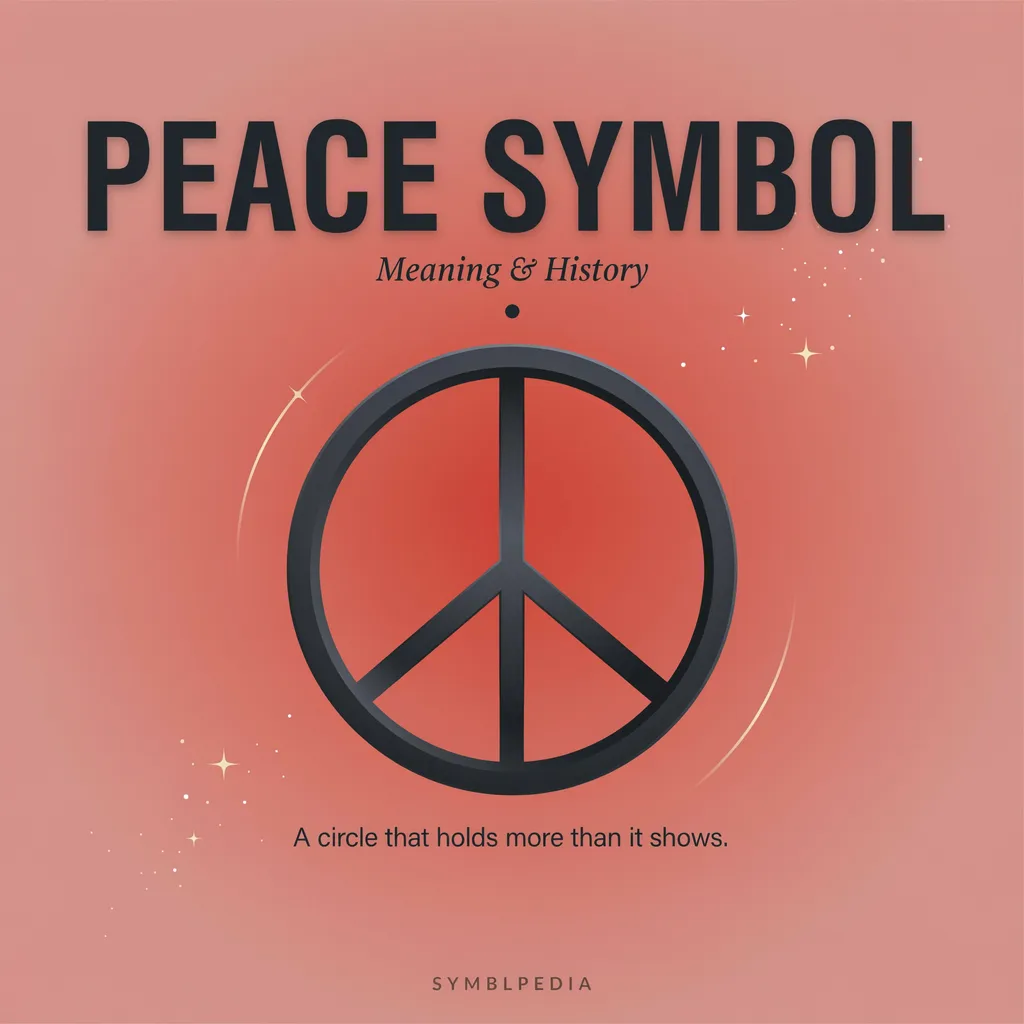
The peace symbol is one of the most recognizable signs in the world. You can find it on jewelry, clothing, stickers, social media posts, artwork, and even tattoos. For some people, it simply means “peace and love.” For others, it represents hope, unity, freedom, or a desire for a world without violence.
So, what does the peace symbol mean exactly?
The answer is more interesting than many people realize. While its modern use is associated with kindness and harmony, the symbol has a unique history connected to anti-war movements and social change. Over time, its meaning has expanded across cultures and generations, becoming a universal sign of positivity.
Whether you saw it in a text message, an Instagram bio, or on someone’s necklace, this guide explains everything you need to know in simple language.
What Does the Peace Symbol Mean? – Quick Meaning
The peace symbol (☮) generally represents:
- Peace and non-violence
- Love and unity
- Hope for a better future
- Acceptance and understanding
- Harmony between people and cultures
Quick examples
“Let’s forget the argument and move on ☮”
“Sending positive vibes and peace ☮❤️”
“Weekend mood: relax, smile, and enjoy life ☮”
In everyday communication, the symbol usually expresses calmness, friendship, or a wish for conflict to end.
Origin & Background
Many people assume the peace symbol is ancient, but its modern design is relatively recent.
It was created in 1958 for the British nuclear disarmament movement. The designer combined two semaphore signals (used by flag communicators) representing the letters N and D, which stood for Nuclear Disarmament.
Soon, the symbol became associated with protests against war, especially during the 1960s and 1970s. Students, musicians, activists, and artists adopted it as a sign of peaceful resistance.
As the decades passed, its meaning grew beyond politics.
Today, the peace symbol is commonly used to express:
- Friendship
- Kindness
- Mental calm
- Positive energy
- Global unity
Social media has helped transform it into an everyday emoji-like expression that often carries no political message at all.
Real-Life Conversations
WhatsApp Chat
Person A: I know we’ve both been stressed lately.
Person B: Let’s leave the drama behind and start fresh ☮
Person A: Deal. Life’s too short.
Instagram DM
Person A: Love your new tattoo!
Person B: Thanks! The peace symbol reminds me to stay calm no matter what happens.
Person A: That’s actually a beautiful meaning.
TikTok Comments
Person A: Everyone deserves respect.
Person B: Exactly ☮ Spread kindness instead of hate.
Person A: Couldn’t agree more.
Text Messages
Person A: Sorry for snapping at you yesterday.
Person B: It’s okay. Peace? ☮
Person A: Peace. Let’s grab coffee tomorrow.
Emotional & Psychological Meaning
The peace symbol communicates much more than the absence of conflict.
Psychologically, it often reflects:
- Emotional balance
- A desire to avoid unnecessary arguments
- Compassion toward others
- Optimism about difficult situations
- Inner healing
People frequently use it when they want to create a calm atmosphere instead of continuing negativity.
A relatable scenario
Imagine two friends who disagree during a group chat. Hours later, one sends a simple message:
“No hard feelings ☮.”
Without writing a long explanation, the symbol softens the conversation and signals forgiveness. Its visual simplicity makes it powerful because it expresses goodwill in a single character.
Usage in Different Contexts
Social Media
The peace symbol appears in:
- Instagram bios
- TikTok captions
- Pinterest quotes
- Facebook posts
- X replies
It often represents positivity, mindfulness, travel, or self-love.
Example:
“Living one day at a time ☮✨”
Friends & Relationships
Among friends, it can mean:
- No arguments
- Everything is okay
- Let’s stay positive
- Mutual respect
It often replaces a lengthy apology or reassurance.
Work & Professional Settings
Using the peace symbol in professional communication depends on the environment.
Suitable:
- Team wellness posts
- Creative industries
- Friendly internal chats
Less suitable:
- Legal documents
- Formal business emails
- Serious client negotiations
Professional communication usually benefits from clear words rather than symbolic expressions.
Casual vs Serious Tone
Casual:
“See you tomorrow ☮”
Serious:
“We hope for lasting peace in the region.”
The same symbol can feel playful among friends but deeply meaningful in discussions about conflict or social issues.
When NOT to Use It
Although widely accepted, there are situations where using the peace symbol may not be appropriate.
During serious conflicts
Someone discussing loss or tragedy may expect empathy rather than symbolic positivity.
In formal legal or business communication
The symbol may appear overly casual.
When cultural understanding is unclear
Some people recognize its historical anti-war meaning, while others simply see it as a fashion icon. Assuming everyone interprets it the same way can create confusion.
During heated debates
Adding a peace symbol after an aggressive comment can appear sarcastic instead of sincere.
Common Misunderstandings
“It only means anti-war.”
Not anymore. Modern usage includes friendship, positivity, and emotional calm.
“It’s a religious symbol.”
No. While individuals may connect it with personal beliefs, it is generally considered a universal social symbol.
“It means surrender.”
Some people incorrectly assume this because of its design, but its accepted meaning is peace, unity, and non-violence.
“Young people use it ironically.”
Sometimes they do, but most online users still employ it sincerely to express good intentions.
Comparison Table
| Expression | Main Meaning | Typical Tone |
|---|---|---|
| ☮ Peace Symbol | Harmony and unity | Calm and positive |
| ❤️ Heart | Love and affection | Warm and emotional |
| ✌ Victory/Peace Sign | Success or peace | Friendly and casual |
| 🤝 Handshake | Agreement and respect | Cooperative |
| 🕊 Dove | Hope and peace | Symbolic and thoughtful |
| 💥 Conflict imagery | Tension or excitement | Energetic or negative |
Key Insight
While many symbols communicate positive feelings, the peace symbol uniquely combines emotional calm, social harmony, and a universal desire for understanding, making it meaningful across many different situations.
How to Respond When Someone Uses It
Casual Replies
- “Peace right back at you!”
- “Sounds good!”
- “All good here.”
Funny Replies
- “Peace accepted… snacks included?”
- “Only if pizza is involved.”
- “Zero drama mode activated.”
Mature Replies
- “I appreciate that.”
- “Let’s move forward positively.”
- “Thank you for reaching out.”
Respectful Replies
- “Wishing you peace as well.”
- “Hope everything goes well.”
- “Take care and stay positive.”
Regional & Cultural Usage
Western Culture
The peace symbol is strongly connected to anti-war movements, freedom, kindness, and social activism. It is also widely used in fashion and pop culture.
Asian Culture
Many people view it as a universal sign of harmony, although the hand gesture ✌ is especially popular in selfies and casual photos.
Middle Eastern Culture
Interpretation depends on context. While many people recognize it as a symbol of peace, conversations involving politics or conflict may give it deeper emotional significance.
Global Internet Usage
Online, the peace symbol has evolved into a friendly way of saying:
- Stay positive
- No hard feelings
- Good vibes
- Let’s keep things respectful
Generational Differences
Gen Z
Uses it casually in captions, bios, and aesthetic content. It often represents positive energy and individuality.
Millennials
More likely to connect it with historical peace movements while also using it to express optimism and balance.
Is It Safe for Kids?
Yes.
The peace symbol is generally considered a safe and positive symbol for children. It promotes kindness, friendship, respect, and cooperation.
Parents and educators can use it as an opportunity to discuss empathy, conflict resolution, and understanding different perspectives. As with any symbol, explaining its historical background helps children appreciate its deeper meaning.
Frequently Asked Questions
What does the peace symbol mean in texting?
It usually means peace, positivity, friendship, or a desire to end conflict on good terms.
Is the peace symbol the same as the peace hand sign?
Not exactly. The circular peace symbol (☮) and the hand gesture (✌) are related but visually different and may carry slightly different meanings depending on context.
Why do people wear the peace symbol?
Many wear it to express personal values such as kindness, unity, hope, or simply because they like its timeless design.
Does the peace symbol have a political meaning?
It originated in an anti-nuclear movement, but today it is commonly used as a universal symbol of peace and goodwill.
Can I use the peace symbol in social media posts?
Absolutely. It is widely used in captions, bios, comments, and messages to create a positive and welcoming tone.
Does the peace symbol mean love?
Not directly, but it is often paired with hearts and other positive symbols to express compassion, acceptance, and caring.
Is the peace symbol recognized worldwide?
Yes. Although interpretations may vary slightly, it is one of the most universally recognized symbols associated with harmony and non-violence.
Conclusion
Understanding what the peace symbol means goes beyond recognizing a simple design. It carries decades of history while continuing to evolve with modern communication.
For some, it represents anti-war activism. For others, it symbolizes inner calm, forgiveness, friendship, or hope. In text messages, social media, and everyday life, it has become a gentle reminder that respect and understanding often speak louder than conflict.
Used thoughtfully, the peace symbol communicates optimism without saying many words. Its lasting popularity proves that even a simple sign can unite people across languages, cultures, and generations.
descover more post
Symbol for Population Mean What It Means, Why It Matters …
Apollo Symbol Meaning The Powerful Message Behind …
Ohm Symbol and Meaning Understanding Ω Its History and …

Kavon is a passionate content creator and digital researcher who specializes in decoding symbols, meanings, and modern internet language. With a strong focus on clarity and authenticity, Kavon writes in a way that makes complex ideas simple, relatable, and useful for everyday readers.
Known for a hardworking mindset and attention to detail, Kavon is dedicated to creating content that genuinely helps people understand the deeper meanings behind words, signs, and online expressions. Every article is crafted with care, combining research, real-life insight, and a reader-first approach.
Through Symblpedia, Kavon aims to build a trusted space where curiosity meets clarity—helping users find answers that are not only accurate but also meaningful and easy to understa