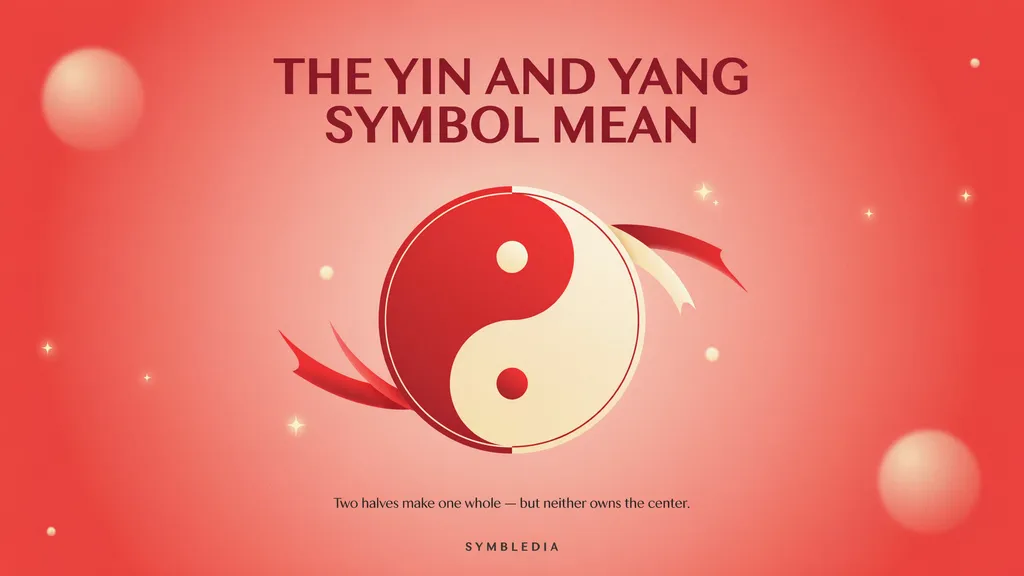
If you’ve ever seen a black-and-white circle divided into two swirling halves with a small dot in each side, you’ve probably wondered, what does the yin and yang symbol mean?
Some people wear it as jewelry. Others get it tattooed or use it as a profile picture on social media. It appears in movies, meditation spaces, fashion, and even everyday conversations about life and relationships.
The symbol is often simplified as “good versus evil,” but that explanation misses its true depth. In reality, yin and yang represent the idea that opposite forces exist together, depend on each other, and create harmony when balanced.
Understanding this ancient concept can change the way you view emotions, relationships, work, and even personal growth. Let’s explore its meaning in a simple, practical, and culturally respectful way.
What Does the Yin and Yang Symbol Mean? – Quick Meaning
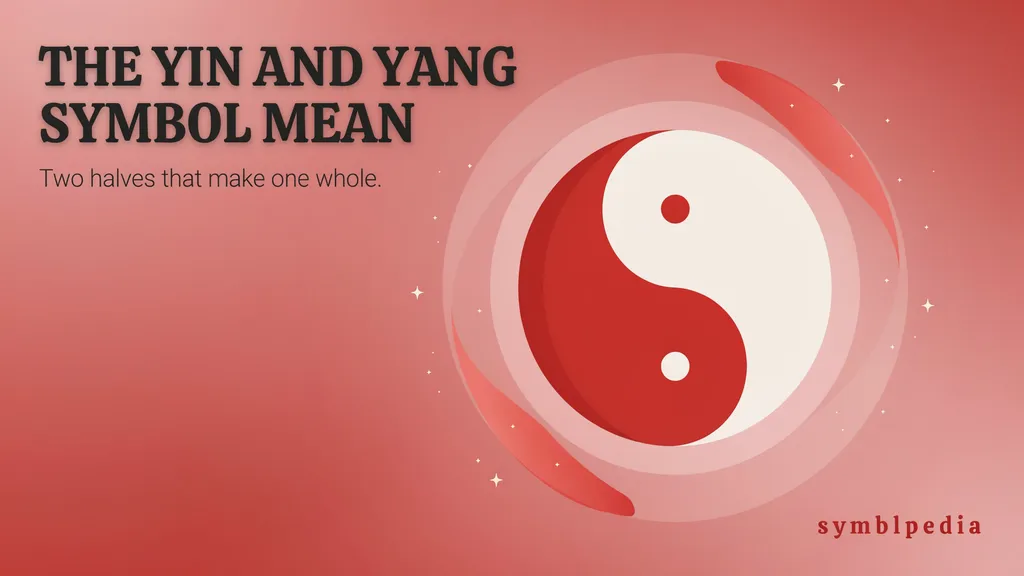
The yin and yang symbol represents the balance of opposite but connected forces in life.
Key meanings include:
- Balance instead of conflict
- Light and darkness existing together
- Strength and softness complementing each other
- Change as a natural part of life
- Harmony through accepting differences
Rather than showing two enemies fighting, the symbol teaches that opposite qualities need each other to exist.
Example quotes:
“You can’t appreciate the day without experiencing the night.”
“Sometimes resting is just as powerful as working harder.”
“Balance creates peace, not perfection.”
Origin & Background
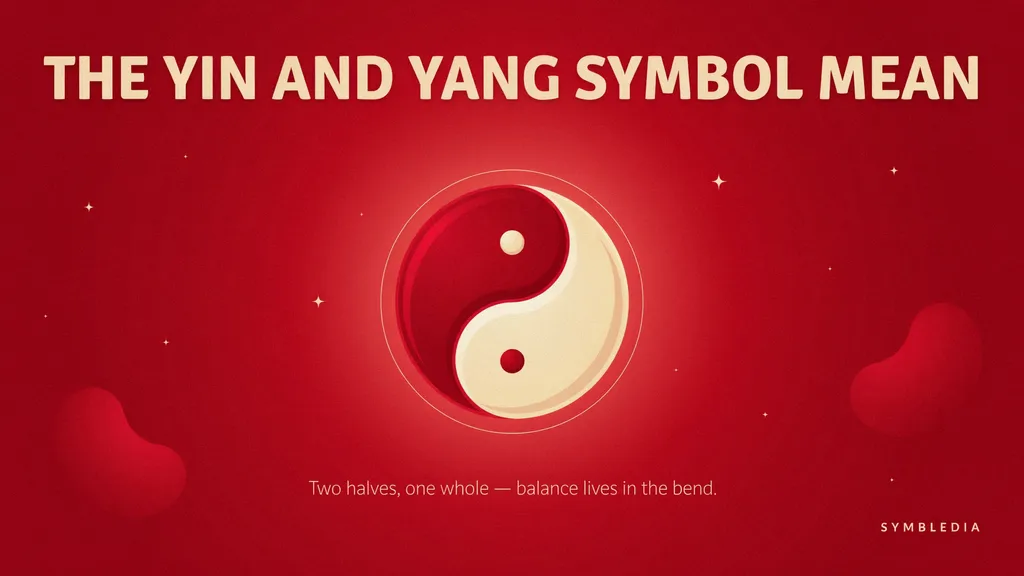
The yin and yang philosophy originated thousands of years ago in ancient China and became a fundamental concept in Chinese philosophy.
Originally, yin referred to the shaded side of a mountain, while yang described the sunny side. Over time, these natural observations evolved into a way of understanding the entire universe.
Traditional associations include:
Yin
- Night
- Moon
- Water
- Stillness
- Reflection
- Femininity
Yang
- Day
- Sun
- Fire
- Movement
- Action
- Masculinity
Neither side is considered better. Each gains meaning because the other exists.
Cultural Influence
Today, the symbol appears worldwide:
- Meditation and wellness communities
- Fashion and jewelry
- Psychology discussions
- Relationship advice
- Pop culture and entertainment
Many people also use it as a reminder to seek balance instead of chasing extremes.
Real-Life Conversations
WhatsApp Chat
Person A:
I’ve been working nonstop for two weeks.
Person B:
You need some yin and yang in your life. Rest is productive too.
Person A:
You’re right. I’m taking tomorrow off.
Instagram DM
Person A:
How are you always so calm?
Person B:
I try to balance busy days with quiet moments. Total yin and yang energy.
Person A:
I seriously need to learn that.
TikTok Comments
User 1:
This couple is complete yin and yang.
User 2:
Exactly! One is loud, one is quiet, but they somehow work perfectly.
Text Message
Friend 1:
I’m emotional today.
Friend 2:
And yesterday you were all logic. That’s life—yin and yang.
Friend 1:
That’s actually comforting.
Emotional & Psychological Meaning
Beyond philosophy, yin and yang speak to everyday human emotions.
Many people feel pressure to stay strong all the time, always be productive, or constantly appear happy. The yin and yang concept reminds us that vulnerability and strength can exist together.
Feeling sadness doesn’t erase joy.
Being quiet doesn’t mean lacking confidence.
Taking a break doesn’t mean giving up.
A Personal-Style Scenario
Imagine preparing for an important presentation.
You spend days researching, practicing, and organizing every detail. The night before, instead of studying until midnight, you decide to sleep early.
That decision reflects yin and yang thinking—recognizing that action and rest work together to produce your best performance.
Instead of chasing perfection, you’re creating balance.
Usage in Different Contexts
Social Media
People often use the symbol in captions about:
- Self-care
- Mental wellness
- Relationships
- Spiritual growth
- Personal transformation
Example:
“Learning that hustle and healing can coexist. ☯”
Friends & Relationships
The phrase often describes people with opposite personalities.
Examples:
- Introvert and extrovert
- Planner and spontaneous friend
- Calm partner and energetic partner
The idea is that differences can strengthen a relationship rather than weaken it.
Work & Professional Settings
The concept can describe healthy workplace balance.
Examples include:
- Creativity and structure
- Leadership and teamwork
- Speed and accuracy
- Innovation and tradition
Using the philosophy thoughtfully can encourage collaboration and reduce conflict.
Casual vs Serious Tone
Casually, someone might say:
“We’re total yin and yang.”
In a deeper discussion, it may refer to:
- Life philosophy
- Emotional intelligence
- Mindfulness
- Personal development
The context changes the depth of the meaning.
When NOT to Use It
Although widely recognized, there are situations where using the symbol may not be appropriate.
Avoid oversimplifying it
Calling it simply “good versus evil” ignores its actual philosophical meaning.
Respect cultural significance
For many people, yin and yang is more than a trendy design. It represents centuries of philosophical and cultural tradition.
Don’t use it to justify unhealthy situations
Balance doesn’t mean accepting harmful behavior.
For example:
“He’s mean sometimes but nice sometimes—that’s just yin and yang.”
This misunderstands the concept. The philosophy promotes harmony, not tolerating abuse or disrespect.
Common Misunderstandings
Myth 1: Yin is bad and yang is good
Reality: Both are equally valuable and necessary.
Myth 2: Opposites always fight
Reality: The philosophy teaches cooperation rather than competition.
Myth 3: Balance means being exactly equal all the time
Reality: Balance changes constantly, just like nature changes through seasons.
Myth 4: It’s only a spiritual symbol
Reality: Many people apply it to psychology, relationships, leadership, and everyday decision-making.
Comparison Table
| Expression | Main Meaning | Tone | Typical Use |
|---|---|---|---|
| Yin and Yang | Balance of complementary opposites | Thoughtful | Life, relationships, philosophy |
| Opposites Attract | Different personalities connect | Romantic | Dating and friendships |
| Work-Life Balance | Healthy division of responsibilities | Professional | Career discussions |
| Give and Take | Mutual compromise | Practical | Relationships and teamwork |
| Black and White Thinking | Seeing only extremes | Critical | Psychology and decision-making |
Key Insight
The biggest difference is that yin and yang doesn’t separate life into winners and losers. Instead, it suggests that contrasting qualities support each other and create harmony when understood together.
How to Respond When Someone Uses It
Casual Replies
- “That’s actually a great way to look at it.”
- “Life really is about balance.”
Funny Replies
- “So you’re saying my coffee and sleep schedule are yin and yang?”
- “My weekend plans finally make philosophical sense.”
Mature Replies
- “Different perspectives often create stronger solutions.”
- “Balance is something I’m still learning.”
Respectful Replies
- “I appreciate that viewpoint.”
- “It’s a meaningful reminder that opposites can work together.”
Regional & Cultural Usage
Western Culture
Many people associate yin and yang with mindfulness, wellness, meditation, and personal growth.
The symbol is often used to represent finding balance in busy modern lifestyles.
Asian Culture
Its roots are deeply connected to traditional Chinese philosophy and continue to influence ideas about health, nature, relationships, and everyday living.
Many people view it as a guiding principle rather than just a decorative image.
Middle Eastern Culture
The symbol is generally recognized through global media, education, and wellness communities.
It is often appreciated as a philosophical idea about harmony while coexisting alongside local cultural and religious traditions.
Global Internet Usage
Online, people use “yin and yang” to describe:
- Complementary friendships
- Opposite personalities
- Balanced lifestyles
- Mental health journeys
- Relationship dynamics
The phrase has become part of everyday digital language.
Gen Z vs Millennials
Gen Z
Often uses the phrase humorously or aesthetically in captions, memes, and personality discussions while still appreciating its message of balance.
Millennials
More commonly connect it with mindfulness, wellness, work-life balance, and long-term personal growth.
Is It Safe for Kids?
Yes.
The yin and yang symbol generally represents balance, harmony, and coexistence, making it suitable for children when explained appropriately.
Parents and educators can use it to teach valuable lessons about:
- Respecting differences
- Managing emotions
- Balancing study and play
- Understanding that people can have multiple feelings at once
Providing cultural context helps children appreciate its historical significance rather than seeing it as just a trendy design.
Frequently Asked Questions
What does the yin and yang symbol actually mean?
It represents the balance and interdependence of opposite forces that work together to create harmony.
Is yin bad and yang good?
No. Neither side is superior. Both are necessary and meaningful.
Why does each side contain a small dot?
The dots symbolize that every force contains the seed of its opposite, showing that change is always possible.
Why do people wear yin and yang jewelry?
Many wear it as a reminder to seek balance, inner peace, and acceptance of life’s natural contrasts.
Is the symbol religious?
It is primarily a philosophical concept rooted in ancient Chinese thought, though it has influenced various cultural and spiritual traditions.
Can yin and yang describe relationships?
Yes. It often describes two people whose different personalities complement each other and create harmony.
Why is the symbol still popular today?
Its message remains timeless. In a fast-moving world filled with extremes, the idea of balance continues to resonate across cultures and generations.
Conclusion
Understanding what the yin and yang symbol means goes far beyond recognizing a famous black-and-white circle.
It represents a powerful reminder that life isn’t about choosing one side over another. Rest supports ambition. Kindness strengthens courage. Reflection improves action. Differences don’t always divide us—they often complete us.
Whether you encounter the symbol in philosophy, social media, relationships, or personal growth, its central message remains surprisingly practical: harmony comes from embracing balance rather than chasing perfection.
That’s why this ancient symbol continues to inspire millions of people looking for a calmer, wiser, and more connected way to live.
descover more post
Apollo Symbol Meaning The Powerful Message Behind …
Irritant Symbol Meaning What It Really Means and Why It …
Ohm Symbol and Meaning Understanding Ω Its History and …

Kavon is a passionate content creator and digital researcher who specializes in decoding symbols, meanings, and modern internet language. With a strong focus on clarity and authenticity, Kavon writes in a way that makes complex ideas simple, relatable, and useful for everyday readers.
Known for a hardworking mindset and attention to detail, Kavon is dedicated to creating content that genuinely helps people understand the deeper meanings behind words, signs, and online expressions. Every article is crafted with care, combining research, real-life insight, and a reader-first approach.
Through Symblpedia, Kavon aims to build a trusted space where curiosity meets clarity—helping users find answers that are not only accurate but also meaningful and easy to understa