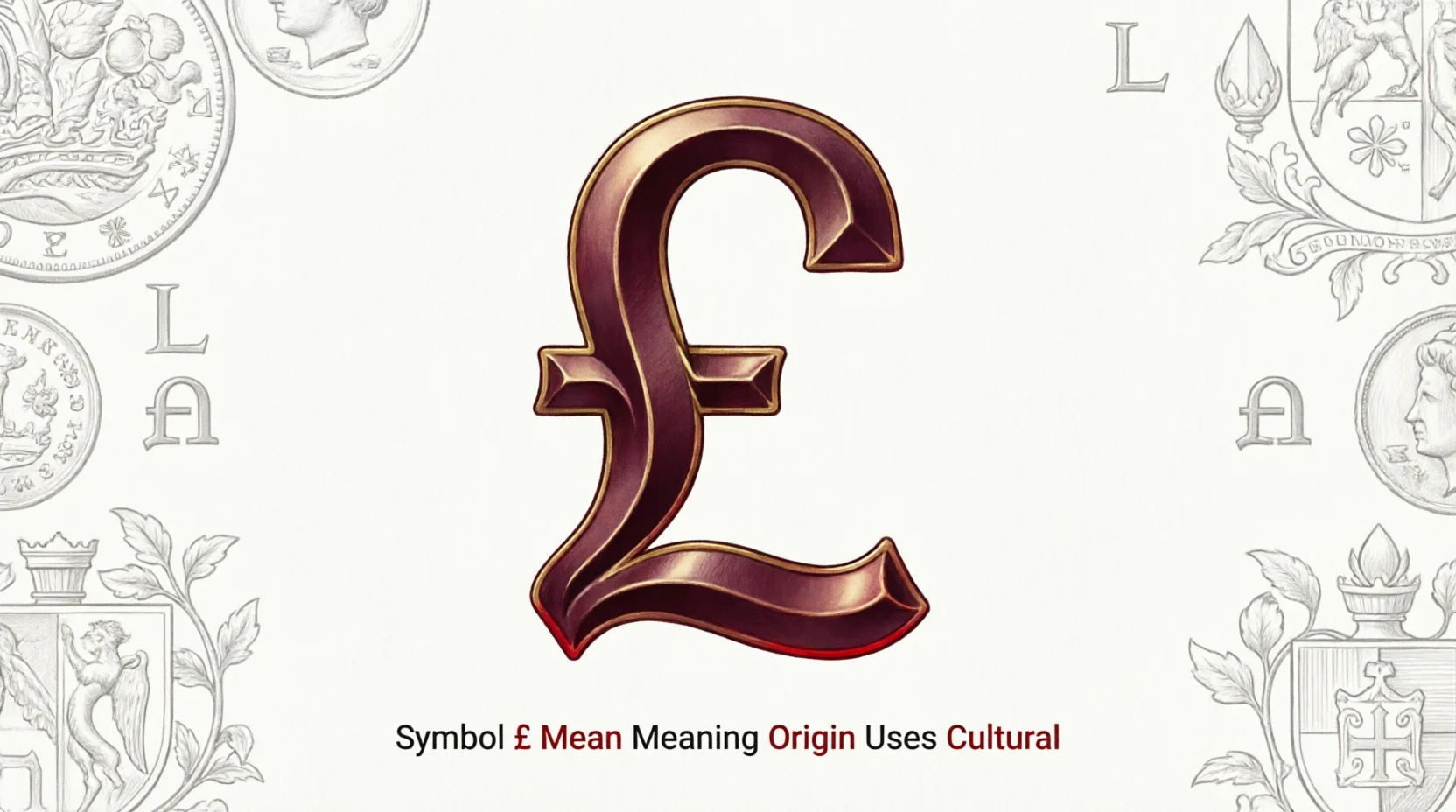
If you have ever seen £20, £100, or a price written as £9.99, you may have wondered, “What does the symbol £ mean?”
The answer is simple: £ is the currency symbol most commonly used for the British pound, officially called pound sterling. It appears on price tags, bank statements, websites, menus, invoices, advertisements, and everyday messages about money.
For example, if someone writes £50, they generally mean fifty British pounds.
But the story behind this small symbol is more interesting than it first appears. The £ sign has centuries of history and is connected to an old unit of weight, accounting traditions, and the Latin word libra.
Understanding the symbol can also prevent confusion when you are shopping online or communicating with someone from another country. A person might write “£30” while another writes “30 GBP,” and both can refer to the same currency.
So, what does the symbol £ really mean, where did it come from, and how is it used today? Let’s take a closer look.
What Does the Symbol £ Mean? Quick Meaning
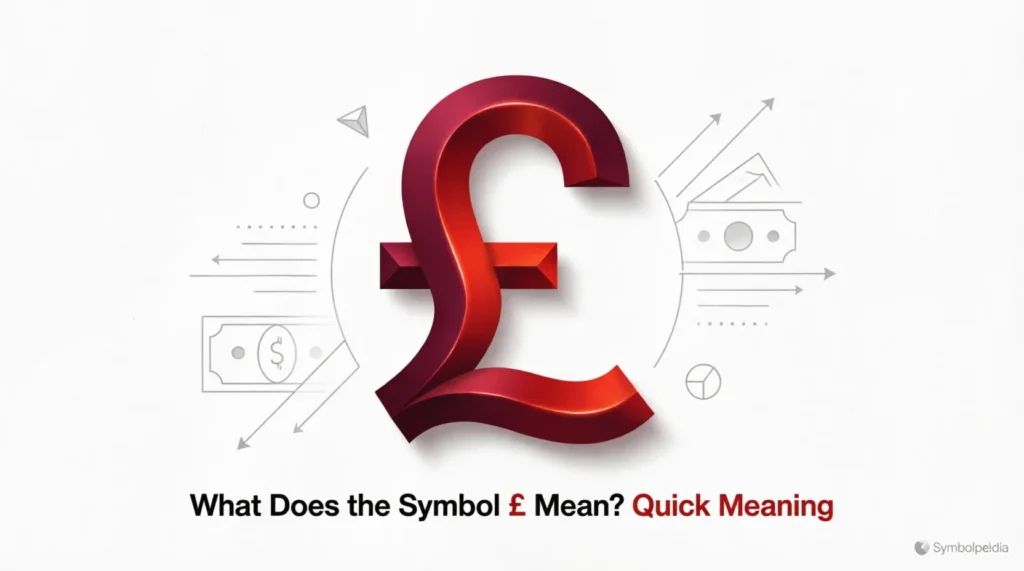
The £ symbol represents pounds, most commonly the British pound sterling, the official currency of the United Kingdom.
Here is the quick explanation:
- £ = pound currency symbol
- £1 = one pound
- £10 = ten pounds
- £50 = fifty pounds
- GBP = international currency code for the British pound
- Pound sterling = the official name of the UK currency
You may see it before a number:
“The shirt costs £25.”
Or in a casual message:
“I only have £10 left.”
Someone might also write:
“Can you lend me £20?”
In these examples, the symbol simply tells you that the amount is measured in pounds.
One important detail is that £ does not always mean exactly the same currency in every historical or international context. Several currencies have used “pound” as their name, although modern everyday use of £ is strongly associated with the United Kingdom.
Origin and Background of the £ Symbol
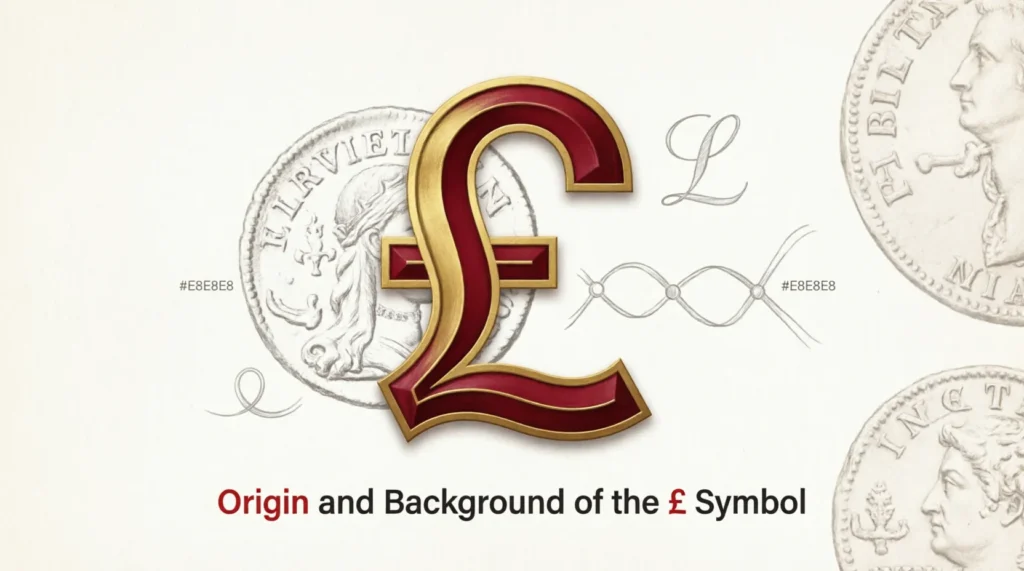
The history of the pound sign goes much further back than modern British shopping.
The word pound has an old connection with weight. In Latin, the word libra referred to a unit of weight. This is also why the abbreviation lb is still used for pounds as a measurement in some English-speaking countries.
The monetary pound developed alongside older systems of accounting and weighing. In medieval England, the pound was associated with a specified quantity of silver, and the system eventually became an important part of British currency history.
The symbol £ is generally understood as developing from the letter L, representing libra. Over time, handwritten forms of the letter became more stylized, eventually producing the familiar crossed symbol used today.
You can think of it as an abbreviation that gradually became a symbol.
Why Does the £ Have a Horizontal Line?
The horizontal strokes in the symbol are part of its historical typographic development.
Different fonts and historical styles have represented the pound sign slightly differently. You may see a version that looks like £, while older typefaces or certain fonts can make it appear somewhat different.
The important point is that the shape developed from the traditional abbreviation associated with the pound rather than being an arbitrary modern logo.
The Pound and British Culture
The British pound has become strongly connected with the economic and cultural identity of the United Kingdom.
You see £ everywhere in British life: in supermarket prices, restaurant menus, salaries, advertisements, train fares, online stores, and financial news.
Even when people do not write the words “British pounds,” the symbol usually makes the meaning immediately clear.
For example:
£4.50 coffee
£1,800 monthly rent
£35 concert ticket
The symbol makes the monetary context obvious without requiring a full sentence.
The Symbol in the Digital Age
The meaning of £ has remained remarkably stable despite changes in communication.
In newspapers, people may see:
“The company invested £2 million.”
On social media, someone might post:
“Spent £40 on dinner 😂”
In an online store:
“£79.99”
In a text message:
“Can you send me £15?”
The format changes, but the basic meaning remains the same.
Real-Life Conversations Using £
Sometimes the easiest way to understand a symbol is to see how people naturally use it.
WhatsApp Conversation
Person A: How much was the jacket?
Person B: £60, but it was on sale.
Person A: That’s actually not bad.
Here, £60 simply means sixty British pounds.
Instagram DM
Person A: Are you going to the concert?
Person B: I want to, but the tickets are £85 😭
Person A: Wow. That’s expensive.
The symbol communicates the price quickly without saying “eighty-five British pounds.”
TikTok Comments
Person A: How much did the whole setup cost?
Person B: Around £500.
Person A: Okay, I definitely need to start saving 😂
The £ symbol is particularly useful in short online conversations because it saves space and makes the amount immediately recognizable.
Text Message
Person A: I ordered the food. It was £24 altogether.
Person B: Perfect. I’ll send you £12.
Person A: Thanks!
In this situation, the symbol helps people discuss splitting a bill without repeating the word “pounds.”
Emotional and Psychological Meaning of £
The £ symbol does not have an emotional meaning by itself. It is fundamentally a currency symbol.
However, people can attach strong emotions to the amounts represented by it.
Think about the difference between seeing:
£5
and:
£5,000
The symbol is identical, but the psychological reaction can be completely different.
A small amount may feel insignificant, while a large amount can trigger excitement, worry, pressure, ambition, or even anxiety.
Money is deeply connected with everyday decisions, so the £ symbol can indirectly become associated with feelings such as security, freedom, stress, achievement, or affordability.
For example, imagine checking your bank account after payday and seeing a healthy balance. The £ sign might feel reassuring.
Later, after several unexpected bills, the same symbol can represent something very different: “How am I going to pay for all of this?”
That emotional response does not come from the symbol itself. It comes from the personal meaning people attach to money.
This is one reason money-related symbols are so powerful in modern communication. A tiny character can instantly bring an entire financial situation to mind.
How the £ Symbol Is Used in Different Contexts
1. Social Media
On platforms such as Instagram, TikTok, Facebook, and X, people frequently use £ when discussing prices, shopping, salaries, travel, or personal spending.
Examples include:
“This dress was only £25!”
“I spent £30 on food today.”
“Tickets are £100 each.”
The symbol keeps posts short and easy to understand.
2. Friends and Relationships
Friends often use £ casually when discussing plans and shared expenses.
For example:
“Dinner is £18 each.”
“Can you lend me £10?”
“The hotel is £75 per person.”
There is usually nothing formal about this usage.
3. Work and Professional Settings
In professional communication, £ appears in invoices, budgets, contracts, salary information, financial reports, business proposals, and advertisements.
For example:
“The project budget is £25,000.”
In formal documents, however, it can be helpful to specify GBP when international readers are involved.
For example:
£25,000 (GBP)
This removes uncertainty for readers who may be unfamiliar with the currency symbol.
4. Casual vs. Serious Communication
The symbol works equally well in casual and formal contexts.
Casual:
“I only spent £12.”
Professional:
“The estimated annual cost is £12,000.”
The surrounding language determines the tone, not the £ symbol itself.
When NOT to Use the £ Symbol
There are situations where using £ without clarification can cause confusion.
When the Audience Is International
If you are communicating with people from several countries, do not automatically assume everyone knows which pound you mean.
Writing:
“The fee is £500.”
may be perfectly clear to a British reader but less clear to an international audience.
In an international business context, £500 GBP can be more precise.
When Discussing Historical Currency
Historical references can be complicated because the value and meaning of a pound changed over time.
If you are discussing old British prices, avoid assuming that an amount from centuries ago has the same purchasing power as the same numerical amount today.
When Confusing Currency With Weight
The word “pound” can refer to both money and weight in different contexts.
The symbol £, however, indicates currency rather than a measurement of weight.
For example:
£10 means ten pounds of currency.
It does not mean ten pounds of physical weight.
When a Different Currency Is Intended
Do not use £ simply because a currency is called a “pound.”
For example, the Egyptian pound and Lebanese pound are different currencies with their own conventions and codes.
Always check the actual currency when precision matters.
Common Misunderstandings About £
Is £ the Same as GBP?
Not exactly, but they normally refer to the same currency when discussing the UK.
£ is the symbol.
GBP is the internationally recognized three-letter currency code for the British pound.
So:
£50
and
50 GBP
can represent the same amount.
Does £ Mean British Money Only?
In modern everyday usage, £ is overwhelmingly associated with the British pound sterling.
Historically and in some other contexts, the pound name has been used for other currencies, so context still matters.
Is £ the Same as “Quid”?
No.
Quid is an informal British term for a pound.
Someone might say:
“It costs ten quid.”
That normally means:
“It costs £10.”
“Quid” is a word used in conversation, while £ is a written currency symbol.
Is the £ Symbol a Letter?
The modern £ sign is a currency symbol, although its historical development is connected with the letter L and the Latin word libra.
Does £ Mean Wealth?
Not by itself.
The symbol only represents a unit of currency. Ideas about wealth, luxury, poverty, or financial success come from the amount and context surrounding it.
£ Compared With Other Currency Symbols and Terms
| Symbol or Term | Meaning | Common Use |
|---|---|---|
| £ | Pound currency symbol | UK prices and amounts |
| GBP | British pound currency code | Banking and international finance |
| $ | Dollar symbol | US dollars and several other dollar currencies |
| € | Euro symbol | Eurozone currencies |
| ¥ | Yen/Yuan symbol | Japanese yen and Chinese yuan contexts |
| ₹ | Indian rupee symbol | Indian currency |
| quid | Informal word for one pound | Casual British conversation |
| pound sterling | Official name of UK currency | Formal and financial contexts |
Key Insight
The most important distinction is between a symbol, a currency code, and a spoken expression. £ is a symbol, GBP is a standardized code, and “quid” is informal British vocabulary. They can point to the same currency while serving completely different communication purposes.
How to Respond When Someone Uses £
If someone sends you a message containing the £ symbol, your response depends on the conversation.
Casual Replies
“That sounds reasonable.”
“How much is that per person?”
“Okay, I’ll send it over.”
Funny Replies
“My wallet just cried 😂”
“£100?! I need a minute.”
“And suddenly I’m interested in staying home 😂”
Mature Replies
“Thanks for letting me know. I’ll check the amount.”
“That works for me.”
“I’ll transfer my share today.”
Respectful Replies
“Could you confirm whether that amount is in GBP?”
“Thanks. Could you send me the full price?”
The key is not to overthink the symbol. If the amount or currency is unclear, simply ask.
Regional and Cultural Usage
Western Culture
In the UK and other Western English-speaking environments, £ is immediately recognizable as a pound-related currency symbol.
British consumers see it constantly in everyday life, from supermarket shelves to online shopping.
Asian Culture
In Asian countries, people are generally familiar with £ because of international commerce, travel, education, online shopping, and media.
However, local currencies such as ₹, ¥, ₩, or ৳ may be more familiar in everyday domestic communication.
Middle Eastern Culture
People in Middle Eastern countries may encounter £ frequently when dealing with British businesses, education, tourism, international payments, or online services.
However, local currencies and their symbols or abbreviations remain more relevant for domestic transactions.
Global Internet Usage
The internet has made currency symbols increasingly international.
Someone in one country can easily encounter a UK website displaying:
£79.99
Even if they understand the symbol, they may still need to convert the amount into their own currency before deciding whether the purchase is affordable.
Gen Z vs. Millennials
Younger users often mix symbols, abbreviations, emojis, and slang naturally.
For example:
“£20 for that?? 😭”
A more formal user might write:
“The price is £20.”
The meaning is identical. The difference is primarily tone and communication style.
Is the £ Symbol Safe for Kids?
Yes. The £ symbol itself is completely harmless and simply represents currency.
Children may encounter it while learning mathematics, shopping with parents, playing educational games, or reading prices online.
The more important lesson for younger users is understanding that a price represents real money and that online prices may not include every possible fee, tax, delivery charge, or currency-conversion cost.
Parents and teachers can use everyday examples such as £2, £5, and £10 to teach basic budgeting and financial awareness.
FAQs About the £ Symbol
What does the £ symbol mean?
The £ symbol represents a pound currency, most commonly the British pound sterling, the official currency of the United Kingdom.
What is the difference between £ and GBP?
£ is the currency symbol, while GBP is the internationally standardized three-letter code for the British pound.
Why does the pound have the £ symbol?
The symbol developed historically from the letter L, associated with the Latin word libra, which was connected with a unit of weight and later monetary accounting.
What does £20 mean?
£20 means twenty British pounds when the symbol is being used for pound sterling.
What does “quid” mean compared with £?
“Quid” is an informal British word for a pound. Saying “ten quid” generally means £10.
Is £ the same as a dollar?
No. £ and $ represent different currencies. The pound sterling and US dollar are separate currencies with exchange rates that can change over time.
Can £ be used in international communication?
Yes, but adding GBP can make the meaning clearer when your audience includes people from different countries.
Conclusion
The £ symbol may look like a simple character, but it carries a long history.
Today, its most familiar meaning is straightforward: £ represents the British pound sterling. You will see it in prices, salaries, invoices, online stores, messages, advertisements, and everyday conversations.
Its history is even more fascinating. The symbol is traditionally connected with libra, an old Latin term associated with weight and accounting, and its shape developed over centuries into the form people recognize today.
In modern communication, £ is useful because it delivers financial information instantly. Whether someone writes “£15,” “£500,” or “£10k,” the reader can immediately understand that the number refers to pounds in the appropriate context.
The best rule is simple: recognize £ as the pound symbol, but consider the context whenever accuracy matters. If your audience is international, adding “GBP” can remove uncertainty.
A tiny symbol can carry centuries of history—and the £ sign is a perfect example of how language, culture, commerce, and everyday communication can all meet in one character.
descover more post
What Does the Swirl Symbol Mean A Complete Guide to Its …
Japanese Symbol Meaning What Popular … – Symbl Pedia
What Does the Hammer Symbol Mean in Curling A Simple …