The swastik symbol meaning is one of the most searched—and misunderstood—topics in cultural symbolism today.
Some people associate it with peace and spirituality. Others immediately connect it with hatred and war. This deep contrast is exactly why so many people feel confused when they encounter it—especially in global conversations, social media posts, or even everyday life.
If you’ve ever paused and wondered, “Is this symbol good or bad?”—you’re not alone.
This article clears that confusion.
We’ll explore what the swastik truly means, where it comes from, how its meaning changed over time, and how people use (or avoid) it today. Most importantly, you’ll understand when it’s appropriate and when it’s not—so you can navigate this symbol with confidence and cultural awareness.
Swastik Symbol Meaning – Quick Meaning
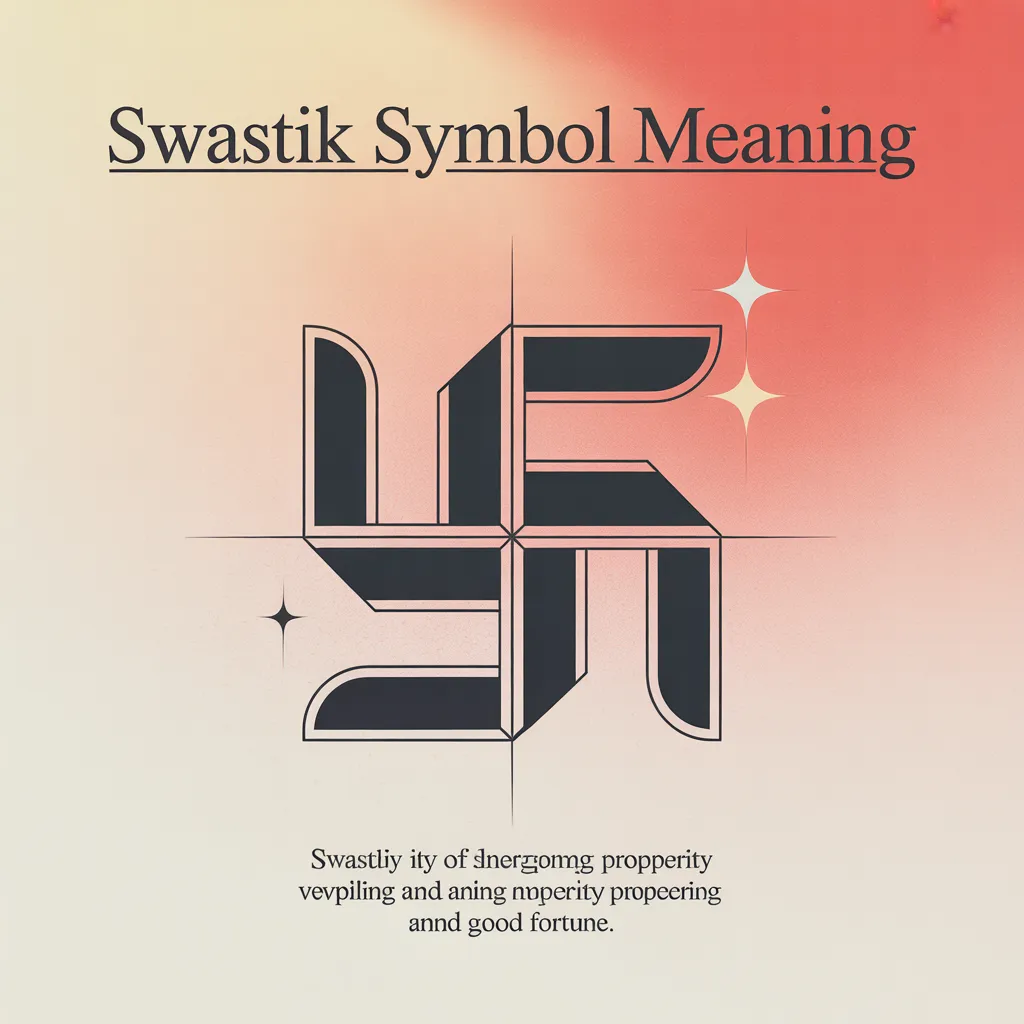
At its core, the swastik is an ancient symbol of positivity, prosperity, and well-being.
Simple definition:
- A geometric symbol with arms bent at right angles
- Traditionally represents good luck, harmony, and divine energy
- Used for thousands of years across multiple cultures
Key meanings:
- Prosperity and success
- Spiritual balance
- Protection from negativity
- Cycles of life and time
Real-life interpretations:
“It’s a symbol of blessings and good beginnings.”
“In our culture, it means peace and positivity.”
“It represents good fortune—not what people think today.”
Origin & Background
The swastik is not a modern invention—it dates back over 5,000 years.
Where it came from:
- Ancient India (especially in Hinduism, Buddhism, and Jainism)
- Found in early civilizations across Asia, Europe, and even Native American cultures
In Sanskrit, “swastika” means:
“that which brings good fortune”
Cultural influence:
- In South Asia, it’s still widely used in:
- Weddings
- Religious rituals
- Home entrances
- In Buddhism, it symbolizes eternal harmony
- In Jainism, it represents the cycle of life
How meaning changed
The turning point came in the 20th century.
The symbol was appropriated and misused during World War II, which permanently altered its perception in Western societies.
Social media impact today:
- People often react emotionally without knowing its history
- Cultural misunderstandings spark debates online
- Younger generations are rediscovering its original meaning
Today, the symbol carries dual meanings depending on cultural context.
Real-Life Conversations
WhatsApp Chat
Person A:
Why is there a swastik on your house door?
Person B:
It’s for blessings. We use it during festivals—it’s not what you think.
Instagram DMs
Person A:
I saw your post and got confused… isn’t that symbol offensive?
Person B:
I understand why you’d think that, but in our culture it means peace and prosperity.
TikTok Comments
User1:
Why are people normalizing that symbol??
User2:
Not everything is what you think. It has a much older, positive meaning.
Text Message
Friend:
Hey, I noticed that symbol in your art. Is it intentional?
Artist:
Yes, I’m exploring its original meaning—before it was misused.
Emotional & Psychological Meaning
Symbols carry emotional weight—and the swastik is a powerful example of how meaning can shift over time.
Emotion it expresses:
- Hope
- Protection
- Stability
- Spiritual grounding
Why people still use it:
- Cultural identity
- Religious tradition
- Reclaiming its original meaning
What it reveals about modern communication:
We live in a world where symbols travel faster than context.
A single image can trigger:
- Pride in one culture
- Pain in another
Personal-style scenario
Imagine visiting a friend’s home for the first time.
You notice a swastik drawn near the entrance. For a moment, you feel uncomfortable.
But then they explain:
“It’s for blessings—it’s been part of our family tradition for generations.”
That moment shifts everything.
It reminds us how understanding changes perception.
Usage in Different Contexts
1. Social Media
- Often misunderstood
- Can spark controversy quickly
- Requires context or explanation
2. Friends & Relationships
- Safe when both understand its meaning
- Risky in diverse groups
3. Work / Professional Settings
- Generally avoided globally
- May be inappropriate in international environments
4. Casual vs Serious Tone
- Casual: Used culturally without explanation
- Serious: Requires sensitivity and awareness
When NOT to Use It
Avoid using the swastik:
- In international or mixed-cultural spaces
- Without context or explanation
- In professional or corporate environments
- In discussions related to sensitive historical topics
Why?
Because meaning is not just about intention—it’s about how it’s received.
Common Misunderstandings
1. “It only represents hate”
Not true—it originally symbolized positivity.
2. “All swastiks are the same”
Different orientations and styles exist across cultures.
3. “Using it always means support for negative ideology”
Context matters more than the symbol alone.
4. Tone confusion
What feels normal in one culture may feel offensive in another.
Comparison Table
| Expression/Symbol | Meaning | Context |
|---|---|---|
| Swastik (traditional) | Good luck, prosperity | Religious/cultural |
| Hate-associated version | Extremism, ideology | Historical misuse |
| Peace symbol ☮️ | Harmony, anti-war | Global |
| Om symbol | Spiritual unity | Hinduism/Buddhism |
| Yin-Yang | Balance | Chinese philosophy |
Key Insight
The same shape can carry completely different meanings depending on history, culture, and intent. Understanding context is everything.
How to Respond When Someone Uses It
Casual replies
- “Oh, I didn’t know that meaning—interesting.”
- “That’s new to me, thanks for explaining.”
Funny replies
- “Google really didn’t prepare me for this one 😅”
- “Okay, that symbol has layers!”
Mature replies
- “I understand the cultural meaning now. Context really matters.”
Respectful replies
- “Thanks for sharing the background—I appreciate the insight.”
Regional & Cultural Usage
Western Culture
- Mostly associated with negative history
- Strong emotional reactions
Asian Culture
- Seen as sacred and positive
- Still widely used in daily life
Middle Eastern Culture
- Mixed awareness
- Often influenced by Western perception
Global Internet Usage
- Highly sensitive
- Context often lost
Generational Differences
Gen Z:
- Curious and open to learning
- More likely to research meaning
Millennials:
- More cautious
- Influenced by historical education
Is It Safe for Kids?
Yes—but with guidance.
Children should learn:
- The original meaning
- The historical misuse
- Why context matters
Teaching both sides helps build awareness, not confusion.
FAQs
1. What does the swastik symbol originally mean?
It means good luck, prosperity, and well-being in ancient cultures.
2. Why is it controversial?
Because it was misused in the 20th century, changing its perception globally.
3. Is it still used today?
Yes, especially in religious and cultural contexts in Asia.
4. Are all swastiks the same?
No, design and orientation can differ in meaning.
5. Can I use it on social media?
Only with clear context—otherwise it may be misunderstood.
6. Is it a religious symbol?
Yes, in Hinduism, Buddhism, and Jainism.
7. Why do people defend its use?
Because of its ancient, positive origins.
Conclusion
The swastik symbol meaning is a powerful reminder that symbols are not fixed—they evolve with history, culture, and human experience.
What once stood purely for good fortune and harmony became one of the most misunderstood symbols in modern times.
But understanding its full story changes how we see it.
Not everything is black and white.
When you approach symbols like this with awareness and empathy, you don’t just avoid misunderstandings—you build deeper cultural respect.
And in today’s connected world, that matters more than ever.
descover more post
Expiry Date Symbol Meaning What It Really Says About Time …
Cancer Zodiac Symbol Meaning The Hidden Power Behind …
What Does Zeus Symbol Mean in Text Real … – Symbl Pedia