The phrase “Lamb of God” carries a quiet weight. It sounds gentle, almost poetic—but behind it lies centuries of meaning, emotion, and spiritual depth.
People search for the lamb of god symbol meaning for different reasons. Some come across it in religious texts. Others notice it in tattoos, art, or jewelry. And many simply feel curious—what does this peaceful image really represent?
The confusion usually comes from its simplicity. A lamb feels soft, innocent, harmless. So how did it become one of the most powerful symbols in spiritual history?
This article clears that confusion. It breaks down the meaning in a way that feels real—not academic, not distant. Just clear, human understanding.
Lamb of God – Quick Meaning
At its core, the Lamb of God symbolizes:
- Innocence and purity
- Sacrifice for others
- Forgiveness and redemption
- Spiritual protection and divine love
In simple terms, it represents someone who gives themselves for the greater good.
Simple Examples
“He forgave them even after everything… like a lamb of God.”
“That tattoo isn’t random—it’s about sacrifice and faith.”
“She carries that calm strength… reminds me of the Lamb of God.”
Origin & Background
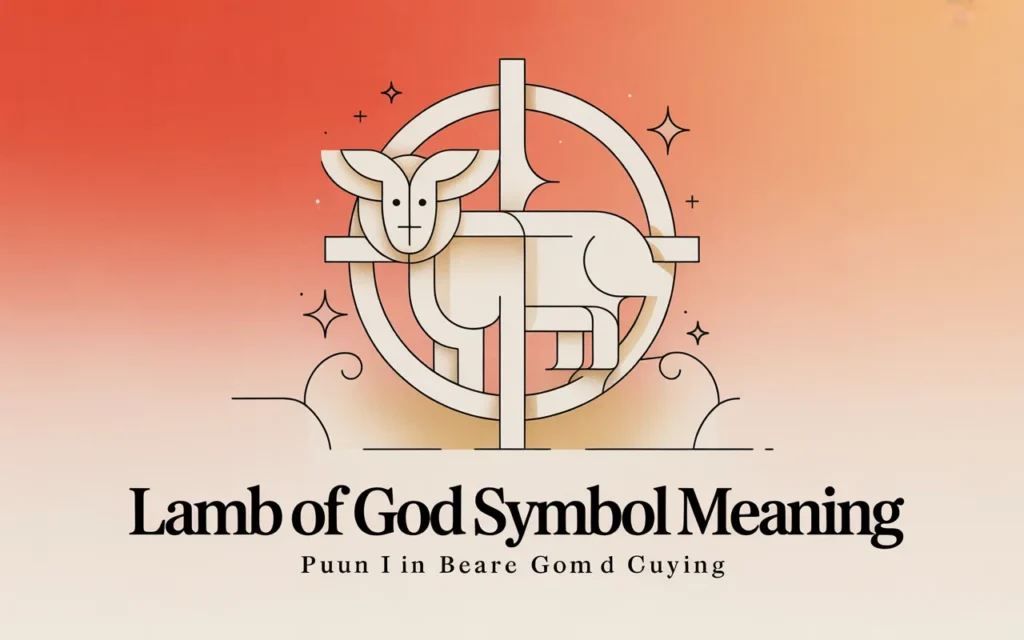
The symbol of the Lamb of God has deep roots in ancient religious tradition, especially within Christianity.
It comes from the idea of sacrifice. In early rituals, lambs were offered as a sign of devotion, purity, and seeking forgiveness. Over time, this image evolved into something more symbolic rather than literal.
The “lamb” became a representation of ultimate innocence—someone who takes on suffering not because they deserve it, but because they choose to.
Cultural Influence
As time passed, this symbol moved beyond religious texts into:
- Paintings and classical art
- Church architecture
- Jewelry and tattoos
- Modern storytelling
Even people who aren’t religious recognize it as a symbol of peace, sacrifice, and moral strength.
Social Media Impact
Today, the phrase appears in captions, quotes, and comments—often used metaphorically.
People use it to describe:
- Someone kind in a harsh world
- A person who sacrifices too much
- Quiet strength and emotional resilience
Its meaning has expanded while still holding its original depth.
Real-Life Conversations
WhatsApp Chat
Person A:
Why didn’t you say anything when they blamed you?
Person B:
I didn’t want to make it worse.
Person A:
You’re acting like a lamb of God… not everyone deserves that patience.
Instagram DMs
Person A:
That tattoo on your arm—what does it mean?
Person B:
It’s the Lamb of God. For me, it’s about staying kind even when it’s hard.
TikTok Comments
User1:
He stayed calm the whole time… respect.
User2:
Real lamb of God energy.
Text Message
Person A:
You always forgive people too easily.
Person B:
Maybe. I just don’t like holding anger.
Person A:
That’s rare these days.
Emotional & Psychological Meaning
The Lamb of God symbol connects deeply with human emotions.
It reflects:
- The desire to stay kind in a harsh world
- The struggle between strength and softness
- The quiet courage of forgiveness
Psychologically, people are drawn to this symbol because it represents something many feel but struggle to express—choosing peace over revenge.
A Real-Life Scenario
Imagine someone being repeatedly misunderstood at work. Instead of reacting with anger, they remain calm, patient, and forgiving.
To some, that looks like weakness.
But in reality, it’s emotional control—and that’s where the Lamb of God symbolism lives.
It’s not about being passive.
It’s about choosing who you want to be, even under pressure.
Usage in Different Contexts
Social Media
People use it in captions to express:
- Emotional depth
- Inner peace
- Spiritual identity
Example:
“Staying soft in a hard world. Lamb of God energy.”
Friends & Relationships
It can describe someone who:
- Forgives easily
- Avoids conflict
- Shows unconditional kindness
Sometimes it’s admiration.
Sometimes it’s gentle criticism.
Work / Professional Settings
Here, usage is rare and should be careful.
It might appear in deeper conversations about:
- Leadership through empathy
- Ethical decision-making
But casual use can feel out of place.
Casual vs Serious Tone
- Casual: Light metaphor, emotional expression
- Serious: Deep spiritual or moral meaning
Tone matters a lot.
When NOT to Use It
There are moments where using this phrase can feel inappropriate.
- During serious religious discussions without understanding context
- When mocking someone’s kindness
- In professional settings without clarity
- Around people who may see it as sacred
Respect matters more than clever wording.
Common Misunderstandings
Many people misunderstand the symbol.
1. It Means Weakness
Not true. It represents controlled strength, not helplessness.
2. It’s Only Religious
While it has religious roots, it’s now also a cultural and emotional symbol.
3. It Encourages Suffering
It doesn’t promote suffering—it highlights meaningful sacrifice.
4. It’s Outdated
In reality, it’s more relevant than ever in today’s emotionally reactive world.
Comparison Table
| Expression | Meaning | Tone |
|---|---|---|
| Lamb of God | Innocent sacrifice, purity | Deep, emotional |
| Martyr | Sacrifice for a cause | Serious |
| Soft-hearted | Kind and sensitive | Casual |
| Cold-hearted | Lacking empathy | Negative |
| Warrior mindset | Strength and resilience | Strong |
Key Insight
The Lamb of God stands apart because it blends strength with gentleness—something most modern expressions separate.
How to Respond When Someone Uses It
Casual Replies
- “Yeah, I just try to stay peaceful.”
- “Not always easy, but I try.”
Funny Replies
- “Guess I need horns sometimes too 😄”
- “Lamb today, lion tomorrow.”
Mature Replies
- “I believe kindness still matters.”
- “It’s about choosing peace, not weakness.”
Respectful Replies
- “That’s a beautiful way to see it.”
- “I respect that perspective.”
Regional & Cultural Usage
Western Culture
Strong religious roots. Often connected to Christianity, but also used metaphorically in everyday language.
Asian Culture
Less religious connection. More focus on symbolism—innocence, calmness, and emotional balance.
Middle Eastern Culture
Used with caution due to religious sensitivity. Symbolism of sacrifice exists but is interpreted differently.
Global Internet Usage
On the internet, it’s more symbolic than religious.
Used to describe:
- Kind personalities
- Emotional maturity
- Peaceful behavior
Generational Differences
Gen Z:
Uses it metaphorically, often in emotional or aesthetic contexts
Millennials:
More likely to understand both religious and symbolic meaning
Is It Safe for Kids?
Yes—with context.
The symbol itself is gentle and positive. However, explaining it properly matters. Kids should understand it as:
- A story about kindness
- A lesson in empathy
- Not something confusing or heavy
FAQs
1. What does Lamb of God mean in simple words?
It means innocence, sacrifice, and choosing kindness even in difficult situations.
2. Is it only a religious term?
No. While it started religiously, it’s now also used symbolically in everyday language.
3. Why do people use it in conversations?
To describe someone who is calm, forgiving, and emotionally strong.
4. Is it a positive or negative phrase?
Mostly positive, though sometimes used to suggest someone is too forgiving.
5. Can it be used casually?
Yes, but tone and context matter.
6. Why is it still popular today?
Because people value emotional intelligence and kindness more than ever.
Conclusion
The lamb of god symbol meaning goes far beyond a simple image. It’s about something deeply human—the choice to remain kind, even when it’s difficult.
In a world that often rewards loudness and reaction, this symbol quietly reminds us of another kind of strength.
Not aggressive.
Not defensive.
Just steady, calm, and intentional.
Understanding it isn’t just about knowledge—it’s about perspective.
And once you see it clearly, you start noticing it everywhere… in people, in moments, and maybe even in yourself.
descover more post
Pachamama Symbol Meaning The Deep Spiritual Message …
Hummingbird Symbol Meaning Deep Spiritual Emotional 2026
Neda Symbol Meaning What It Really Represents in Modern …