If you’ve ever come across a mysterious rune symbol and wondered what it really means, you’re not alone.
People search for rune symbol meaning for different reasons. Some are curious about ancient Norse culture. Others see these symbols on jewelry, tattoos, or even in social media bios and want to understand the deeper message behind them.
The confusion often comes from one thing: runes are not just letters. They carry layered meanings—spiritual, emotional, and even psychological.
This guide breaks it all down in a simple, human way—so you don’t just know what a rune means… you actually feel it.
Rune Symbol Meaning – Quick Meaning
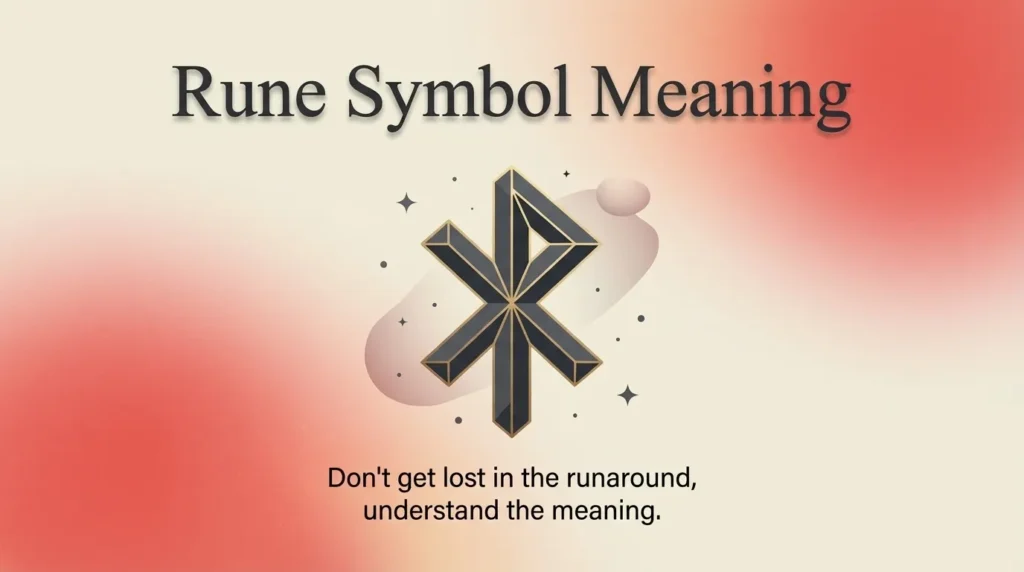
At its core, a rune symbol is:
- An ancient character from early Germanic alphabets
- A symbol that represents sound + meaning + energy
- Often used for guidance, protection, or expression
Unlike modern alphabets, each rune carries a deeper idea.
Simple examples:
“This rune means strength—not just physical, but inner resilience.”
“That symbol represents change, like life shifting directions.”
“Some people wear runes as protection, like a quiet shield.”
Think of runes as symbols that speak without words.
Origin & Background
Runes date back over 1,500 years, primarily used by Germanic and Norse societies.
They were part of alphabets like the Elder Futhark, used across Scandinavia and parts of Europe.
But here’s what makes them fascinating:
They weren’t just used for writing.
They appeared on:
- Weapons
- Amulets
- Stones
- Personal belongings
People believed runes held mystical power—not magic in a fantasy sense, but symbolic influence over life, fate, and intention.
Cultural Influence
Over time, runes became connected with:
- Mythology
- Spiritual practices
- Personal identity
Today, they’ve made a comeback through:
- Tattoos
- Jewelry
- Gaming and fantasy culture
- TikTok and Instagram symbolism trends
Their meaning has evolved from sacred tools to personal expression symbols.
Real-Life Conversations
WhatsApp Chat
Person A:
Hey, what’s that symbol in your DP?
Person B:
It’s a rune. Means protection.
Person A:
Oh wow… that’s actually deep.
Instagram DMs
Person A:
Your necklace looks cool. What does that symbol mean?
Person B:
It’s a rune for growth. Got it during a tough phase.
Person A:
That makes it even more beautiful.
TikTok Comments
User1:
Why is everyone using rune symbols now?
User2:
Because they actually mean something. Not just aesthetics.
Text Message
Person A:
Thinking of getting a rune tattoo.
Person B:
Make sure you know the meaning first. They’re powerful.
Emotional & Psychological Meaning
Rune symbols often express something deeper than words.
They represent:
- Identity
- Personal struggles
- Growth
- Protection
- Transformation
People don’t choose a rune randomly.
They choose it because it reflects something they’re feeling inside.
Why People Use Them
In modern communication, we’re overwhelmed with words.
Runes offer something different:
- Quiet expression
- Personal symbolism
- Emotional depth without explanation
A Real-Life Scenario
I once saw someone wearing a small rune pendant.
When asked, they said:
“It reminds me that even when everything feels uncertain, I’m still moving forward.”
That’s the psychological power of runes.
They’re not just symbols—they’re anchors.
Usage in Different Contexts
Social Media
Runes are used in:
- Bios
- Profile pictures
- Aesthetic posts
They signal depth, mystery, or personal meaning.
Friends & Relationships
Among friends, runes can:
- Represent shared experiences
- Symbolize loyalty or protection
In relationships, they may express:
- Commitment
- Growth
- Emotional connection
Work / Professional Settings
This is where caution is needed.
Using rune symbols in professional environments:
- Can feel too personal
- Might be misunderstood
Subtle use (like jewelry) is usually fine.
Casual vs Serious Tone
- Casual: aesthetic, trendy use
- Serious: deeply personal, symbolic
The intention changes everything.
When NOT to Use It
There are moments where using rune symbols isn’t appropriate.
Avoid when:
- You don’t understand the meaning
- You’re using it just for trend
- It may offend cultural or historical sensitivities
- In formal or corporate communication
Misuse can make you appear careless rather than thoughtful.
Common Misunderstandings
1. “Runes are just cool designs”
They’re not.
Each one has a specific meaning and history.
2. “All runes are magical or supernatural”
Not exactly.
They’re symbolic—power comes from meaning, not literal magic.
3. “Any rune can mean anything”
No.
While interpretation varies, core meanings remain consistent.
4. Tone Confusion
A rune used for protection might be seen as:
- Spiritual by one person
- Aesthetic by another
Context matters.
Comparison Table
| Expression Type | Meaning Style | Depth Level | Example Use |
|---|---|---|---|
| Rune Symbol | Symbolic & historical | High | Tattoo, jewelry, bio |
| Emoji | Emotional & visual | Medium | Chats, comments |
| Slang Words | Casual expression | Low | Texting, social media |
| Quotes | Verbal & direct | Medium | Captions, posts |
| Opposite (Plain Text) | Literal communication | Low | Professional settings |
Key Insight
Runes stand out because they combine visual simplicity with emotional depth, something most modern expressions struggle to achieve.
How to Respond When Someone Uses It
Casual Replies
- “That symbol looks interesting!”
- “What does it mean?”
Funny Replies
- “Is that a secret code or should I be worried?”
- “You just unlocked a new level or what?”
Mature Replies
- “That’s meaningful. I’d love to understand it better.”
- “It seems like it represents something personal.”
Respectful Replies
- “That’s a beautiful symbol. Thanks for sharing its meaning.”
- “I appreciate the depth behind it.”
Regional & Cultural Usage
Western Culture
Runes are often:
- Spiritual tools
- Tattoo symbols
- Personal identity markers
Asian Culture
Less traditional relevance, but growing interest through:
- Aesthetic trends
- Symbolic storytelling
Middle Eastern Culture
Usage is more limited and sometimes misunderstood.
People may view runes as:
- Foreign symbols
- Decorative elements
Global Internet Usage
Online, runes are:
- Trend-driven
- Often aesthetic
But deeper users still value their meaning.
Generational Differences
Gen Z:
- Uses runes for aesthetic + identity
- Influenced by TikTok trends
Millennials:
- More meaning-focused
- Interested in symbolism and self-growth
Is It Safe for Kids?
Yes—with guidance.
Rune symbols are not harmful.
However:
- Kids should understand meanings before using them
- Avoid blind trend-following
Context matters more than the symbol itself.
FAQs
1. What is the main purpose of rune symbols?
They represent ideas like strength, protection, and growth—often used for personal expression.
2. Are rune symbols religious?
Not strictly. They are cultural and symbolic, though sometimes used in spiritual contexts.
3. Can I use rune symbols in tattoos?
Yes, but understand the meaning first to avoid regret.
4. Do rune symbols have power?
They hold symbolic power based on belief and intention—not literal supernatural force.
5. Why are runes trending again?
Because people are looking for deeper, more meaningful ways to express themselves.
6. Can rune meanings change?
Slightly, depending on interpretation—but core meanings remain stable.
Conclusion
Rune symbols are more than ancient markings.
They are quiet storytellers—carrying strength, emotion, and intention across centuries.
In a world full of noise, they offer something rare:
meaning without excess.
If you choose to use one, don’t just pick what looks good.
Pick what feels true.
Because the real power of a rune isn’t in how it looks…
It’s in what it represents to you.
descover more post
New Orleans Symbol Meaning The Hidden Stories Behind Its …
FFA Symbol Meaning What It Really Stands For in Text Social …
Semi Colon Symbol Meaning The Powerful Pause Most …

Kavon is a passionate content creator and digital researcher who specializes in decoding symbols, meanings, and modern internet language. With a strong focus on clarity and authenticity, Kavon writes in a way that makes complex ideas simple, relatable, and useful for everyday readers.
Known for a hardworking mindset and attention to detail, Kavon is dedicated to creating content that genuinely helps people understand the deeper meanings behind words, signs, and online expressions. Every article is crafted with care, combining research, real-life insight, and a reader-first approach.
Through Symblpedia, Kavon aims to build a trusted space where curiosity meets clarity—helping users find answers that are not only accurate but also meaningful and easy to understa