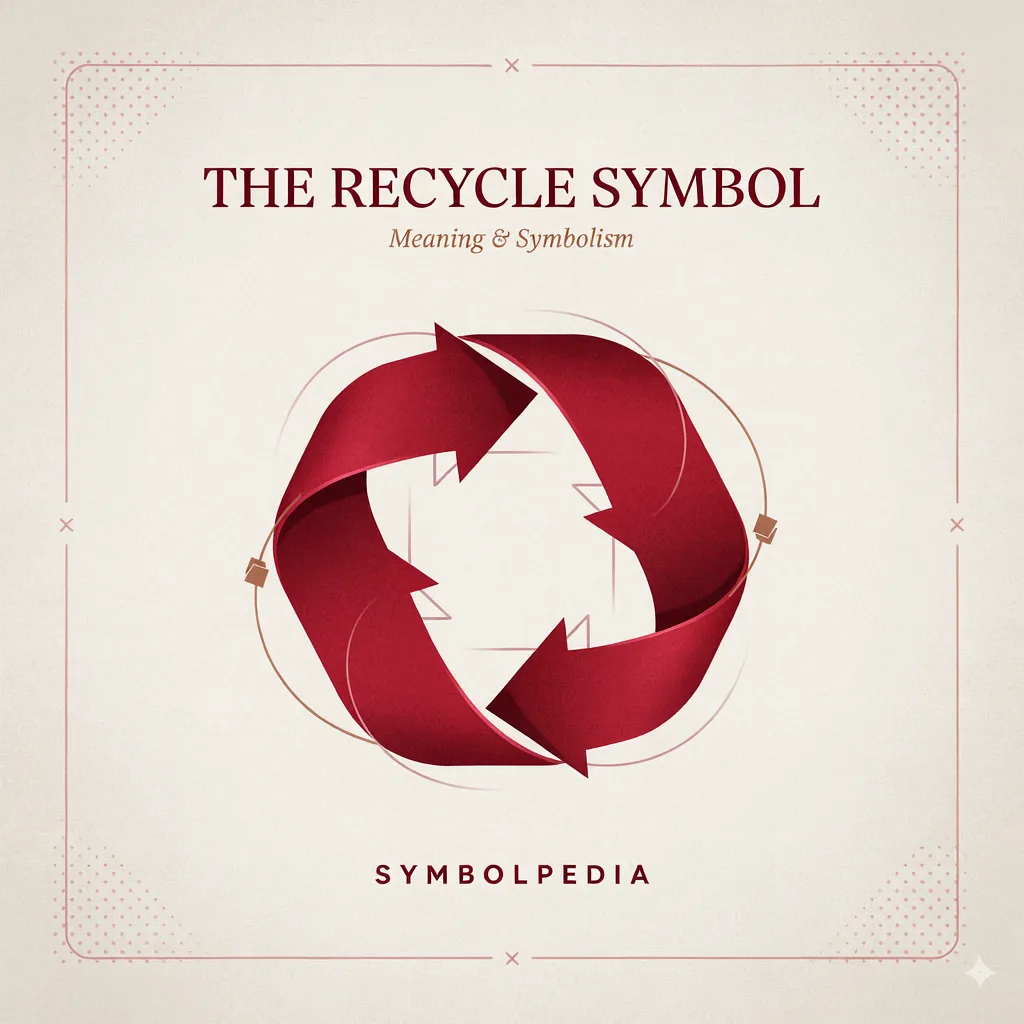
You have probably seen the familiar three arrows chasing one another on a plastic bottle, cardboard box, food package, or household product. It looks simple, but what does the recycle symbol mean in practice?
The symbol generally communicates that an item, material, or packaging is connected to recycling. However, seeing the symbol does not always mean that your local recycling program accepts the item.
That distinction is where much of the confusion begins.
The familiar ♻️ symbol can indicate that packaging is recyclable, made from recycled material, or part of a recycling-related labeling system. Its exact meaning depends on the symbol, number, wording, and context surrounding it.
Understanding these small differences can help you sort household waste more confidently and avoid putting something in the recycling bin simply because you see three green-looking arrows.
What Does the Recycle Symbol Mean? – Quick Meaning
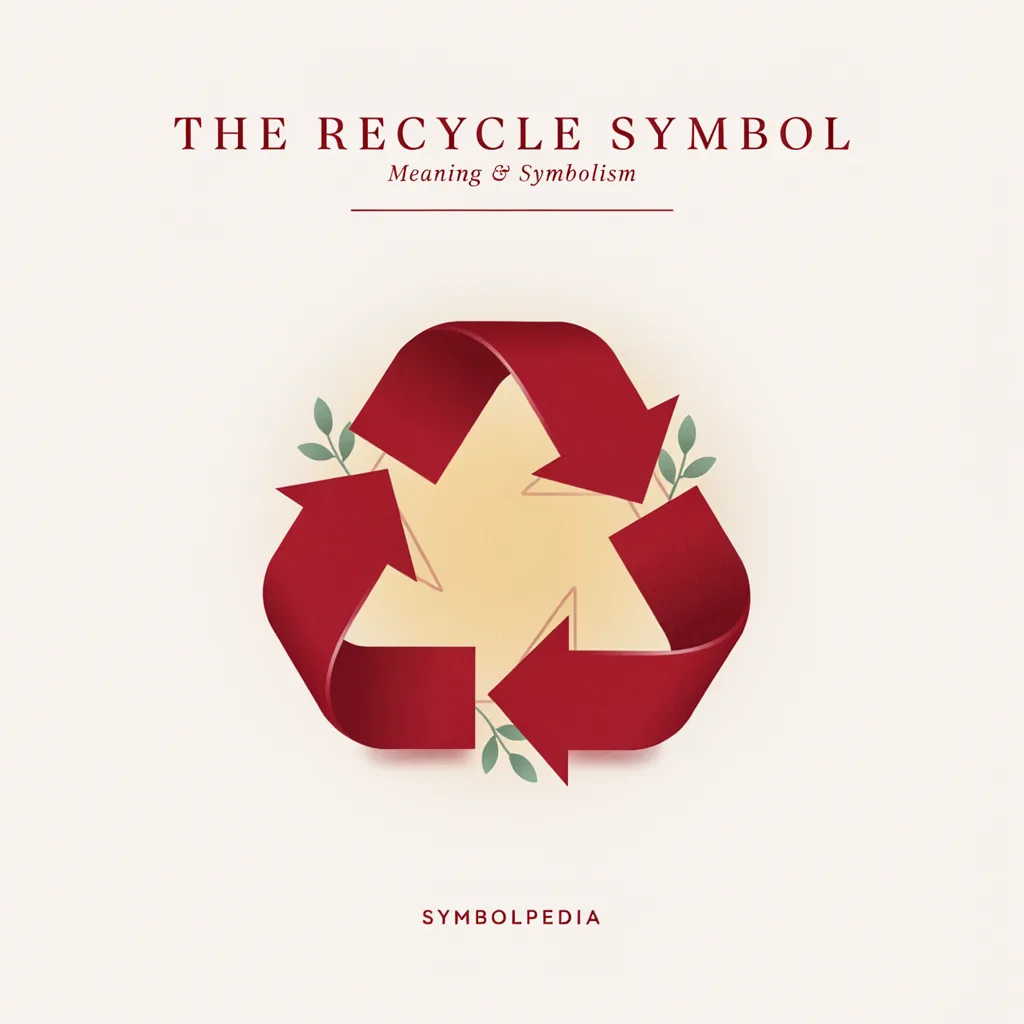
The recycle symbol (♻️) represents recycling, reuse, and the recovery of materials rather than simply throwing them away.
In its most basic sense, the three arrows represent a continuing cycle:
- Collection: Used materials are gathered.
- Processing: Materials are sorted and processed.
- Reuse: Recovered material becomes part of a new product.
The symbol is often associated with environmental responsibility and reducing waste.
For example:
“This bottle has the recycle symbol.”
This tells you that the packaging is associated with recycling, but you should still check whether your local recycling service accepts that particular material.
Another example:
“Look for ♻️ before putting it in the recycling bin.”
Here, the symbol is being used as a quick visual reminder to consider recycling.
And on social media, someone might write:
“♻️ Small changes make a difference.”
In that setting, the symbol has a broader environmental meaning rather than functioning as a packaging instruction.
The simplest definition
The recycle symbol means that an object or material is connected with recycling, reuse, or the recovery of resources.
It is an environmental symbol, not automatically a guarantee that an item is recyclable everywhere.
Origin & Background of the Recycle Symbol
The familiar recycling symbol has an interesting history.
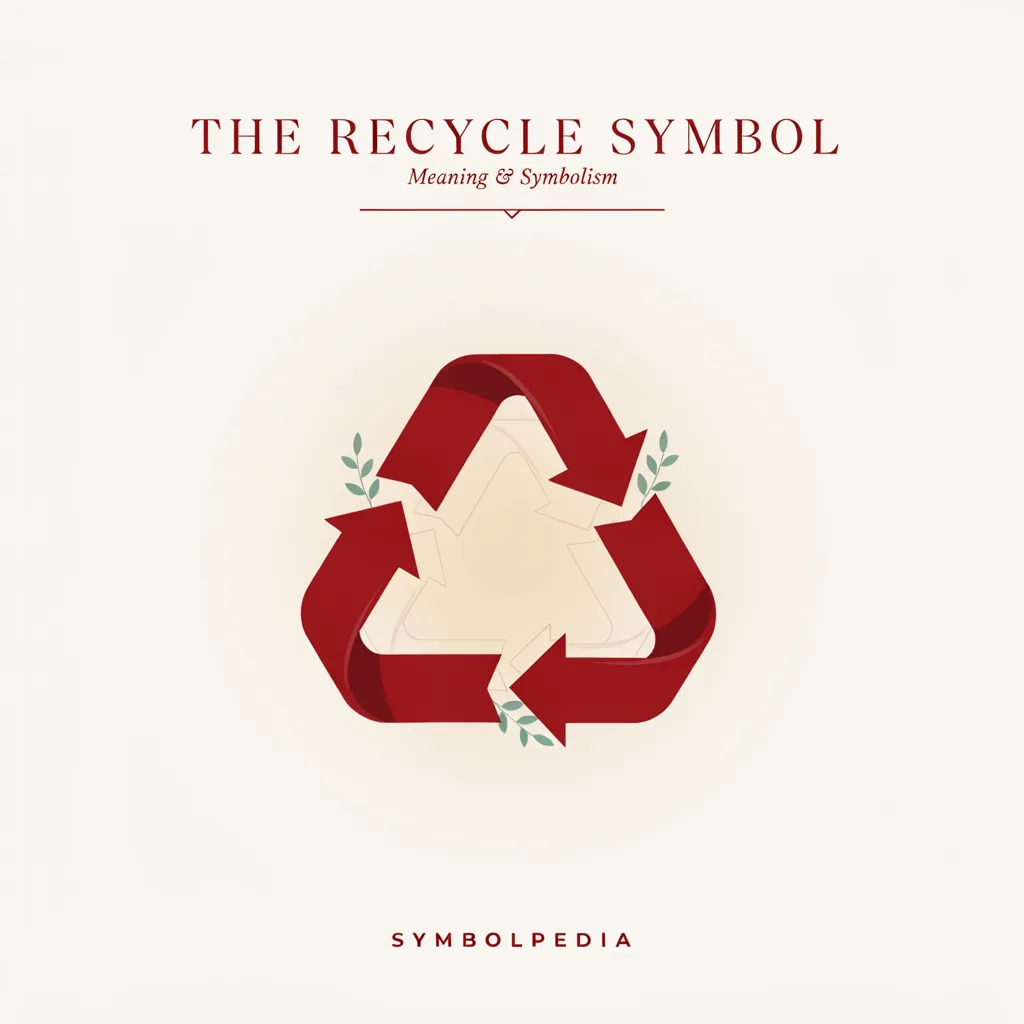
The symbol was created in 1970 by Gary Anderson, who designed it as part of a contest connected with the first Earth Day. The three-arrow design became widely recognized because its circular movement naturally suggested continuity and renewal.
The arrows form a triangular loop, visually communicating the idea that materials can move through a cycle instead of following a one-way path from production to disposal.
This was especially meaningful during a period when environmental awareness was becoming much more prominent.
Why three arrows?
The three arrows are commonly understood as representing the recycling cycle: collecting materials, processing them, and turning recovered materials into something useful again.
The design also visually resembles a continuous loop.
That is one reason the symbol became so memorable. You do not need to read a sentence to understand that it has something to do with environmental responsibility.
Cultural influence
Over time, the symbol moved far beyond recycling facilities.
It began appearing on:
- Plastic containers
- Paper packaging
- Cardboard
- Glass products
- Electronics
- Clothing labels
- Household goods
- Public recycling bins
- Environmental campaigns
Eventually, the symbol became part of everyday visual language.
People could recognize ♻️ even without knowing exactly how municipal recycling systems worked.
How its meaning evolved
The biggest change is that people increasingly use the symbol in both literal and symbolic ways.
Literally, it can identify recycling-related information.
Figuratively, it can represent ideas such as sustainability, reducing consumption, reusing objects, or giving something another life.
On social media, for example, ♻️ may accompany posts about secondhand clothing, sustainable living, environmental activism, or waste reduction.
So the symbol now communicates more than “put this in the recycling bin.”
Real-Life Conversations Using the Recycle Symbol
The recycle symbol is rarely used in conversation as a traditional word. Instead, people often use ♻️ visually to communicate an environmental idea quickly.
1. WhatsApp Conversation
Person A:
I’m cleaning out the kitchen. Should I throw these bottles away?
Person B:
Check the labels first. Some have the ♻️ symbol.
Person A:
So they can all go into recycling?
Person B:
Not necessarily. I’d check what our local recycling service accepts.
This conversation shows an important distinction: the recycle symbol and local recyclability are not always identical things.
2. Instagram DM
Person A:
Your outfit looks amazing!
Person B:
Thanks! The jacket is thrifted ♻️
Person A:
I love that. Sustainable fashion?
Person B:
Exactly. I’m trying to buy fewer new things.
Here, ♻️ expresses the broader concept of reuse and sustainability.
3. TikTok Comments
Person A:
I turned old jars into storage containers.
Person B:
♻️ Love this idea!
Person C:
Reuse before buying something new whenever possible.
In this context, the symbol is essentially a visual expression of approval for environmentally conscious behavior.
4. Text Message
Person A:
Can you remind me which bin this goes in?
Person B:
Blue one, I think. ♻️
Person A:
Perfect, thanks!
Here, the symbol works almost like a shorthand for “recycling.”
Emotional & Psychological Meaning of the Recycle Symbol
Symbols work differently from ordinary words because they communicate ideas almost instantly.
The recycle symbol can create a sense of responsibility, renewal, hope, and conscious consumption.
When people use ♻️ online, they may be expressing more than a practical instruction. They can be signaling that they care about reducing waste or making environmentally responsible choices.
Why do people respond strongly to it?
The circular shape matters psychologically.
A straight arrow can suggest movement toward an ending. The three arrows looping around each other suggest continuation.
That visual message supports the idea that something old does not necessarily have to become useless.
A personal-style example
Imagine cleaning a drawer and finding an old glass jar that you were about to throw away.
Instead of putting it in the trash, you wash it and use it to store spices.
Later, you see ♻️ on a sustainability post and immediately connect the symbol with what you just did.
That is the strength of visual communication: the symbol can turn an abstract environmental idea into something personal and familiar.
Usage in Different Contexts
Social Media
On Instagram, TikTok, Facebook, and other platforms, ♻️ is often used in posts about:
- Recycling
- Sustainable living
- Secondhand shopping
- Reusing products
- Environmental awareness
- Zero-waste habits
It can also appear in captions as a visual replacement for words such as “recycle” or “reuse.”
Friends & Relationships
Among friends, the symbol is usually casual.
Someone might send:
“I’m donating my old clothes ♻️”
The person is communicating an environmentally conscious action without needing a long explanation.
In relationships, it can also appear when discussing sustainable gifts, thrift shopping, or reducing household waste.
Work & Professional Settings
Businesses may use the recycle symbol in:
- Packaging information
- Sustainability reports
- Environmental campaigns
- Waste-management instructions
- Product labeling
In a professional context, however, it is better not to assume what the symbol legally or technically guarantees.
Specific packaging claims should be interpreted alongside the accompanying text and relevant recycling guidance.
Casual vs. Serious Tone
The emoji ♻️ is generally casual.
A recycling logo printed on packaging is more informational.
That difference matters. Sending ♻️ to a friend can feel friendly and expressive, while a workplace document may need precise wording such as “recyclable where facilities exist.”
When NOT to Use the Recycle Symbol
The symbol is useful, but context matters.
Don’t assume it guarantees local acceptance
A package can carry a recycling-related symbol while still being unsuitable for the recycling collection available in your area.
Always follow local recycling rules when disposing of it.
Don’t use it to make unsupported environmental claims
A company should not treat ♻️ as a substitute for clear sustainability information.
If a product contains recycled material, for example, the percentage and relevant claim may need to be communicated separately.
Be careful in professional communication
In formal documents, ♻️ can look too informal unless the subject specifically involves environmental communication.
Don’t use it sarcastically when the context is sensitive
Environmental issues can be emotionally important to people.
Using ♻️ sarcastically in a serious discussion may make your message sound dismissive.
Common Misunderstandings About the Recycle Symbol
“If I see ♻️, I can recycle it anywhere.”
Not necessarily.
Recycling systems differ by location, equipment, collection rules, and material type.
“The symbol always means the item is made from recycled material.”
No.
A recycling-related symbol does not automatically mean that the product itself was manufactured entirely from recycled material.
Look for specific wording about recycled content.
“The three arrows mean three different types of recycling.”
That is a common assumption, but the arrows are primarily designed to communicate a continuous recycling loop.
“The symbol has to be green.”
Not at all.
The familiar green version is common, but the recycling symbol can appear in different colors depending on the product, packaging, printing method, or design.
“The symbol is only used on plastic.”
Definitely not.
You can encounter recycling symbols and recycling-related labels on paper, cardboard, glass, metals, electronics, packaging, and other materials.
Recycle Symbol vs. Similar Symbols
| Symbol / Expression | General Meaning | Important Difference |
|---|---|---|
| ♻️ Recycle symbol | Recycling or material recovery | Broad environmental/recycling meaning |
| “Recyclable” | Indicates an item may be recyclable | Actual acceptance depends on facilities and rules |
| “Made from recycled material” | Contains previously used/recovered material | Refers to material content rather than disposal |
| ♻️ + number | Often identifies a plastic resin type | The number helps identify the plastic material |
| Reuse symbol/message | Use an item again | Focuses on reuse rather than material recycling |
| Trash-bin symbol | Dispose of item properly | Gives disposal guidance rather than recycling information |
| Zero-waste ♻️ messaging | Reduce waste overall | Broader lifestyle/environmental concept |
Key Insight
The recycle symbol is best understood as a signpost toward recycling, not a universal promise that an item belongs in every recycling bin. The surrounding label and local recycling rules provide the missing context.
How to Respond When Someone Uses the Recycle Symbol
If someone sends ♻️ in a message, your response depends on what they mean.
Casual replies
- “Absolutely ♻️”
- “Good idea!”
- “I’m in.”
- “Let’s recycle it.”
Funny replies
- “Giving that bottle a second life 😂♻️”
- “Trash can rejected! ♻️”
- “Environmental mode: activated.”
Mature replies
- “That makes sense. Reusing it is even better if we can.”
- “Good point. I’ll check the recycling guidelines first.”
- “Small habits can make a difference.”
Respectful replies
- “Thanks for pointing that out.”
- “I appreciate the reminder.”
- “I’ll make sure it goes into the appropriate collection.”
Regional & Cultural Usage
The recycling symbol is broadly recognizable, but how people interpret and use it can vary.
Western Culture
In many Western countries, ♻️ is strongly associated with household recycling, sustainability, climate awareness, and environmentally responsible consumption.
It is common in public signage and packaging.
Asian Culture
Across many Asian countries, recycling symbols appear in consumer packaging, public waste-management campaigns, schools, and environmental initiatives.
However, actual recycling systems vary dramatically from one country or city to another.
The symbol may therefore be familiar even when local recycling rules differ.
Middle Eastern Culture
The symbol is increasingly visible in environmental campaigns, packaging, educational materials, and sustainability initiatives.
As in other regions, the presence of the symbol does not mean that every local waste system handles that material in the same way.
Global Internet Usage
Online, ♻️ has become much broader.
People use it for:
- Sustainable fashion
- Thrift shopping
- Upcycling
- Reusing household items
- Environmental activism
- Eco-friendly lifestyles
It can function almost like a tiny visual word for “sustainable.”
Gen Z vs. Millennials
Younger internet users may use ♻️ more creatively, especially in social media captions and environmental conversations.
Millennials may be more likely to associate it with traditional recycling and household waste management, although there is considerable overlap.
Neither interpretation is fixed. Context usually tells you what the sender means.
Is the Recycle Symbol Safe for Kids?
Yes. The recycle symbol itself is harmless and can be useful for teaching children about sustainability and responsible waste disposal.
Parents and teachers can use ♻️ to introduce ideas such as reduce, reuse, and recycle.
The important lesson is not simply “see ♻️, put it in the recycling bin.”
Children should learn that different materials have different disposal requirements and that adults should help them follow local recycling instructions.
FAQs About the Recycle Symbol
1. What does the recycle symbol mean?
The recycle symbol ♻️ represents recycling, reuse, material recovery, and environmental responsibility.
2. What do the three arrows in the recycling symbol represent?
The three arrows form a continuous loop that represents the idea of materials moving through a recycling cycle.
3. Does the recycle symbol mean something is recyclable?
Not always in the practical sense. The symbol can provide recycling-related information, but local recycling facilities determine what they actually accept.
4. What does the recycling symbol with a number mean?
A number inside or associated with a recycling-style symbol commonly identifies a material category, especially a type of plastic resin.
5. Is ♻️ the same as the recycle emoji?
Yes. ♻️ is the Unicode recycling symbol emoji commonly used in digital communication.
6. Can I use ♻️ in a text message?
Yes. It is commonly used in casual messages to represent recycling, reuse, sustainability, or environmentally friendly behavior.
7. Why is the recycling symbol important?
It gives people a quick visual reminder that materials can potentially be recovered, reused, or recycled instead of simply discarded.
Conclusion
So, what does the recycle symbol mean?
At its heart, ♻️ represents the idea of keeping materials in circulation rather than treating everything as disposable. The three arrows create a visual cycle that has become one of the world’s most recognizable environmental symbols.
But there is an important detail worth remembering: seeing the recycle symbol does not automatically mean an item can go into your local recycling bin.
The symbol provides a starting point. The material, accompanying label, and local recycling rules provide the rest of the answer.
That distinction makes your understanding more accurate—and it turns a simple symbol into something genuinely useful.
Whether you see ♻️ on a bottle, in an Instagram caption, or in a message from a friend, you can now read it with more confidence: it generally points toward recycling, reuse, recovery, and a more circular approach to the things we consume.
descover more post
What Does the Car Sliding Symbol Mean Warning Light …
What Does the Battery Symbol Mean on a Car A Complete Driver’s Guide 2026
Symbol for Mean in Stats What It Means and How to Use It Correctly 2026