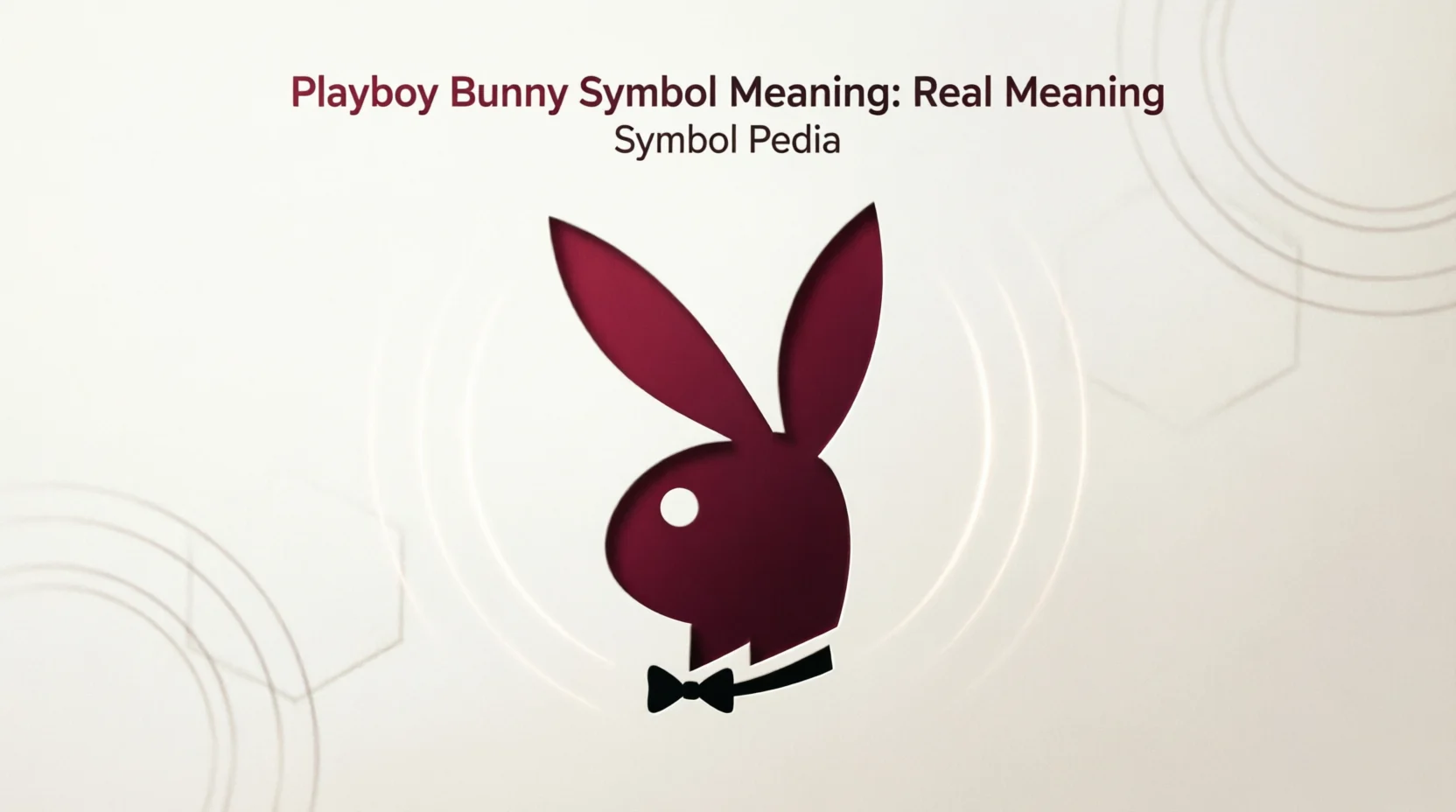
The Playboy Bunny is one of the most recognizable symbols in modern pop culture. You may have seen the black rabbit head with a bow tie on clothing, accessories, tattoos, posters, social media profiles, or vintage designs and wondered: what does the Playboy Bunny symbol mean?
At first glance, it looks like a simple rabbit wearing a formal bow tie. But the symbol carries much more cultural baggage than its minimal design suggests.
The Playboy Bunny is strongly associated with the Playboy brand, but over decades it has also come to represent ideas such as sexuality, confidence, glamour, playfulness, luxury, rebellion, and adult entertainment. Depending on where you see it, however, its meaning can change considerably.
Understanding that distinction matters. Someone wearing a Bunny logo may be making a fashion statement rather than expressing a literal connection to Playboy. Similarly, seeing the symbol in a social-media post does not automatically mean the person is trying to communicate something sexual.
This guide explains the history behind the symbol, what it can communicate today, how different generations and cultures may interpret it, and when using it could create an unintended impression.
What Does the Playboy Bunny Symbol Mean? — Quick Meaning
The Playboy Bunny symbol is the stylized rabbit head wearing a tuxedo-style bow tie that became the signature logo of Playboy.
In simple terms, it can represent:
- Playfulness and a mischievous personality
- Sexuality and sensuality
- Glamour and nightlife
- Confidence and bold self-expression
- Luxury and an adult-oriented lifestyle
- The Playboy brand itself
- Vintage or retro pop culture
The bow tie is important because it gives the rabbit a polished, sophisticated appearance rather than making it look like an ordinary cartoon animal.
So if someone says, “That shirt has the Playboy Bunny on it,” they are usually identifying a brand symbol, not describing an ordinary rabbit.
For example:
“She bought a vintage shirt with the Playboy Bunny on it.”
“I recognize that Bunny logo from old Playboy merchandise.”
“He uses the Bunny symbol because he likes the retro aesthetic.”
The context determines whether the symbol is being used as branding, fashion, humor, nostalgia, or something more suggestive.
Origin and Background of the Playboy Bunny
The Playboy Bunny dates back to 1953, when Playboy magazine was being established in the United States.
The famous logo was created by Art Paul, Playboy’s founding art director. The stylized rabbit head with a bow tie was developed for the magazine’s second issue and quickly became an important part of its visual identity.
The design was remarkably simple: a rabbit’s head in profile, distinctive ears, and a formal bow tie. Its simplicity helped make it easy to reproduce on magazines, clothing, accessories, signs, and other products.
According to accounts of the logo’s development, the rabbit was deliberately connected with the playful and sexually suggestive personality Playboy wanted its brand to communicate. The rabbit was seen as energetic, lively, playful, and somewhat mischievous.
That combination was clever from a branding perspective. The logo did not explicitly explain anything. Instead, it created an association.
The Bunny eventually became much bigger than a magazine mark. It appeared across Playboy merchandise, clubs, advertising, and popular culture, becoming one of the world’s most recognizable corporate symbols.
Why a Rabbit?
The rabbit was not selected randomly.
A rabbit can naturally suggest qualities such as energy, speed, curiosity, liveliness, and playfulness. Playboy’s branding gave those qualities an adult and glamorous interpretation.
The tuxedo bow tie added another layer. It suggested sophistication and a polished social image, creating a contrast between the playful animal and the formal clothing.
That contrast is part of why the logo became memorable.
From Magazine Logo to Cultural Icon
Over time, people stopped seeing the Bunny only as a magazine logo.
It became a symbol that could appear independently on clothing, jewelry, posters, cars, accessories, and other forms of popular culture. The logo’s clean visual design made it particularly easy to recognize and reproduce.
Art Paul’s own recollections describe how the symbol eventually became a kind of cultural image that people interpreted in their own ways.
That evolution is important when interpreting the symbol today.
Real-Life Conversations
The easiest way to understand the modern meaning of the Playboy Bunny is to look at ordinary conversations.
WhatsApp Conversation
Person A:
“Why did you buy that hoodie? It has the Playboy Bunny on it.”
Person B:
“I just like the vintage design. I don’t really think about the magazine.”
Person A:
“Fair enough. It definitely has a retro look.”
Here, the symbol is being treated primarily as a fashion and nostalgia reference.
Instagram DM
Person A:
“Is that a Playboy Bunny tattoo?”
Person B:
“Yeah. I got it because I wanted something that represented confidence and being unapologetically myself.”
Person A:
“That’s actually a different meaning than I expected.”
In this situation, the wearer has assigned a personal meaning to a symbol with an established cultural history.
TikTok Comments
Person A:
“What does the bunny on your necklace mean?”
Person B:
“Mostly vintage fashion. My mom had old Playboy stuff, so it reminds me of that era.”
Person A:
“Ohhh, I thought it meant something else.”
The conversation demonstrates how quickly symbols can be misunderstood online.
Text Message
Person A:
“Your new profile picture has the Bunny logo. Is that supposed to mean something?”
Person B:
“Not really. I just liked the aesthetic.”
Person A:
“Got it. I wasn’t sure if it was a message.”
This is particularly common with profile pictures, tattoos, emojis, and fashion symbols. People often assume that every visual choice has a hidden meaning when sometimes the person simply likes the design.
Emotional and Psychological Meaning
Symbols work partly because humans naturally attach emotions and stories to images.
The Playboy Bunny can communicate confidence, flirtation, rebellion, playfulness, sexuality, independence, or glamour, depending on the individual using it.
For some people, the symbol feels provocative. For others, it feels nostalgic. Someone who grew up seeing Playboy imagery may immediately associate it with a particular era of American pop culture.
A younger person, meanwhile, may encounter the Bunny first through fashion or social media and interpret it primarily as a recognizable retro logo.
There is also an element of deliberate provocation.
Because the Playboy brand has a well-established association with adult entertainment and sexuality, wearing the Bunny can sometimes communicate, “I’m comfortable with being bold,” or “I don’t mind challenging conventional expectations.”
But that interpretation should never be assumed automatically.
Imagine someone buying a vintage jacket at a thrift store. They may see the Bunny as an iconic piece of graphic design and have little interest in its original context.
That small difference—intention versus interpretation—is one of the most important things to remember when reading symbols.
Usage in Different Contexts
Social Media
On Instagram, TikTok, Snapchat, or other platforms, the Playboy Bunny can appear in profile pictures, captions, fashion posts, tattoos, memes, or aesthetic edits.
Its meaning can range from retro fashion and confidence to flirtation and sexuality.
Hashtags, captions, surrounding images, and the person’s overall profile can help clarify the intended message.
Friends and Relationships
Among friends, the Bunny might be used jokingly or playfully.
In romantic conversations, it may carry a more flirtatious meaning because of the symbol’s cultural connection with sexuality and Playboy imagery.
Still, context matters. A Bunny emoji, sticker, or graphic should not automatically be interpreted as a sexual invitation.
Work and Professional Settings
This is where caution becomes important.
Because the symbol has a strong association with Playboy and adult-oriented culture, using it in a professional presentation, workplace profile, business email, or formal portfolio could create an unintended impression.
Even if you personally view it as vintage fashion, someone else may interpret it differently.
Casual vs. Serious Tone
In casual settings, the symbol can feel humorous, fashionable, rebellious, or nostalgic.
In a serious environment, however, its adult associations may become more noticeable.
The same image can therefore feel harmless among friends but inappropriate in a formal workplace.
When NOT to Use the Playboy Bunny Symbol
There are situations where using the Bunny can easily create confusion.
Professional Communications
Avoid it in formal business communications unless the brand or project specifically relates to it.
School or Academic Settings
Students should consider school policies and the audience before displaying it on assignments, presentations, or school-related profiles.
Formal Family Events
Because the symbol can carry adult and sexual associations, it may not fit every family-oriented environment.
When the Audience May Misinterpret It
If you are communicating with people from different cultural or generational backgrounds, remember that not everyone will interpret the symbol in the same way.
When Representing a Brand
Never assume that using a famous logo is neutral simply because it looks fashionable. Brand symbols can carry strong associations that affect how people perceive a person or business.
Common Misunderstandings About the Playboy Bunny
“It Always Means Someone Is Sexual.”
Not necessarily.
The Bunny has a sexual and adult-oriented cultural history, but people may use it for fashion, nostalgia, humor, or personal expression.
“The Rabbit Is Just a Normal Bunny.”
The design itself is a rabbit, but the Playboy Bunny logo has a specific cultural identity.
The bow tie and recognizable silhouette distinguish it from an ordinary rabbit illustration.
“Everyone Knows Exactly What It Means.”
Not at all.
A person familiar with Playboy may immediately recognize the adult-brand association. Someone else may simply see a stylish rabbit logo.
“Wearing It Means Supporting Everything Playboy Represented.”
That conclusion is too broad.
People frequently use cultural symbols selectively. Someone might appreciate the visual design while having a completely different relationship with the brand’s history.
“The Symbol Has One Universal Meaning.”
This is perhaps the biggest misconception.
Symbols evolve when they move between generations, cultures, fashion trends, and online communities.
Playboy Bunny vs. Similar Expressions and Symbols
| Symbol or Expression | General Meaning | Connection to Playboy Bunny |
|---|---|---|
| Playboy Bunny | Playfulness, sexuality, glamour, brand identity | Direct symbol |
| Bunny/Rabbit 🐰 | Cute, playful, innocent, energetic | Similar animal, but usually less adult-oriented |
| Flirty emoji 😉 | Playfulness or flirtation | Can communicate a similar teasing tone |
| Heart ❤️ | Love, affection, warmth | More emotional and generally less provocative |
| 🔥 | Attractiveness, excitement, intensity | Often used to compliment someone’s appearance |
| Playboy | Someone associated with romantic or sexual confidence | Related cultural idea |
| Girl/Boy Next Door | Familiarity, approachability, innocence | Often contrasts with Playboy’s more glamorous image |
| Rebellious fashion | Individuality and nonconformity | Similar attitude in some contexts |
| Vintage logo aesthetic | Nostalgia and retro style | Common modern reason for using the Bunny |
Key Insight
The Playboy Bunny has a strong historical meaning, but its meaning in an individual situation depends on context. The safest interpretation is to consider the surrounding message rather than assuming the symbol tells the whole story.
How to Respond When Someone Uses the Playboy Bunny Symbol
If someone sends you the symbol or uses it in a conversation, your response should depend on the situation.
Casual Replies
- “Nice vintage vibe.”
- “That logo is definitely recognizable.”
- “I know that Bunny!”
Funny Replies
- “Okay, that’s a bold choice.”
- “Someone’s feeling fancy today.”
- “The bow tie makes it official.”
Mature Replies
- “Interesting choice. What does it mean to you?”
- “I recognize the logo, but I’m curious about why you chose it.”
- “I suppose the meaning depends on the context.”
Respectful Replies
- “I recognize the symbol. Is there a personal meaning behind it?”
- “I don’t want to assume what you mean by it.”
- “What made you choose that design?”
That last approach is often the best. Instead of guessing someone’s intention, simply ask.
Regional and Cultural Usage
The Playboy Bunny does not carry exactly the same emotional weight everywhere.
Western Culture
In the United States and much of Western popular culture, the Bunny is strongly associated with Playboy, sexuality, glamour, nightlife, fashion, and retro culture.
Its history is particularly well established because Playboy became a major part of twentieth-century American media culture.
Asian Culture
Across Asian countries, interpretation can vary considerably by age, location, and exposure to Western media.
Some people recognize the Bunny immediately as a Playboy symbol, while others may encounter it mainly through fashion or entertainment.
For younger internet users, it may sometimes function more as a recognizable aesthetic than a direct statement about sexuality.
Middle Eastern Culture
Interpretation can be more sensitive because public attitudes toward sexually suggestive imagery vary widely across Middle Eastern societies.
In more conservative settings, the Bunny may attract stronger attention or be viewed primarily through its adult-brand association.
That does not mean everyone interprets it identically. Personal background and exposure to Western pop culture still matter.
Global Internet Usage
The internet has separated many symbols from their original contexts.
A person can encounter the Playboy Bunny through a fashion account, meme, vintage shop, music video, or social-media post without knowing much about Playboy’s history.
As a result, the logo may function simultaneously as a brand symbol, fashion reference, retro aesthetic, or provocative image.
Gen Z vs. Millennials
Older Millennials and previous generations may have a stronger immediate association between the Bunny and Playboy magazine, television, clubs, or merchandise.
Gen Z users may encounter it through vintage fashion, nostalgia trends, celebrity styling, social media, or resale culture.
That generational difference explains why two people can look at exactly the same Bunny logo and think about completely different things.
Is the Playboy Bunny Symbol Safe for Kids?
The logo itself is simply a graphic image, but its cultural associations are adult-oriented.
For younger children, there may be little understanding of what Playboy represents. Older children and teenagers, however, may encounter the symbol alongside adult themes online.
Parents and educators should therefore focus on context rather than panic.
If a child asks about the symbol, a simple age-appropriate explanation is usually enough: it is a logo associated with Playboy, a brand historically connected with adult entertainment and sexuality.
The important lesson is that recognizing a symbol does not require exposing a child to unnecessary adult material.
FAQs About the Playboy Bunny Symbol
1. What does the Playboy Bunny symbol mean?
The Playboy Bunny represents the Playboy brand and can suggest playfulness, sexuality, glamour, confidence, and adult-oriented pop culture.
2. Who designed the Playboy Bunny logo?
The famous Bunny logo was designed by Art Paul, Playboy’s founding art director, for the magazine’s second issue in 1953.
3. Why is the Playboy logo a rabbit?
The rabbit was chosen because its playful, energetic, and lively qualities fit the personality Playboy wanted its brand to communicate. It also carried a humorous sexual association in American culture.
4. Does wearing a Playboy Bunny shirt mean someone is sexually active?
No. Clothing choices do not reliably reveal someone’s private behavior or intentions.
5. What does a Playboy Bunny tattoo mean?
It can symbolize sexuality, confidence, rebellion, nostalgia, fashion, or personal identity. The tattoo owner’s intended meaning is the most reliable interpretation.
6. Is the Playboy Bunny always inappropriate?
No. Its appropriateness depends on the setting, audience, and purpose. It may work as fashion or pop-culture imagery but can be unsuitable in some professional or family-oriented environments.
7. Is the Playboy Bunny the same as a normal bunny symbol?
No. Although both depict rabbits, the Playboy Bunny has a specific association with the Playboy brand because of its distinctive bow tie and recognizable design.
Conclusion
So, what does the Playboy Bunny symbol mean?
At its core, it is the iconic logo of Playboy, but its cultural meaning has grown far beyond a simple brand mark. It can suggest playfulness, confidence, glamour, sexuality, rebellion, nostalgia, or retro fashion, depending on who is using it and why.
The history is important because the Bunny was deliberately designed to communicate a particular personality. Art Paul’s simple rabbit head and bow tie became an extraordinarily recognizable symbol, eventually appearing far beyond the magazine it was created for.
But symbols change as they travel through culture.
Today, one person might see the Bunny and think of adult entertainment. Another might think of vintage fashion. Someone else might simply recognize a famous piece of graphic design.
That is why context matters more than assumptions.
If you encounter the Playboy Bunny in a message, tattoo, outfit, or social-media post, don’t automatically assign a personal meaning to it. Look at the surrounding context—or, when appropriate, simply ask the person what it means to them.
Understanding symbols isn’t just about memorizing definitions. It’s about understanding people, culture, history, and intention.
descover more post
What Does the Infinity Symbol Mean in Apple Music Complete …
Aquarius Zodiac Symbol Meaning The Hidden Power Behind …
What Does the Swirl Symbol Mean A Complete Guide to Its …