If you’ve ever noticed the bold three-diamond logo on a car, appliance, or heavy machinery, you’ve already encountered the Mitsubishi symbol. But what does it actually mean?
People search for “mitsubishi symbol meaning” because it looks simple—yet feels deeply symbolic. Is it just a logo, or does it carry a deeper message? Why three diamonds? And why has it stayed unchanged for so long?
This article clears up that curiosity.
You’ll discover not just the literal meaning, but also the cultural, emotional, and psychological layers behind one of the most recognizable symbols in the world. By the end, you’ll never look at it the same way again.
Mitsubishi Symbol Meaning – Quick Meaning
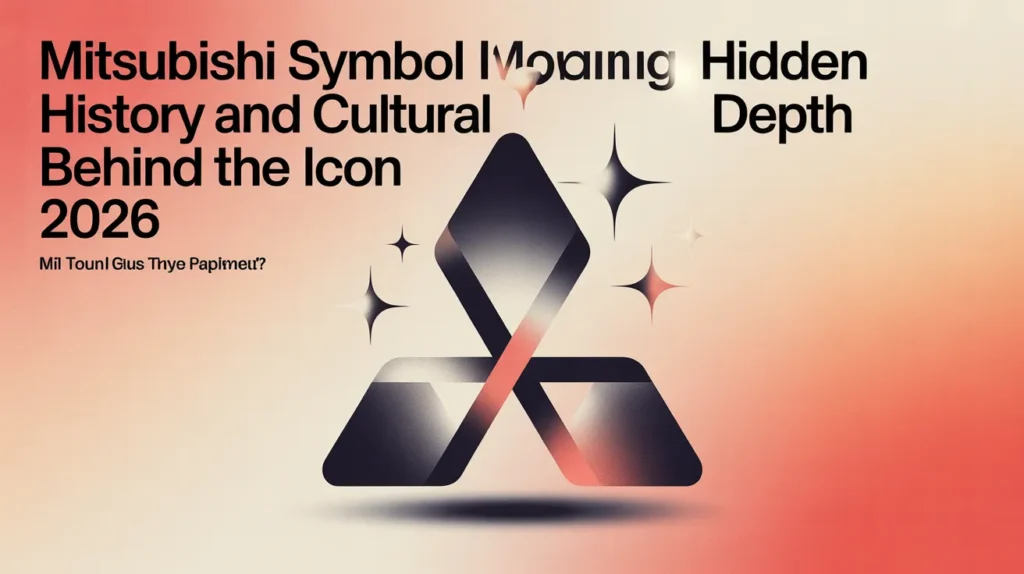
The Mitsubishi symbol consists of three red diamonds arranged in a triangular formation.
Core meaning:
- Three diamonds = “Mitsu” (three) + “Hishi” (diamond/water chestnut shape)
- Represents strength, reliability, and unity
- Symbolizes integrity and trust in business
Simple explanation:
- “Mitsu” = Three
- “Hishi” = Diamond (which becomes “bishi” in pronunciation)
Together → Mitsubishi = “Three Diamonds”
Example usage in conversation:
- “I always liked the Mitsubishi logo—it feels strong and balanced.”
- “Those three diamonds actually represent trust and legacy.”
- “It’s not just a logo, it’s a whole identity.”
Origin & Background
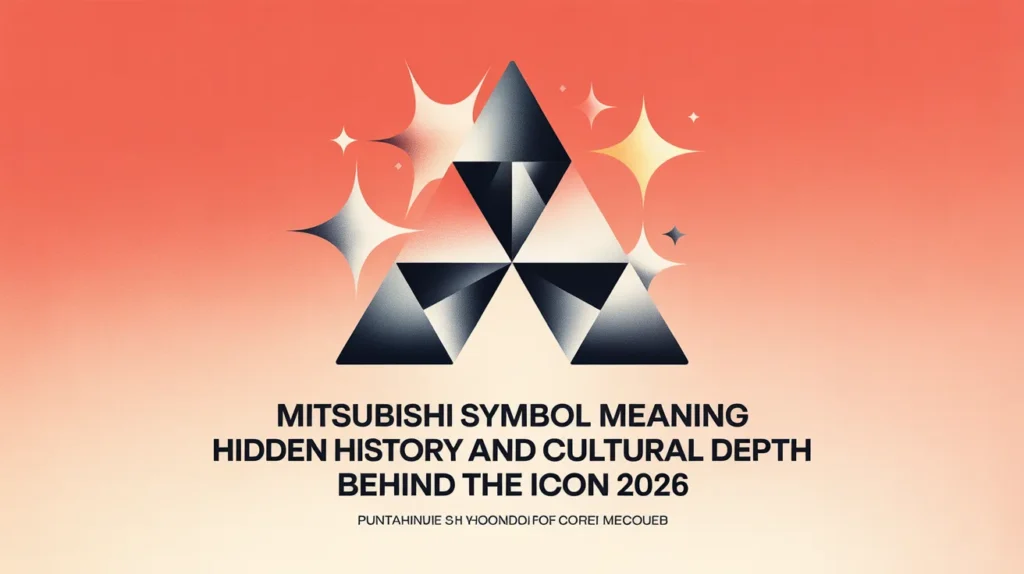
The Mitsubishi symbol dates back to the late 1800s in Japan.
It was created by Yataro Iwasaki, the founder of Mitsubishi. But here’s where it gets interesting—the logo wasn’t invented randomly.
It combines two family crests:
- The Iwasaki family crest: Three stacked diamonds
- The Tosa clan crest: Three oak leaves arranged symmetrically
When merged, they formed the now-famous three-diamond emblem.
Over time, this symbol became more than just a family mark. It represented a growing industrial empire involved in shipping, banking, and eventually automobiles.
Cultural Influence
In Japanese culture, symbols carry deep meaning. The Mitsubishi logo reflects:
- Harmony (balance in shape)
- Stability (triangular structure)
- Honor (family heritage)
Evolution in Modern Times
Despite global expansion, Mitsubishi never changed the core design.
Why?
Because consistency builds trust.
Today, whether you see it on a car or an air conditioner, the symbol still quietly communicates:
“This brand stands on tradition, strength, and reliability.”
Real-Life Conversations
WhatsApp Chat
Person A:
Did you ever notice Mitsubishi’s logo?
Person B:
Yeah, those three diamonds, right?
Person A:
Apparently it means strength and trust.
Person B:
Makes sense… it actually looks powerful.
Instagram DMs
Person A:
Why does Mitsubishi use diamonds?
Person B:
It’s not random. It comes from old Japanese family symbols.
Person A:
That’s actually kinda cool.
TikTok Comments
User1:
That logo is so clean 🔥
User2:
It’s called “three diamonds” btw
User3:
Japanese brands always have deeper meaning
Text Message
Person A:
Thinking of buying a Mitsubishi
Person B:
Good choice. That brand stands for reliability
Person A:
Even the logo feels solid tbh
Emotional & Psychological Meaning
At a deeper level, the Mitsubishi symbol taps into something universal.
What it expresses:
- Stability → The triangle feels grounded
- Strength → Diamonds represent durability
- Trust → Symmetry creates visual confidence
People may not consciously analyze it, but they feel it.
Why people connect with it
In a world full of flashy, changing logos, Mitsubishi’s symbol feels:
- Consistent
- Honest
- Dependable
That emotional reassurance matters, especially when buying something expensive like a car.
Personal-style scenario
Imagine you’re choosing between two brands.
One has a trendy, modern logo that changes every few years.
The other has a timeless, strong symbol that hasn’t changed in decades.
Most people instinctively trust the second one.
That’s the psychological power of the Mitsubishi symbol.
Usage in Different Contexts
1. Social Media
People use the Mitsubishi symbol as:
- A sign of brand loyalty
- A symbol of Japanese engineering excellence
- A visual shorthand for reliability
Example:
“Team Mitsubishi forever 🔺🔺🔺”
2. Friends & Relationships
Among friends, mentioning Mitsubishi often implies:
- Practical thinking
- Smart choices
- Reliability over hype
3. Work / Professional Settings
In business discussions, Mitsubishi symbolizes:
- Long-term trust
- Corporate stability
- Strong legacy
4. Casual vs Serious Tone
- Casual: “Nice logo, looks cool”
- Serious: “The Mitsubishi emblem reflects heritage and trust”
Same symbol, different depth depending on context.
When NOT to Use It
While the Mitsubishi symbol is generally positive, there are situations where it might not fit.
Avoid using it:
- As a generic diamond symbol without understanding its meaning
- In cultural discussions without acknowledging its Japanese roots
- In sarcastic or negative brand comparisons
Why it matters
Symbols tied to heritage deserve respectful use.
Using them casually without context can come across as uninformed.
Common Misunderstandings
1. “It’s just a design”
Not true.
It has deep historical and cultural roots.
2. “Diamonds = luxury”
Partially correct.
But here, diamonds symbolize strength and reliability, not just wealth.
3. “It’s modern branding”
Actually, it’s over 100 years old.
4. Tone confusion
Some people assume the logo is aggressive or sharp.
In reality, it represents balance and harmony, not aggression.
Comparison Table
| Concept | Meaning | Tone | Usage |
|---|---|---|---|
| Mitsubishi Symbol | Strength, trust, unity | Strong, stable | Branding, identity |
| Luxury Logos (e.g. crowns) | Wealth, prestige | Elegant | Fashion, status |
| Minimalist Logos | Simplicity | Neutral | Tech brands |
| Opposite Concept | Chaos, imbalance | Weak | Poor branding |
Key Insight
The Mitsubishi symbol stands out because it balances power with simplicity. It’s not loud, but it’s deeply authoritative.
How to Respond When Someone Uses It
Casual Replies
- “Yeah, that logo is iconic.”
- “Looks strong, I like it.”
Funny Replies
- “Three diamonds = triple power 😄”
- “That’s a logo that lifts weights 💪”
Mature Replies
- “It represents heritage and reliability.”
- “There’s a lot of history behind it.”
Respectful Replies
- “It reflects Japanese tradition beautifully.”
- “A great example of meaningful branding.”
Regional & Cultural Usage
Western Culture
Seen mainly as a car brand logo, associated with durability.
Asian Culture
Carries deeper meaning tied to:
- Heritage
- Honor
- Corporate legacy
Middle Eastern Culture
Often associated with:
- Reliability
- Value for money
- Strong engineering
Global Internet Usage
Recognized universally as:
- A trusted brand
- A clean, powerful design
Generational Differences
Gen Z:
- Sees it as aesthetic and minimal
- Appreciates the clean design
Millennials:
- Associate it with reliability and long-term value
Is It Safe for Kids?
Yes, completely safe.
The Mitsubishi symbol has:
- No negative meaning
- No offensive context
- Educational value when explained
It can even be a good way to teach kids about:
- Symbols
- Cultural heritage
- Branding
FAQs
1. What does the Mitsubishi logo mean?
It means “three diamonds,” symbolizing strength, trust, and unity.
2. Why are there three diamonds?
They come from the founder’s family crest combined with a Japanese clan symbol.
3. Is the Mitsubishi symbol related to luxury?
Not directly. It represents reliability more than luxury.
4. Has the logo changed over time?
The core design has remained consistent for over a century.
5. What does “Mitsubishi” literally translate to?
“Three diamonds.”
6. Why is the logo red?
Red symbolizes energy, strength, and confidence in Japanese culture.
7. Is it just for cars?
No. Mitsubishi is involved in many industries beyond automobiles.
Conclusion
The Mitsubishi symbol may look simple, but it carries a powerful story.
It’s not just three shapes—it’s a legacy of trust, heritage, and thoughtful design. In a world where brands constantly reinvent themselves, Mitsubishi stands firm, reminding us that consistency and meaning still matter.
Once you understand it, the logo stops being just a logo.
It becomes a quiet statement of strength.
And that’s why it continues to resonate across generations, cultures, and industries.
descover more post
Neda Symbol Meaning What It Really Represents in Modern …
Rune Symbol Meaning Hidden Messages Ancient Power 2026
Expiry Date Symbol Meaning What It Really Says About Time …

Kavon is a passionate content creator and digital researcher who specializes in decoding symbols, meanings, and modern internet language. With a strong focus on clarity and authenticity, Kavon writes in a way that makes complex ideas simple, relatable, and useful for everyday readers.
Known for a hardworking mindset and attention to detail, Kavon is dedicated to creating content that genuinely helps people understand the deeper meanings behind words, signs, and online expressions. Every article is crafted with care, combining research, real-life insight, and a reader-first approach.
Through Symblpedia, Kavon aims to build a trusted space where curiosity meets clarity—helping users find answers that are not only accurate but also meaningful and easy to understa