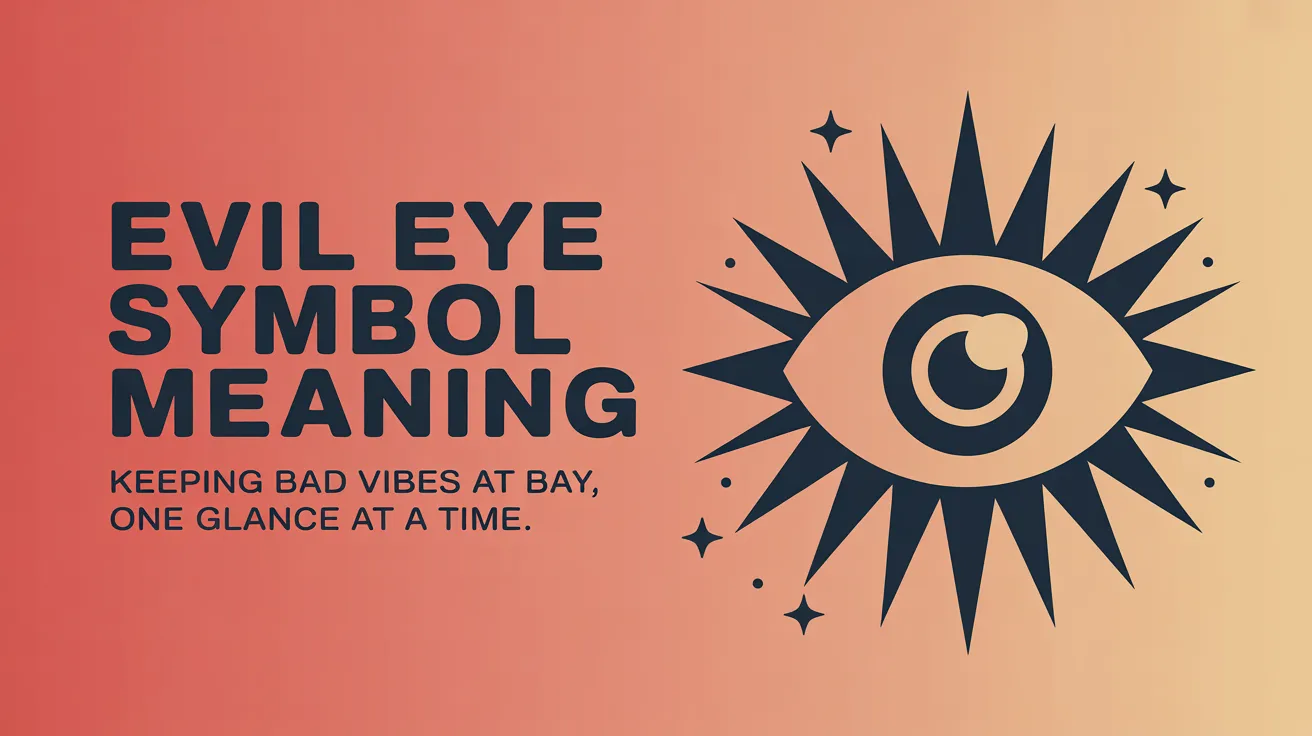
You’ve probably seen it—a deep blue eye on a bracelet, necklace, or even in someone’s home decor. It’s striking, mysterious, and often called the “evil eye.” But what does the evil eye symbol mean spiritually, and why do so many people still trust its power today?
For some, it’s just a trendy accessory. For others, it’s a form of protection, almost like an invisible shield against negativity. The confusion usually comes from mixed interpretations—some people think it causes harm, while others believe it prevents it.
This article clears that up.
You’ll learn the real spiritual meaning behind the evil eye symbol, where it comes from, how people use it in everyday life, and why it continues to hold emotional and psychological significance—even in a modern, digital world.
Evil Eye Symbol Meaning Spiritual – Quick Meaning
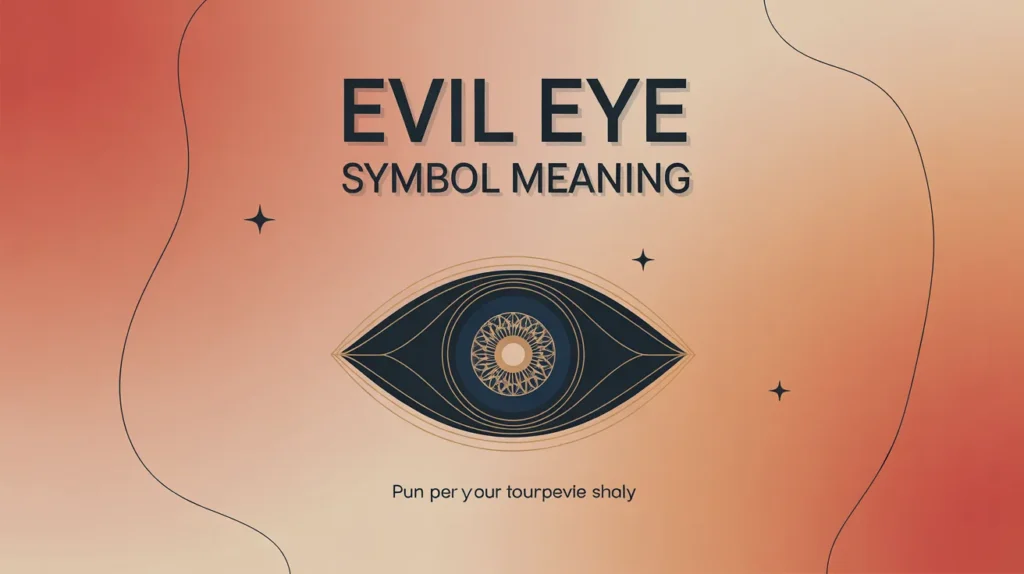
At its core, the evil eye symbol represents protection against negative energy, jealousy, and harmful intentions.
Spiritually, it’s believed to:
- Shield you from envy or ill wishes
- Reflect negative energy back to its source
- Promote emotional balance and inner peace
Simple examples people say:
“Wear this—it’ll protect you from bad vibes.”
“Someone gave you the evil eye, be careful.”
“That bracelet keeps negative energy away.”
The symbol itself isn’t evil—it’s meant to defend you from it.
Origin & Background
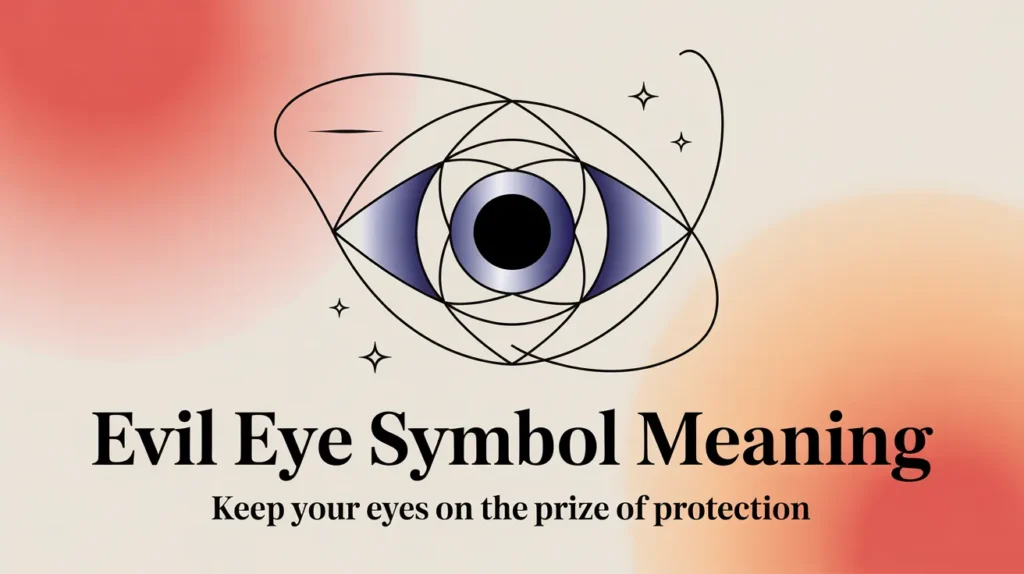
The belief in the evil eye dates back thousands of years, long before modern spirituality trends.
It appeared in ancient Mediterranean, Middle Eastern, and South Asian cultures. In these societies, people believed that jealousy wasn’t just an emotion—it was a force that could harm others.
A simple look filled with envy was thought to bring:
- Misfortune
- Illness
- Bad luck
To protect themselves, people created symbolic “eyes” to reflect that energy.
Over time, this belief spread across cultures. From Turkey’s blue glass “nazar” to protective charms in South Asia, the concept remained surprisingly consistent: protect yourself from unseen negativity.
Today, social media has given the symbol new life.
It’s no longer just cultural—it’s aesthetic, emotional, and even psychological. You’ll see influencers wearing it, TikTok users talking about “bad energy,” and people casually saying, “That’s evil eye.”
The meaning has evolved, but the core idea hasn’t changed.
Real-Life Conversations
WhatsApp Chat
Person A:
I told her about my promotion, and suddenly things started going wrong.
Person B:
Not to scare you, but that sounds like evil eye. Wear something protective.
Instagram DM
Person A:
Omg your new car is stunning 😍
Person B:
Thank you!! 🧿 Just hoping nazar doesn’t hit 😅
TikTok Comments
User1:
Every time I post something good, something bad happens after.
User2:
That’s evil eye energy fr. Protect yourself.
Text Message
Person A:
Why do you always wear that bracelet?
Person B:
It’s an evil eye. Keeps negativity away. Makes me feel safe.
Emotional & Psychological Meaning
Spiritually, the evil eye symbol is about protection. But emotionally, it goes deeper.
It reflects a very human feeling: the fear of being harmed by others’ jealousy.
People don’t just use the symbol because they believe in magic—they use it because:
- It gives them a sense of control
- It reduces anxiety about others’ opinions
- It acts as a reminder to stay grounded
In a world where people constantly compare themselves online, the fear of envy feels real.
Personal-style scenario:
Imagine you finally achieve something you’ve worked for—a new job, a relationship, or even just personal growth. You share it online, and instead of pure joy, there’s a small voice in your head:
“What if someone resents this?”
Wearing or using the evil eye symbol becomes a quiet reassurance. It says, “I’m protected. I can enjoy this moment.”
Usage in Different Contexts
Social Media
People use the evil eye emoji (🧿) to:
- Protect their achievements
- Avoid “nazar” after sharing good news
- Show awareness of negative energy
Example:
“Finally got my dream job 🧿”
Friends & Relationships
Among friends, it’s often said jokingly or semi-seriously:
- “Don’t evil eye me!”
- “Say mashallah, please.”
It blends humor with belief.
Work / Professional Settings
In formal environments, it’s less common.
However, subtle use (like wearing jewelry) is accepted, especially in multicultural spaces.
Casual vs Serious Tone
- Casual: Used jokingly or lightly
- Serious: Used when someone genuinely believes in protection
Tone depends on the person and situation.
When NOT to Use It
There are times when using the evil eye symbol can feel inappropriate:
- In highly professional or formal communication
- When speaking to someone unfamiliar with the concept
- During serious emotional discussions where it may seem dismissive
Also, cultural sensitivity matters.
Not everyone sees it the same way. For some, it’s deeply spiritual—not a trend or aesthetic.
Common Misunderstandings
1. “The evil eye symbol is evil”
It’s actually the opposite—it protects against evil.
2. “It only belongs to one culture”
It exists across multiple cultures, with shared meaning.
3. “It’s just superstition”
For many, it’s emotional comfort, not blind belief.
4. “It always works literally”
Some people see it as symbolic rather than supernatural.
Comparison Table
| Expression | Meaning | Tone | Usage |
|---|---|---|---|
| Evil Eye 🧿 | Protection from jealousy | Spiritual / casual | Social, personal |
| “Bad vibes” | Negative energy | Casual | Everyday speech |
| “Jinx” | Fear of bad luck after speaking | Playful | Friends |
| “Blessing” | Positive spiritual energy | Serious | Religious/cultural |
| “Manifestation” | Creating reality through thought | Modern/spiritual | Self-growth |
Key Insight:
While these expressions differ, they all reveal the same human concern—how unseen energy, emotions, or intentions might influence our lives.
How to Respond When Someone Uses It
Casual Replies
- “Haha, yeah protect the vibes 🧿”
- “Not taking any risks 😄”
Funny Replies
- “Let me get one too, just in case 😂”
- “Evil eye can’t catch me today!”
Mature Replies
- “I understand, it’s important to feel protected.”
- “That makes sense, especially these days.”
Respectful Replies
- “I respect that belief.”
- “Stay protected, always.”
Regional & Cultural Usage
Western Culture
Often seen as a fashion trend or symbolic spirituality.
Asian Culture
Connected with “nazar” and protection from jealousy.
Middle Eastern Culture
Deeply rooted belief; commonly used in daily life.
Global Internet Usage
Blends humor, belief, and aesthetic expression.
Generational Differences
- Gen Z: Uses it casually, often humor + belief
- Millennials: More balanced between belief and symbolism
Is It Safe for Kids?
Yes, generally.
The evil eye symbol is not harmful. For children, it’s often used as a protective or cultural symbol, especially in families that value tradition.
However, it’s important to explain it in a simple, non-fear-based way—focusing on positivity rather than fear of harm.
FAQs
1. Is the evil eye symbol good or bad?
It’s considered good—it protects against negative energy.
2. Can anyone wear the evil eye?
Yes. It’s widely used across cultures and beliefs.
3. What does the 🧿 emoji mean?
It represents protection from jealousy or bad energy.
4. Does the evil eye actually work?
It depends on personal belief. Many people value its emotional comfort.
5. Why do people say “nazar”?
“Nazar” refers to the evil eye or harmful gaze in many cultures.
6. What happens if the evil eye breaks?
Some believe it has absorbed negativity and done its job.
7. Is it religious?
Not strictly—it exists in cultural and spiritual contexts across different traditions.
Conclusion
The evil eye symbol meaning spiritual isn’t just about superstition—it’s about something deeply human.
It reflects our awareness of envy, our desire for protection, and our need to feel safe in a world where not everything is visible or predictable.
Whether you see it as a cultural tradition, a psychological comfort, or a spiritual shield, its meaning comes down to one thing: protecting your peace.
And in today’s world, that matters more than ever.
Wear it, use it, or simply understand it—but now, you know what it truly represents.
descover more post
Neptune Symbol Meaning Hidden Spiritual Power Mythology …
Hexagon Symbol Meaning Deep Spiritual Scientific 2026
Hummingbird Symbol Meaning Deep Spiritual Emotional 2026