If you’ve ever opened a statistics textbook, analyzed survey results, or looked at research data, you’ve probably come across the mean symbol in statistics. At first glance, it can seem confusing. Many students and even professionals occasionally mix it up with other mathematical symbols.
People often search for the mean symbol because they want to understand averages, interpret data correctly, or make sense of formulas used in statistics classes, research papers, and business reports.
The good news is that the concept is much simpler than it appears. Once you understand what the mean symbol represents, you’ll start noticing it everywhere—from academic studies and scientific research to sports analytics and social media polls.
This guide explains the meaning of the mean symbol in statistics, where it comes from, how it is used, and why it remains one of the most important symbols in data analysis.
Mean Symbol in Statistics – Quick Meaning
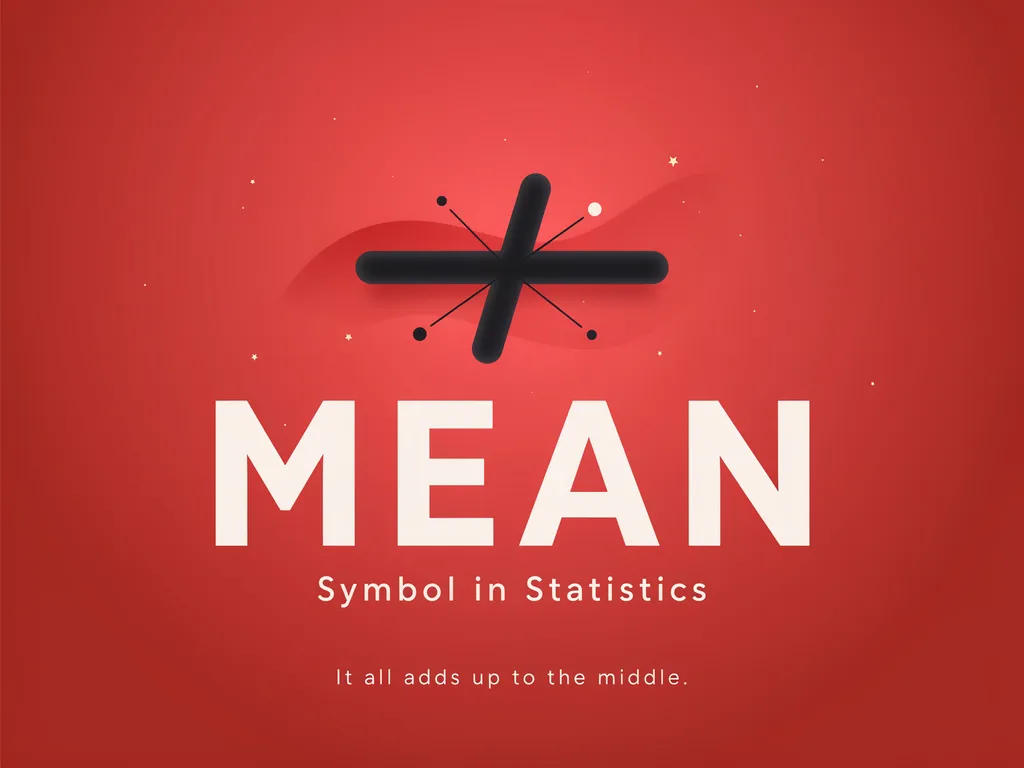
The mean symbol in statistics represents the average value of a set of numbers.
The two most common symbols are:
- x̄ (x-bar) = Sample mean
- μ (Greek letter mu) = Population mean
In simple terms:
- Sample mean refers to the average of a smaller group taken from a larger population.
- Population mean refers to the average of the entire population.
Quick Examples
“The class had an x̄ score of 78.”
“The population mean (μ) income was $45,000.”
“Researchers compared the sample mean to the population mean.”
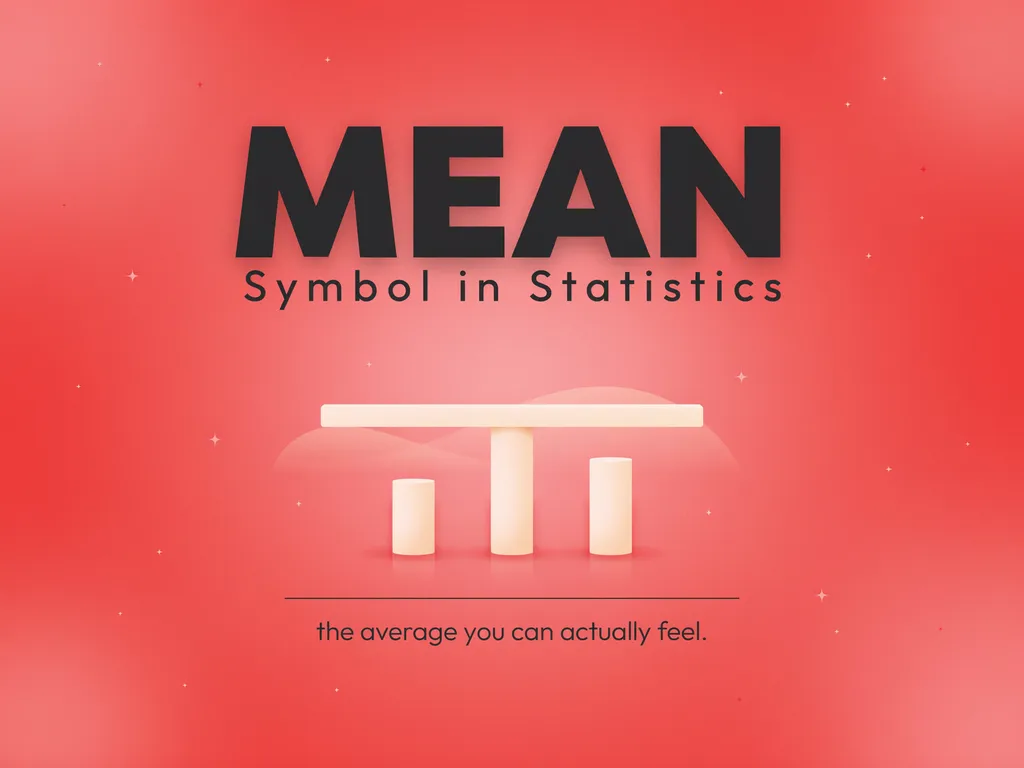
The mean helps summarize large amounts of data into a single value that represents the center of the dataset.
Origin & Background
The concept of the mean has existed for centuries.
Ancient mathematicians used averaging techniques to solve trade, astronomy, and measurement problems. As mathematics evolved, statisticians needed symbols that could represent averages efficiently in formulas and research papers.
The symbol μ (mu) became widely used to represent the true average of an entire population.
Later, x̄ (x-bar) emerged as the standard symbol for sample means because researchers often worked with samples rather than entire populations.
Cultural Influence
As education expanded globally, these symbols became standard in schools, universities, and scientific publications.
Today, students encounter mean symbols in:
- Mathematics
- Psychology
- Economics
- Business analytics
- Medical research
- Sports statistics
Social Media Impact
Educational creators on YouTube, TikTok, Instagram, and online learning platforms frequently explain statistical concepts using x̄ and μ.
As data literacy becomes increasingly important, understanding statistical symbols has become a valuable modern skill.
Real-Life Conversations
WhatsApp Chat
Person A:
I got 82, 79, and 89 on my tests.
Person B:
What’s your mean score?
Person A:
About 83.3.
Person B:
Nice! That’s a solid average.
Instagram DM
Person A:
This study says the mean income is higher this year.
Person B:
So people are earning more on average?
Person A:
Exactly.
TikTok Comments
Person A:
Can someone explain x̄?
Person B:
It’s just the sample average.
Person A:
Oh wow, that’s way easier than I thought.
Text Message
Person A:
The teacher said compare the sample mean with the population mean.
Person B:
Sample average versus overall average.
Person A:
That makes much more sense now.
Emotional & Psychological Meaning
Although the mean symbol itself is mathematical, it represents something deeply human: our desire to summarize information and find patterns.
People naturally seek simplicity when dealing with large amounts of information.
The mean provides a way to answer questions like:
- What’s typical?
- What’s normal?
- What’s the average experience?
In many ways, the mean helps reduce complexity.
Personal-Style Scenario
Imagine a teacher reviewing exam results from hundreds of students.
Looking at every individual score would be overwhelming.
Calculating the mean provides a quick snapshot of overall performance and helps identify whether students generally understood the material.
That single number can tell an important story.
Usage in Different Contexts
Social Media
Content creators often use averages to discuss trends.
Examples include:
- Average engagement rates
- Average watch times
- Average views per video
The mean helps summarize performance quickly.
Friends & Relationships
People frequently use averages in everyday conversations.
Examples:
- Average spending on gifts
- Average response times
- Average grades
The concept of the mean appears more often than many realize.
Work and Professional Settings
Businesses rely heavily on means.
Examples include:
- Average employee performance
- Average sales figures
- Average customer satisfaction ratings
Many business decisions begin with analyzing means.
Casual vs Serious Tone
Casually, people simply say “average.”
Professionally, statisticians often use symbols like:
- x̄
- μ
The meaning remains the same, but the notation becomes more precise.
When NOT to Use It
Although the mean is useful, it is not always the best measure.
Extreme Outliers
A few unusually large or small values can distort the mean.
Example:
A group earns:
- $30,000
- $32,000
- $35,000
- $40,000
- $5,000,000
The mean becomes misleading because one extreme value changes the average dramatically.
Skewed Data
In highly uneven datasets, the median may provide a more accurate picture.
Communication Risks
Using statistical symbols with audiences unfamiliar with statistics can create confusion.
Sometimes writing “average” is clearer than writing x̄ or μ.
Common Misunderstandings
Confusing Mean with Median
Many people assume they’re identical.
They’re different measures of central tendency.
Thinking Mean Always Represents Reality
The mean is a summary, not a complete description.
Mixing Up x̄ and μ
Students frequently confuse:
- x̄ = sample mean
- μ = population mean
Assuming Every Dataset Needs a Mean
Some data types are better analyzed using other statistical methods.
Comparison Table
| Expression | Meaning | Relationship to Mean |
|---|---|---|
| Mean | Average value | Main concept |
| Median | Middle value | Similar but different |
| Mode | Most frequent value | Related measure |
| Average | Common-language term | Often means mean |
| Population Mean (μ) | Entire population average | Formal statistic |
| Sample Mean (x̄) | Sample average | Estimate of μ |
| Range | Difference between highest and lowest values | Opposite purpose |
| Standard Deviation | Measures spread | Complements mean |
Key Insight
The mean tells you where the center of the data is, while other statistics explain how the data is distributed around that center. Together, they provide a fuller understanding of information.
How to Respond When Someone Uses It
Casual Replies
- “So that’s the average?”
- “Got it.”
- “Makes sense.”
Funny Replies
- “Statistics making my brain work again!”
- “The average strikes again.”
- “Math wins every time.”
Mature Replies
- “That’s a useful benchmark.”
- “The average helps put the results into perspective.”
- “Interesting data point.”
Respectful Replies
- “Thanks for explaining that.”
- “I understand the calculation now.”
- “That’s helpful information.”
Regional & Cultural Usage
Western Culture
Statistics is heavily integrated into education, sports, economics, and public policy.
The mean is commonly discussed in reports and media coverage.
Asian Culture
Many education systems emphasize mathematical precision, making statistical symbols familiar to students from an early age.
Middle Eastern Culture
Statistical literacy continues growing across universities, businesses, and government institutions.
The mean plays a significant role in research and economic analysis.
Global Internet Usage
Online courses and educational content have made terms like x̄ and μ recognizable worldwide.
Generational Differences
Gen Z
Often encounters statistical concepts through online learning platforms and digital content.
Millennials
Frequently use averages in workplace reporting, business analytics, and higher education.
Both generations increasingly interact with data-driven decision-making.
Is It Safe for Kids?
Yes.
The mean symbol is completely safe for children and is commonly taught in schools.
Learning how averages work helps children develop critical thinking, problem-solving skills, and a better understanding of data.
The key is presenting the concept at an age-appropriate level.
FAQs
What is the mean symbol in statistics?
The most common mean symbols are x̄ (sample mean) and μ (population mean).
What does x̄ mean?
x̄ represents the average value of a sample dataset.
What does μ mean?
μ represents the average value of an entire population.
Is mean the same as average?
Usually yes. In everyday language, average often refers to the mean.
Why do statisticians use symbols?
Symbols make formulas shorter, clearer, and easier to communicate.
Is the mean always accurate?
Not necessarily. Extreme values can make the mean misleading.
When should I use the mean?
Use it when you want a general measure of central tendency and the data is reasonably balanced.
Conclusion
The mean symbol in statistics may look intimidating at first, but its purpose is remarkably simple. Whether represented by x̄ or μ, it helps summarize data by identifying an average value that reflects the center of a dataset.
From classrooms and research labs to business reports and everyday conversations, the mean remains one of the most useful tools for understanding information. Knowing the difference between sample means and population means can make statistical concepts far easier to interpret and apply.
Once you recognize what these symbols represent, statistics becomes less about memorizing formulas and more about understanding the stories hidden within data. That’s why learning the mean symbol is often one of the first and most important steps toward becoming confident with numbers.
descover more post
Ollin Symbol Meaning The Ancient Symbol of Movement …
Power Button Symbol Meaning The Hidden Message Behind …
Dionysus Symbol Meaning The Hidden Power Behind Ecstasy …

Kavon is a passionate content creator and digital researcher who specializes in decoding symbols, meanings, and modern internet language. With a strong focus on clarity and authenticity, Kavon writes in a way that makes complex ideas simple, relatable, and useful for everyday readers.
Known for a hardworking mindset and attention to detail, Kavon is dedicated to creating content that genuinely helps people understand the deeper meanings behind words, signs, and online expressions. Every article is crafted with care, combining research, real-life insight, and a reader-first approach.
Through Symblpedia, Kavon aims to build a trusted space where curiosity meets clarity—helping users find answers that are not only accurate but also meaningful and easy to understa