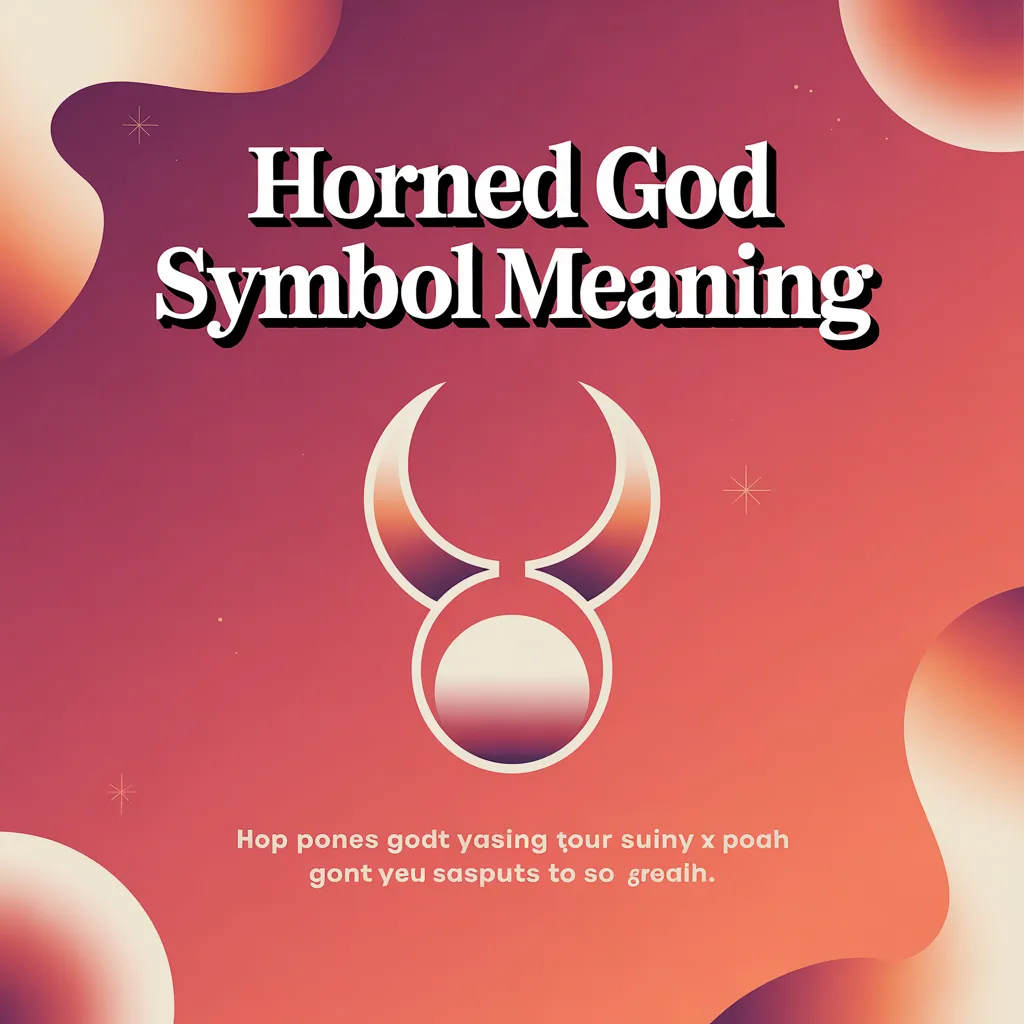
The horned god symbol meaning often sparks curiosity, confusion, and even controversy. Some people see it and immediately think of ancient mythology, while others associate it with modern spiritual practices like Wicca or neopaganism.
But the truth is more layered—and far more interesting—than most online assumptions.
At its core, the Horned God symbol represents nature, instinct, fertility, wilderness, and the raw masculine energy found in the natural world. Yet depending on where you encounter it—an artwork, tattoo, spiritual book, or social media post—it can carry slightly different emotional and cultural meanings.
People search for its meaning because:
- They see it in spiritual or pagan contexts
- They come across it in tattoos or digital art
- They want to understand whether it has a “dark” or “positive” meaning
- They are confused by conflicting internet explanations
This guide breaks everything down in a clear, human, and culturally aware way so you can understand not just what the symbol means—but why it still matters today.
Horned God Symbol Meaning – Quick Meaning
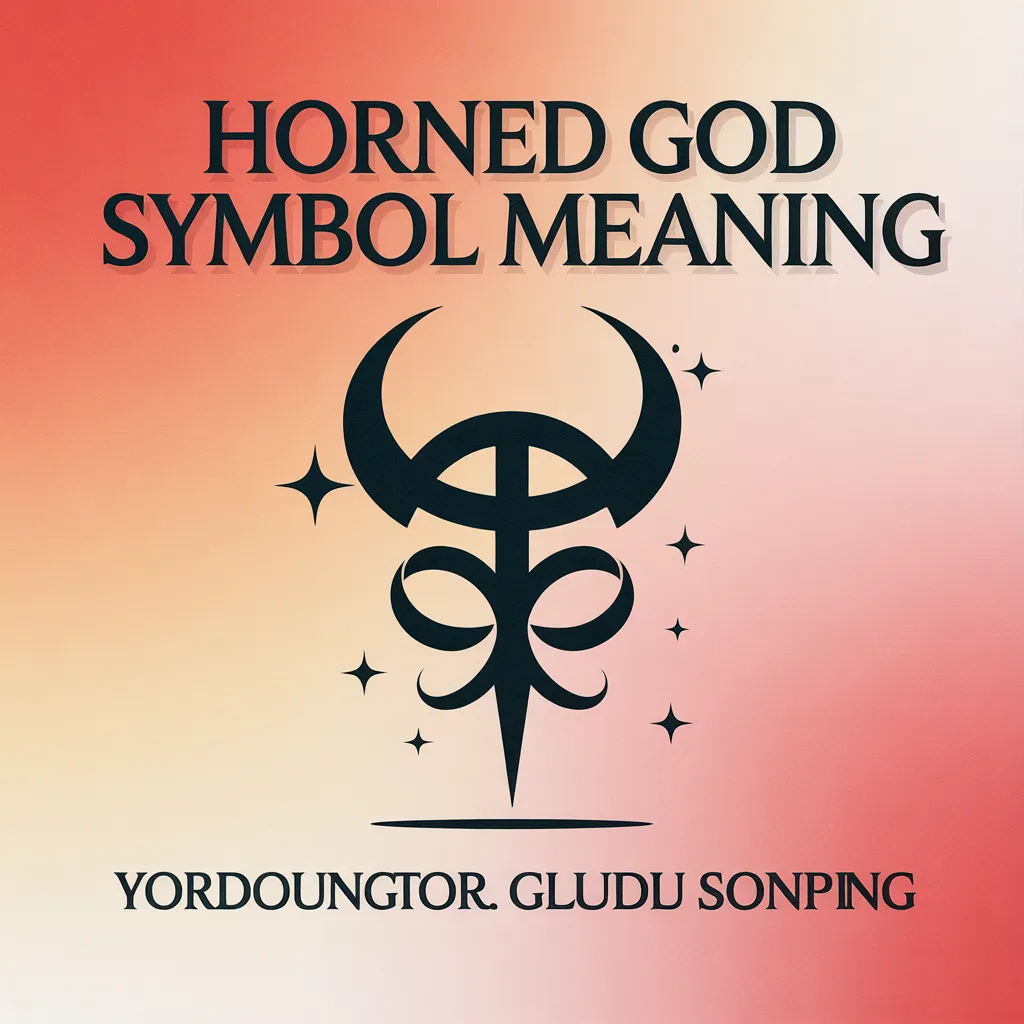
The horned god symbol meaning refers to an ancient spiritual and mythological representation of masculine nature energy, wilderness, and life cycles.
In simple terms:
- It represents nature’s wild masculine force
- It symbolizes fertility, growth, and instinct
- It connects to ancient pagan and pre-Christian beliefs
- It reflects balance between human and nature
Common interpretations include:
- “A symbol of nature’s untamed spirit.”
- “Represents masculine energy aligned with Earth.”
- “A spiritual figure of life, death, and rebirth.”
It is NOT inherently evil or negative, despite common misunderstandings.
Origin & Background
To understand the horned god symbol meaning, we need to go back thousands of years.
Ancient Roots
The Horned God concept appears in several ancient cultures:
- Celtic traditions, especially the figure of Cernunnos, often shown with antlers
- Greco-Roman mythology, linked to Pan, the half-goat god of nature, music, and wilderness
- Pre-Christian European paganism, where horned figures symbolized animals, forests, and fertility
These horned beings were not feared in ancient times. Instead, they were respected as guardians of nature and symbols of life’s natural cycles.
Modern Revival in Wicca
In modern spirituality, especially Wicca, the Horned God is paired with the Goddess to represent balance:
- Goddess = Moon, earth, fertility, creation
- Horned God = Sun, wilderness, instinct, strength
This duality represents harmony in nature.
Social Media Influence
Today, platforms like TikTok, Pinterest, and Instagram have reshaped how people see this symbol:
- Some view it as aesthetic pagan art
- Others misunderstand it as “dark” or “occult”
- Many use it in tattoos for personal empowerment or nature connection
This mix of meanings has created both fascination and confusion.
Real-Life Conversations (MANDATORY)
WhatsApp Chat
Person A: I saw someone with a horned god tattoo. Is that like… dark stuff?
Person B: Not really. It’s more about nature and ancient mythology than anything negative.
Person A: Oh, I thought it was something evil 😅
Person B: Nope, more like wild earth energy.
Instagram DMs
Person A: What does your profile pic symbol mean? The horned figure?
Person B: It represents balance with nature and instinct.
Person A: That’s actually deep, I thought it was just aesthetic.
Person B: It’s both aesthetic and symbolic for me.
TikTok Comment Section
User1: Why do people use horned god symbols? Isn’t that scary?
User2: It’s literally pagan mythology, not horror stuff 💀
User3: It’s more about nature than fear tbh.
Text Message
Friend A: That necklace with horns looks intense lol
Friend B: It’s inspired by ancient nature gods
Friend A: So it’s not like… bad?
Friend B: Not at all. It’s actually about harmony and nature.
Emotional & Psychological Meaning
The horned god symbol meaning goes deeper than mythology. Psychologically, it reflects human connection to instinct and natural identity.
It often represents:
- A desire to reconnect with nature
- Acceptance of primal instincts (not suppression of them)
- Masculine emotional balance (strength + sensitivity)
- Inner freedom and independence
People are often drawn to it during times of personal transformation.
Short Real-Life Scenario
A person going through burnout might start exploring nature-based spirituality. They come across the Horned God symbol and feel drawn to it—not because of religion, but because it represents a life that feels more grounded, instinctive, and real.
It becomes less about belief and more about emotional identity.
Usage in Different Contexts
Social Media
- Used in aesthetic pagan or nature-themed posts
- Often appears in tattoos, art, and digital designs
- Sometimes misinterpreted without context
Friends & Relationships
- Can be used as a personal symbol of identity
- Often explained when someone asks about it
- May represent shared spiritual beliefs
Work / Professional Settings
- Rarely used in professional communication
- May appear in creative industries (art, design, writing)
- Usually explained if relevant to personal branding
Casual vs Serious Tone
- Casual: “It just represents nature vibes”
- Serious: “It symbolizes ancient masculine archetypes and natural cycles”
When NOT to Use It
Even though the symbol is meaningful, context matters.
Avoid using it when:
- You are in strictly conservative environments where it may be misunderstood
- The audience has no cultural or mythological context
- It could be interpreted as offensive or religiously sensitive
It is also important not to use it casually in ways that distort its meaning.
Common Misunderstandings
Many misunderstandings around the horned god symbol meaning come from modern media.
Common myths:
- “It represents evil” → Incorrect
- “It is satanic” → Historically inaccurate confusion
- “It is just a fashion trend” → It has deep cultural roots
Tone confusion:
People often misread it because horns in modern pop culture are linked with negativity or monsters. In ancient symbolism, horns often meant:
- Power
- Fertility
- Protection
Literal vs Symbolic Meaning:
It is symbolic, not literal. It does not represent an actual creature but an archetype.
Comparison Table
| Concept | Meaning | Tone |
|---|---|---|
| Horned God | Nature, masculinity, cycles | Spiritual & symbolic |
| Devil imagery | Evil, temptation (modern religious symbolism) | Negative in most contexts |
| Nature spirit | Earth connection, harmony | Neutral to positive |
| Pan (Greek myth) | Wilderness, music, instinct | Playful & natural |
| Cernunnos | Fertility, animals, forest life | Ancient sacred |
Key Insight
The Horned God symbol is often misunderstood because modern culture reinterprets ancient symbols through a limited lens. In reality, it is more about balance with nature than anything dark or threatening.
How to Respond When Someone Uses It
Casual Replies
- “That’s a cool symbol—what does it mean to you?”
- “I’ve seen that before, it looks powerful.”
Funny Replies
- “Are you summoning forest energy or what 😄”
- “Okay nature spirit vibes, I see you”
Mature Replies
- “Interesting symbol. I understand it has mythological roots.”
- “That represents some deep cultural history.”
Respectful Replies
- “Thanks for explaining it, I appreciate the meaning behind it.”
- “I didn’t know its background—very insightful.”
Regional & Cultural Usage
Western Culture
- Common in Wicca and neopagan communities
- Often accepted as spiritual symbolism
- Sometimes misunderstood by mainstream audiences
Asian Culture
- Less commonly recognized
- Often seen as aesthetic or mysterious
- Sometimes confused with fantasy or demon imagery
Middle Eastern Culture
- May be viewed cautiously due to religious interpretations
- Less exposure in mainstream cultural references
Global Internet Usage
- Popular in aesthetic and tattoo communities
- Frequently shared without full context
- Mixed interpretations depending on platform
Generational Differences
- Gen Z: sees it as aesthetic or spiritual identity
- Millennials: more likely to connect it to mythology or symbolism
Is It Safe for Kids?
Yes, the symbol itself is not harmful. However:
- Kids may misunderstand its meaning without context
- Some versions may look “intense” due to horns imagery
- Explanation should be age-appropriate
Overall, it is a cultural and mythological symbol, not a harmful one.
FAQs
1. What does the Horned God symbolize?
It represents nature, fertility, masculinity, and the cycle of life in ancient mythology and modern spirituality.
2. Is the Horned God evil?
No, it is not evil. It is a misunderstood symbol from pagan and mythological traditions.
3. Is it related to Satan?
No. That is a modern misconception based on visual similarities, not historical meaning.
4. Why do people use it in tattoos?
People use it to represent strength, freedom, nature connection, and personal identity.
5. What cultures use this symbol?
It appears in Celtic, Greek, and modern Wiccan-inspired traditions.
6. Is it religious?
It can be spiritual, but it is not tied to one religion universally.
7. What is its modern meaning?
Today it often represents balance with nature and inner instinct.
Conclusion
The horned god symbol meaning is far richer than surface-level interpretations suggest. It is not a symbol of fear or negativity, but a reminder of humanity’s deep connection to nature, instinct, and life cycles.
Across ancient mythology and modern spirituality, it continues to evolve—shaped by culture, art, and personal belief.
Understanding it without bias allows us to see it for what it truly is: a symbol of balance, wilderness, and the timeless rhythm of nature.
When you see it again, you won’t just see horns—you’ll see history, identity, and a story that has traveled through thousands of years.
descover more post
Rune Symbol Meaning Hidden Messages Ancient Power 2026
What Does Zeus Symbol Mean in Text Real … – Symbl Pedia
New Orleans Symbol Meaning The Hidden Stories Behind Its …

Orvian is a passionate researcher and dedicated content creator focused on exploring the deeper meanings behind symbols, signs, and cultural interpretations. With a strong interest in symbolism and human psychology, Orvian simplifies complex ideas into clear, engaging, and easy-to-understand content for readers around the world.
Through consistent research and thoughtful writing, Orvian aims to provide accurate, insightful, and meaningful information that helps users connect with symbols on a deeper level—whether for personal growth, curiosity, or knowledge.
Known for a hardworking mindset and attention to detail, Orvian believes that every symbol carries a story, and every story deserves to be understood.