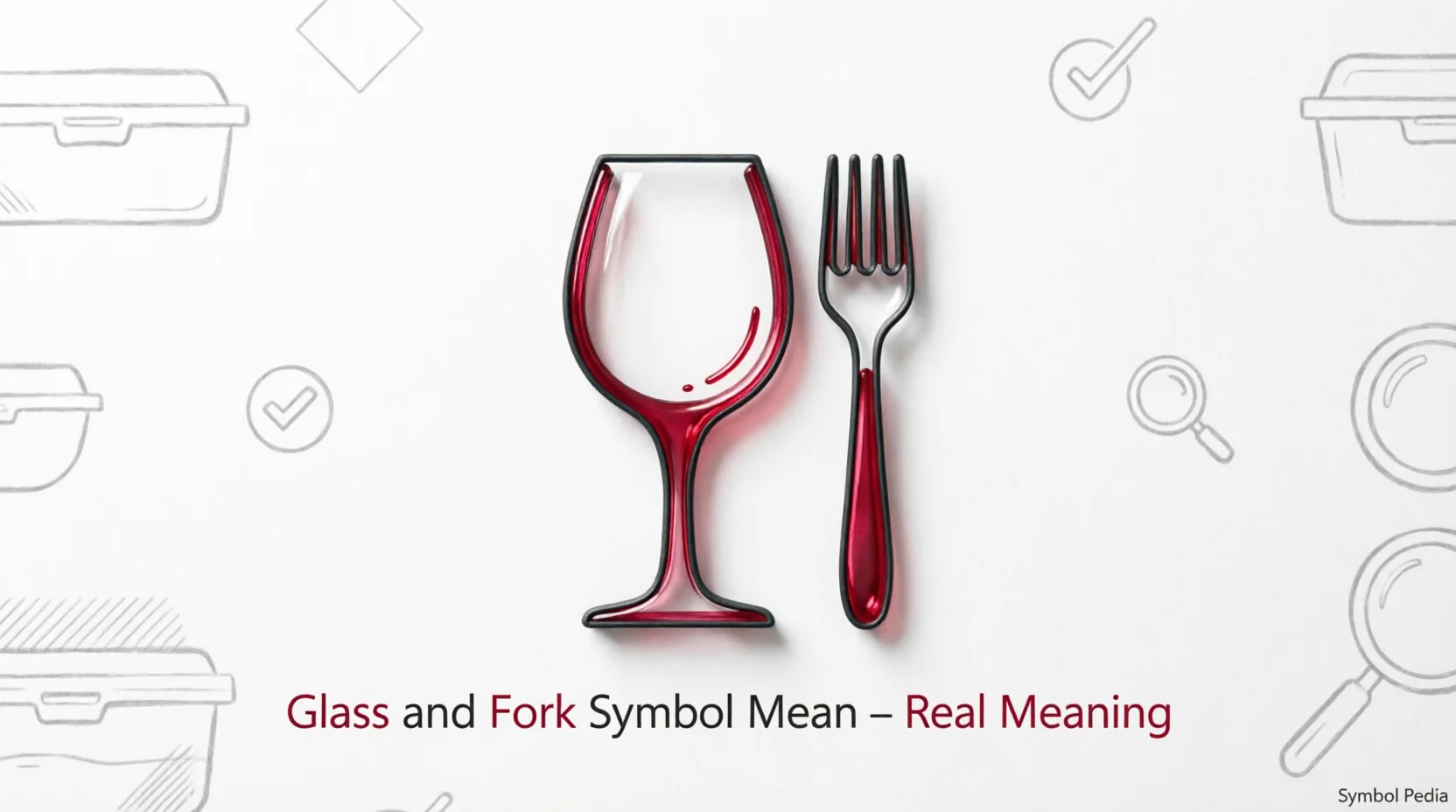
Have you ever noticed a glass and fork symbol on a plastic container, kitchen item, packaging, or product label and wondered what it actually means?
You are not alone. The symbol looks simple, but its purpose is important: it generally tells you that a product or material is intended to come into contact with food.
The symbol usually appears as a wine-glass or drinking glass beside a fork. You may find it printed on food-storage containers, packaging, kitchen utensils, lunch boxes, bottles, and other items that can touch food or drinks.
People often search for the meaning because the symbol can be confused with recycling marks, dishwasher symbols, plastic identification codes, or general safety labels. Understanding the difference helps you know what a product is designed for—and just as importantly, what the symbol does not guarantee.
In this guide, we will look at the glass and fork symbol from practical, cultural, and everyday communication perspectives, including where you might see it, how to interpret it, and common mistakes people make.
What Does the Glass and Fork Symbol Mean? – Quick Meaning
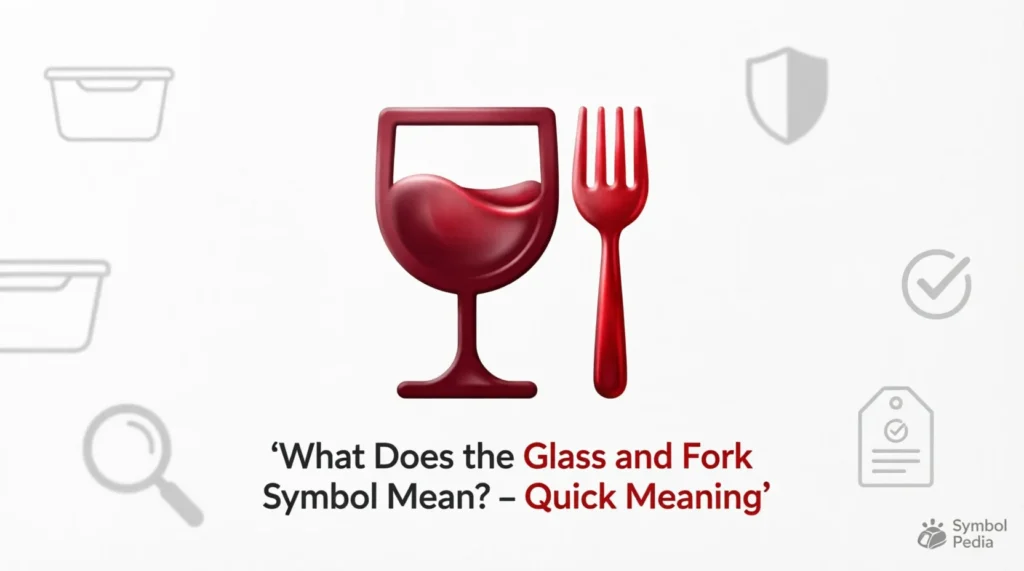
The glass and fork symbol generally means that a product is suitable for contact with food under the conditions intended by the manufacturer.
In simple terms:
- 🍷 Glass + fork = suitable for food contact
- It indicates that the material is designed to be used with food or beverages.
- It can appear on packaging, containers, utensils, and kitchen products.
- It is different from a recycling symbol.
- It does not automatically mean the item is microwave-safe, dishwasher-safe, oven-safe, or suitable for hot food.
You might see the symbol on an item such as:
“This container is suitable for food contact.”
Or someone might ask:
“Can I use this plastic box for storing lunch?”
Another common question is:
“Does the glass and fork symbol mean this is food safe?”
The short answer is generally yes, for food-contact use, but you should still follow the product’s instructions and limitations.
Origin & Background of the Glass and Fork Symbol
The glass-and-fork marking developed as a straightforward way of communicating food-contact suitability without relying entirely on written language.
That matters because products cross borders. A manufacturer may sell the same container in several countries where consumers speak different languages. A recognizable pictogram can communicate a basic safety-related message quickly.
The image itself is deliberately uncomplicated. A drinking glass represents beverages or food-related use, while the fork represents eating. Together, they communicate the idea of food contact.
Why Symbols Became Important
Modern packaging contains an enormous amount of information.
Consumers may see recycling codes, material numbers, temperature limits, washing instructions, warning symbols, and manufacturer information all on the same product.
A recognizable food-contact symbol makes one particular question easier to answer:
“Is this material intended to touch food?”
This is especially useful for plastic containers, storage products, kitchen accessories, and packaging materials.
Cultural Influence
The symbol is particularly familiar across European product labeling, but its meaning can be encountered internationally.
Because pictograms are more easily understood across languages than long instructions, similar food-related symbols have become familiar to consumers around the world.
How Its Meaning Evolved
The basic idea has remained relatively stable: the product is intended for food contact.
However, modern consumers increasingly want more detailed information. People now ask whether an item is safe for microwaves, freezers, dishwashers, acidic foods, oily foods, or high temperatures.
That is where confusion begins.
The glass and fork symbol answers one question, but it does not necessarily answer all of those others.
Real-Life Conversations About the Glass and Fork Symbol
1. WhatsApp Conversation
Person A:
I found a glass and fork symbol on my new storage box. What does it mean?
Person B:
It means the material is intended for food contact.
Person A:
So I can put leftovers in it?
Person B:
If the manufacturer’s instructions say it’s suitable for that use, yes. But check whether it’s also microwave-safe before heating anything.
2. Instagram DM
Person A:
What is that little glass and fork icon on this container?
Person B:
It’s basically a food-contact symbol.
Person A:
I thought it meant dishwasher-safe 😂
Person B:
Nope. Dishwasher safety is usually shown with a different marking or explained in the instructions.
3. TikTok Comments
Person A:
Does anyone know what the glass + fork symbol means?
Person B:
Food contact.
Person A:
Ohhh, so it isn’t a recycling symbol?
Person B:
Right. Recycling symbols usually look completely different.
4. Text Message
Person A:
Can I use this plastic container for snacks?
Person B:
Does it have the glass and fork symbol?
Person A:
Yes.
Person B:
Then it’s intended for food contact. Just don’t assume that means it’s safe for every temperature or appliance.
Emotional & Psychological Meaning
Although the glass and fork symbol is not an emotional symbol in the way an emoji is, it still communicates something psychologically important: reassurance through visual simplicity.
When people see an unfamiliar symbol on something they eat or drink from, uncertainty can create hesitation.
A tiny pictogram can reduce that uncertainty by communicating, “This product is designed for contact with food.”
This is especially noticeable when shopping for products made from unfamiliar plastics or other materials. A person may not know the technical name of the material, but they can recognize that the manufacturer has provided a food-contact indication.
From a communication perspective, this is a good example of visual language replacing written language.
I have seen this kind of confusion frequently in everyday product use: someone notices a tiny icon, assumes it means one thing, and only later discovers that the symbol communicates something more specific. The lesson is simple—symbols should be interpreted in context rather than guessed from appearance.
Usage in Different Contexts
Social Media
On social media, people often post pictures of containers or kitchen products and ask what the glass-and-fork icon means.
The symbol is particularly likely to appear in discussions about plastic safety, reusable containers, meal preparation, and food storage.
A concise response might be:
“It indicates the item is intended for food contact.”
Friends & Relationships
Friends may discuss the symbol when buying lunch boxes, bottles, storage containers, or inexpensive kitchen products.
For example, someone might send a product photo and ask:
“Is this okay for food?”
The glass-and-fork marking can provide useful information, but the product’s instructions should still be checked.
Work & Professional Settings
In professional environments such as food packaging, catering, hospitality, manufacturing, and retail, food-contact labeling can have much greater significance.
Employees may need to distinguish between materials intended for food contact and materials designed for completely different purposes.
In these settings, relying on the symbol alone may not be enough. Product specifications and applicable regulations can provide additional information.
Casual vs. Serious Tone
Casually, people might call it:
- “the food-safe symbol”
- “the fork and glass icon”
- “the food-contact sign”
In a more technical context, food-contact symbol or food-contact indication is more precise.
When NOT to Rely on the Glass and Fork Symbol
The symbol is useful, but it should not be treated as a universal safety certificate.
Don’t Assume It Means Microwave-Safe
An item can be intended for food contact without being designed for microwave heating.
Always look for specific microwave instructions before heating food in it.
Don’t Assume It Means Oven-Safe
Food-contact suitability does not mean the material can withstand oven temperatures.
A plastic container may be perfectly suitable for storing food while being completely unsuitable for an oven.
Don’t Assume It Means Dishwasher-Safe
Dishwasher safety involves heat, water pressure, detergents, and repeated exposure.
Look for a dishwasher-specific marking or follow the manufacturer’s instructions.
Don’t Ignore Temperature Limits
Some products are suitable for cold or room-temperature food but have restrictions concerning hot liquids or heated foods.
Don’t Treat It as a Recycling Symbol
The glass-and-fork symbol tells you about food contact, while recycling or material-identification marks communicate different information.
Cultural Sensitivity
Unlike certain religious or political symbols, the glass-and-fork marking generally has little cultural controversy.
Still, interpretations can vary when symbols are unfamiliar. In international communication, explaining the symbol in words is often clearer than assuming everyone recognizes it.
Common Misunderstandings
“It Means Microwave-Safe”
This is probably one of the most common mistakes.
Food-contact suitability and microwave suitability are different things.
“It Means the Product Is Completely Safe”
The marking indicates intended food-contact use, but proper use still matters.
Temperature, food type, duration, and manufacturer’s instructions can all be relevant.
“It Means Dishwasher-Safe”
Again, not necessarily.
Dishwasher compatibility should be identified separately.
“It Is a Recycling Symbol”
The visual design may look like other packaging marks to someone unfamiliar with it, but the glass-and-fork symbol has a different purpose.
“Every Plastic Product Needs It”
Not necessarily. Labeling requirements can vary depending on the product, material, jurisdiction, and circumstances.
“The Symbol Tells Me Everything About the Material”
It doesn’t.
You may still need to check the material identification, care instructions, temperature limits, and other manufacturer information.
Glass and Fork Symbol vs. Similar Symbols
| Symbol / Marking | General Meaning | What It Tells You |
|---|---|---|
| Glass + fork | Food-contact indication | Intended for contact with food |
| Recycling triangle | Recycling/material-related information | Provides recycling or material information |
| Microwave symbol | Microwave compatibility | Indicates suitability for microwave use |
| Dishwasher symbol | Dishwasher compatibility | Indicates dishwasher-related suitability |
| Snowflake symbol | Freezer/cold-use indication | May indicate suitability for freezing |
| Temperature marking | Temperature limitation | Shows a permitted temperature range or limit |
| “Food safe” wording | Food-contact suitability | Written indication rather than a pictogram |
| Material code | Material identification | Identifies the type of material or plastic |
Key Insight
The easiest way to remember it is: glass and fork = food contact, not “safe for everything.” Think of it as one piece of information in a larger set of product instructions.
How to Respond When Someone Asks About the Symbol
If someone sends you a picture and asks, “What does this mean?”, your response can depend on the situation.
Casual Replies
- “It means the item is intended for food contact.”
- “That’s the food-contact symbol.”
- “It means you can use the material with food, assuming you follow the product instructions.”
Funny Replies
- “It basically says, ‘Food is welcome here.’ 😂”
- “The fork and glass are giving you the food-contact approval.”
- “Not a recycling symbol—your lunch is the guest of honor. 😄”
Mature Replies
- “The glass-and-fork symbol indicates that the product is intended for food contact, but it doesn’t automatically mean microwave- or oven-safe.”
- “It indicates food-contact suitability. For heating or freezing, check the additional markings.”
Respectful Replies
- “It generally indicates that the product is intended for food contact. If you’re unsure about a specific use, I’d recommend checking the manufacturer’s instructions.”
Regional & Cultural Usage
Western Culture
In many Western markets, consumers encounter food-contact markings on packaging, storage containers, kitchen products, and reusable food items.
People who are accustomed to product labeling may recognize the symbol immediately.
Asian Culture
Across Asian markets, consumers may encounter the symbol alongside local-language instructions and other product markings.
The symbol is useful because it communicates across language barriers, particularly on imported products.
Middle Eastern Culture
In Middle Eastern markets, imported household and food-storage products may carry international pictograms alongside Arabic and/or English information.
The visual nature of the symbol makes it relatively easy to identify even when the surrounding text is unfamiliar.
Global Internet Usage
Online shopping has made product symbols even more important.
A person may purchase a container from another country and see unfamiliar labeling. Instead of asking what the entire package says, they may search for one specific icon.
That’s why questions such as “what does the glass and fork symbol mean?” continue to appear in online discussions.
Gen Z vs. Millennials
Younger consumers may be more likely to encounter these symbols through social media, online shopping, product reviews, and short-form videos.
Millennials may be more accustomed to seeing them on household packaging and traditional product labels.
The difference is less about the symbol itself and more about where people encounter product information.
Gen Z might ask about an icon after seeing it in a TikTok product review, while an older consumer might encounter it while reading the label on a storage container.
Is the Glass and Fork Symbol Safe for Kids?
The symbol itself is simply a product-labeling indication and is not an age-related warning.
However, food-contact suitability does not automatically mean that a product is appropriate for children.
For kids’ products, parents should also consider choking hazards, sharp edges, breakability, temperature limits, cleaning instructions, and any age recommendations supplied by the manufacturer.
For example, a container may be intended for food contact but still be unsuitable for a young child if it contains small detachable parts.
Context matters.
FAQs
1. What does the glass and fork symbol mean?
The glass and fork symbol generally indicates that a product or material is intended for contact with food or beverages.
2. Does the glass and fork symbol mean microwave-safe?
No. Food-contact suitability does not automatically mean that a product is safe for microwave heating.
3. Does the glass and fork symbol mean dishwasher-safe?
Not necessarily. Dishwasher compatibility should be confirmed through separate labeling or the manufacturer’s instructions.
4. Is the glass and fork symbol a recycling symbol?
No. The glass-and-fork marking communicates food-contact suitability, while recycling symbols provide different information.
5. Can I put food in a container with this symbol?
Generally, the symbol indicates that the product is intended for food contact. You should still follow any specific instructions or restrictions provided with the product.
6. Does it mean the container is safe for hot food?
Not automatically. Check the product’s temperature limits and instructions before using it with very hot food or liquids.
7. Why do manufacturers use the glass and fork symbol?
It provides a simple visual way to indicate that a material or product is intended for food contact, including in situations where consumers may not share the same language.
Conclusion
The glass and fork symbol is one of those tiny markings that can look mysterious until you know what it is saying.
Its basic message is straightforward: the product is intended for contact with food or beverages.
But there is an important distinction worth remembering. The symbol does not automatically tell you that the product is microwave-safe, oven-safe, dishwasher-safe, freezer-safe, or suitable for every temperature and type of food.
Think of the symbol as an answer to one specific question: “Is this product intended to come into contact with food?”
Once you understand that, the icon becomes much easier to read.
The next time you spot that little glass and fork on a container, package, or kitchen product, you won’t have to guess. You’ll know what it is communicating—and you’ll also know when to look for additional instructions before using the product in a particular way.
descover more post
What Does the Clover Symbol Mean Luck Love Culture More …
Statistical Symbol for Mean What It Means How to Use It and …
What Does the Infinity Symbol Mean in Apple Music Complete …

Kavon is a passionate content creator and digital researcher who specializes in decoding symbols, meanings, and modern internet language. With a strong focus on clarity and authenticity, Kavon writes in a way that makes complex ideas simple, relatable, and useful for everyday readers.
Known for a hardworking mindset and attention to detail, Kavon is dedicated to creating content that genuinely helps people understand the deeper meanings behind words, signs, and online expressions. Every article is crafted with care, combining research, real-life insight, and a reader-first approach.
Through Symblpedia, Kavon aims to build a trusted space where curiosity meets clarity—helping users find answers that are not only accurate but also meaningful and easy to understa