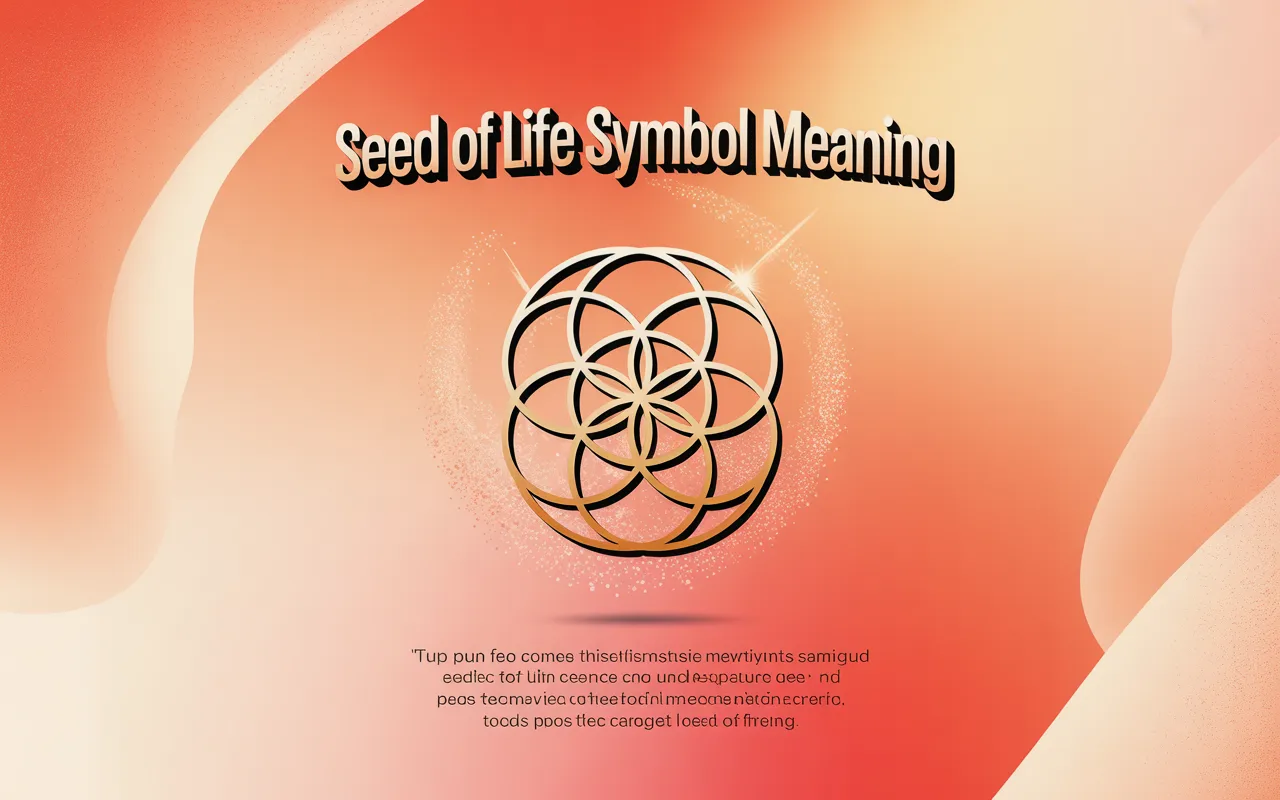
If you’ve ever come across a circular pattern made of evenly spaced overlapping circles, you’ve likely seen the Seed of Life symbol—even if you didn’t know its name. People search for its meaning because it feels… intentional. Balanced. Almost calming in a way that’s hard to explain.
Some see it in tattoos, jewelry, or spiritual art and wonder: Is this just decorative, or does it carry a deeper message? Others hear about it in meditation or manifestation spaces and want clarity—without the vague, mystical fluff.
This guide clears the confusion. You’ll understand what the Seed of Life symbol really means, where it comes from, how people actually use it today, and why it resonates so strongly on an emotional level.
Seed of Life Symbol Meaning – Quick Meaning
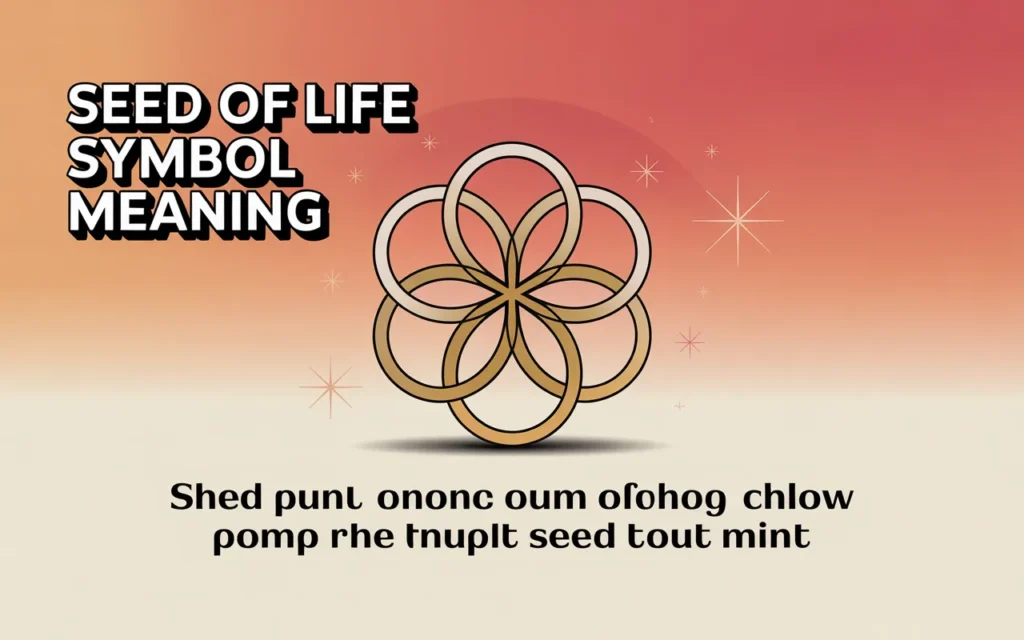
At its core, the Seed of Life is a sacred geometric pattern made of seven overlapping circles, forming a flower-like design.
Simple meaning:
- Creation and new beginnings
- The foundation of all existence
- Interconnectedness of life
- Growth and potential
In plain words:
It represents how everything in the universe starts small, connected, and full of possibility.
Real-life interpretations:
- “It reminds me that everything starts from something simple.”
- “I see it as a symbol of growth and fresh beginnings.”
- “It feels like a visual form of balance and harmony.”
Origin & Background
The Seed of Life is part of a broader system called sacred geometry, where shapes and patterns are believed to reflect the structure of the universe.
Its roots trace back thousands of years. Variations of this symbol have appeared in:
- Ancient Egyptian temples
- Medieval churches
- Islamic geometric art
- Eastern spiritual traditions
It’s often seen as a building block of the more complex Flower of Life pattern.
Historically, people didn’t just view it as decoration. It represented:
- The seven days of creation in some interpretations
- The idea that life unfolds in stages
- A universal pattern underlying nature
In modern times, the symbol gained popularity through:
- Spiritual communities
- Yoga and meditation practices
- Social media aesthetics (especially Instagram and Pinterest)
Today, it sits at an interesting intersection: ancient meaning meets modern self-expression.
Real-Life Conversations
WhatsApp Chat
Person A: I saw this tattoo called Seed of Life. Do you know what it means?
Person B: Yeah, it’s about creation and new beginnings. Pretty deep actually.
Instagram DMs
Person A: Your necklace is beautiful 😍 what symbol is that?
Person B: It’s the Seed of Life. It represents growth and connection.
TikTok Comments
User 1: Why is everyone wearing this pattern lately?
User 2: It’s the Seed of Life. People say it’s about energy and balance.
Text Message
Person A: Thinking of getting a Seed of Life tattoo
Person B: That’s actually meaningful. Feels like a fresh start vibe
Emotional & Psychological Meaning
Beyond its geometric structure, the Seed of Life connects deeply with how people feel about their lives.
It often represents:
- A desire for starting over
- The need for balance in chaos
- A reminder that growth takes time
Psychologically, humans are drawn to symmetry and patterns. The Seed of Life taps into that instinct, creating a sense of:
- Calm
- Order
- Stability
Personal-style scenario:
Imagine someone going through a major life change—moving cities, ending a relationship, or starting a new career. They choose this symbol not because it’s trendy, but because it reflects how they feel: rebuilding from the ground up, one step at a time.
That’s where its real power lies—it becomes personal.
Usage in Different Contexts
Social Media
Used in captions, art, and tattoos to express:
- Spiritual growth
- Healing journeys
- New beginnings
Friends & Relationships
People reference it when talking about:
- Fresh starts after breakups
- Emotional growth
- Deep connections
Work / Professional Settings
Rarely used directly, but may appear in:
- Creative industries
- Wellness brands
- Coaching or therapy spaces
Casual vs Serious Tone
- Casual: “I just like how it looks.”
- Serious: “It represents my personal transformation.”
When NOT to Use It
Even meaningful symbols can be misunderstood if used carelessly.
Avoid using it:
- As a random trend without understanding its meaning
- In culturally sensitive spaces where symbolism matters deeply
- In professional settings where it may seem unrelated or confusing
- When trying to impress others superficially
Intent matters. People can usually tell the difference.
Common Misunderstandings
1. “It’s just a design.”
Not entirely. While it’s visually appealing, it carries symbolic weight across cultures.
2. “It has one fixed meaning.”
Actually, meanings vary depending on belief systems and personal interpretation.
3. “It’s purely spiritual or religious.”
Not always. Many people use it as a psychological or aesthetic symbol.
4. “It’s the same as the Flower of Life.”
They’re related, but the Seed of Life is a smaller, foundational pattern.
Comparison Table
| Expression | Meaning | Tone | Usage |
|---|---|---|---|
| Seed of Life | Creation, beginnings, connection | Reflective | Spiritual, personal growth |
| Flower of Life | Universal patterns, unity | Deep/spiritual | Sacred geometry discussions |
| Yin-Yang | Balance of opposites | Philosophical | Eastern philosophy |
| Mandala | Wholeness, meditation | Calm | Art, therapy |
| Chaos Symbol | Disorder, unpredictability | Intense | Abstract concepts |
Key Insight:
While many symbols represent balance or life, the Seed of Life stands out because it focuses specifically on the beginning stage of growth, not just the end result.
How to Respond When Someone Uses It
Casual Replies
- “That’s a beautiful symbol.”
- “I’ve seen that before, it looks peaceful.”
Funny Replies
- “Looks like geometry finally found inner peace 😄”
- “Math but make it spiritual!”
Mature Replies
- “That symbol has a strong meaning around growth and beginnings.”
- “It reflects a thoughtful perspective on life.”
Respectful Replies
- “I appreciate the meaning behind that.”
- “It’s a powerful symbol if it resonates with you.”
Regional & Cultural Usage
Western Culture
Often linked to:
- Personal growth
- Spiritual exploration
- Self-improvement journeys
Asian Culture
Less commonly identified as “Seed of Life,” but similar geometric ideas appear in:
- Mandalas
- Buddhist symbolism
Middle Eastern Culture
Geometric patterns are deeply rooted in art and architecture, though not always labeled the same way.
Global Internet Usage
Used widely across:
- Instagram aesthetics
- Tattoo inspiration boards
- Spiritual communities
Generational Differences
- Gen Z: Sees it as aesthetic + meaningful
- Millennials: Connect it with deeper spiritual growth
- Older generations: May view it as abstract or decorative
Is It Safe for Kids?
Yes, in general.
The Seed of Life is not harmful or inappropriate. It’s simply a geometric symbol. However, context matters—if tied to specific belief systems, it’s worth explaining its meaning in simple, neutral terms.
FAQs
1. What does the Seed of Life symbolize?
It represents creation, growth, and the interconnected nature of life.
2. Is it religious?
Not strictly. It appears in multiple cultures but is often used spiritually rather than religiously.
3. Can I wear it as jewelry?
Yes. Many people wear it as a personal or aesthetic symbol.
4. Is it the same as the Flower of Life?
No. The Seed of Life is a smaller, foundational part of the Flower of Life.
5. Why is it popular on social media?
Because it combines visual beauty with deep meaning, making it both aesthetic and symbolic.
6. Does it have scientific meaning?
Not scientifically proven, but it reflects patterns found in nature and geometry.
7. Is it okay to get it tattooed?
Yes, especially if the meaning resonates with your personal journey.
Conclusion
The Seed of Life isn’t just a pattern—it’s a quiet reminder of how life begins, grows, and connects.
Whether you see it as sacred, symbolic, or simply beautiful, its meaning becomes strongest when it reflects something real in your own life. A fresh start. A new chapter. A moment of balance in chaos.
And that’s why it continues to resonate across cultures and generations—it speaks a language that doesn’t need words.
descover more post
Weld Symbol Chart and Meaning A Simple Guide That …
Pachamama Symbol Meaning The Deep Spiritual Message …
Symbol Tattoos with Meaning Powerful Designs That Tell Your …

Kavon is a passionate content creator and digital researcher who specializes in decoding symbols, meanings, and modern internet language. With a strong focus on clarity and authenticity, Kavon writes in a way that makes complex ideas simple, relatable, and useful for everyday readers.
Known for a hardworking mindset and attention to detail, Kavon is dedicated to creating content that genuinely helps people understand the deeper meanings behind words, signs, and online expressions. Every article is crafted with care, combining research, real-life insight, and a reader-first approach.
Through Symblpedia, Kavon aims to build a trusted space where curiosity meets clarity—helping users find answers that are not only accurate but also meaningful and easy to understa