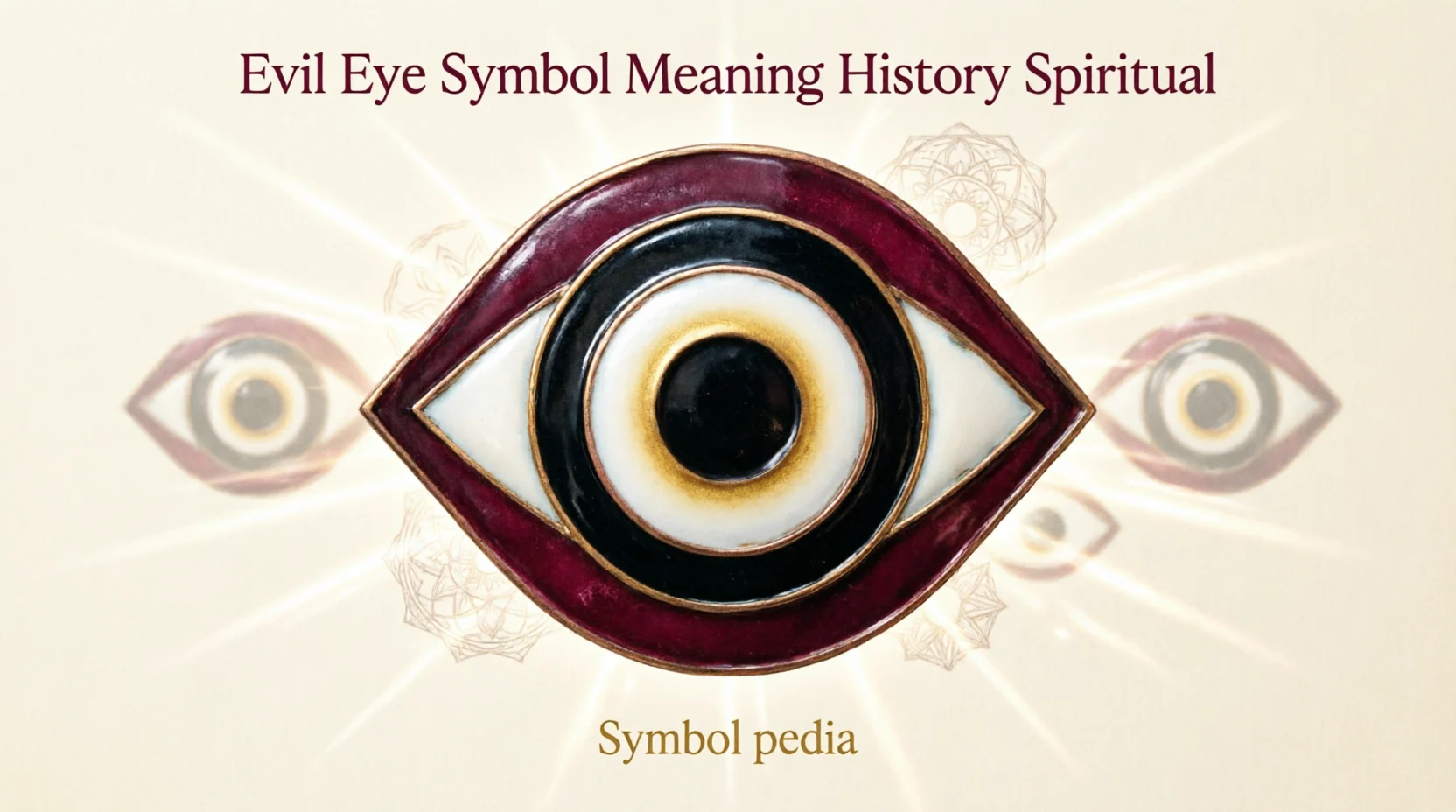
The evil eye symbol meaning is deeply connected with protection, jealousy, spiritual beliefs, and the fear that another person’s negative attention can cause harm.
You may have seen the familiar blue-and-white eye on jewelry, bracelets, necklaces, home decorations, tattoos, or social media posts. For some people, it is a meaningful protective symbol. For others, it is simply a beautiful cultural design.
That difference is important.
The evil eye is not just a trendy icon. It has a long history across several cultures, and its meaning can change depending on where you encounter it and what the person wearing it believes.
People often search for its meaning after receiving an evil eye bracelet, considering an evil eye tattoo, seeing the symbol in someone’s home, or noticing the 🧿 emoji in a message. They may wonder: Is it a religious symbol? Does it actually protect you? Does it represent something negative? And why does an eye have such a powerful meaning?
Understanding the symbol becomes much easier once you separate the evil eye belief from the evil eye amulet used as protection.
The evil eye traditionally refers to a harmful look or gaze, often associated with envy or jealousy. The familiar eye-shaped charm, however, is commonly used as a protective object against that perceived negativity.
In other words, the symbol is often associated with protection from the evil eye rather than representing evil itself.
Evil Eye Symbol Meaning – Quick Meaning
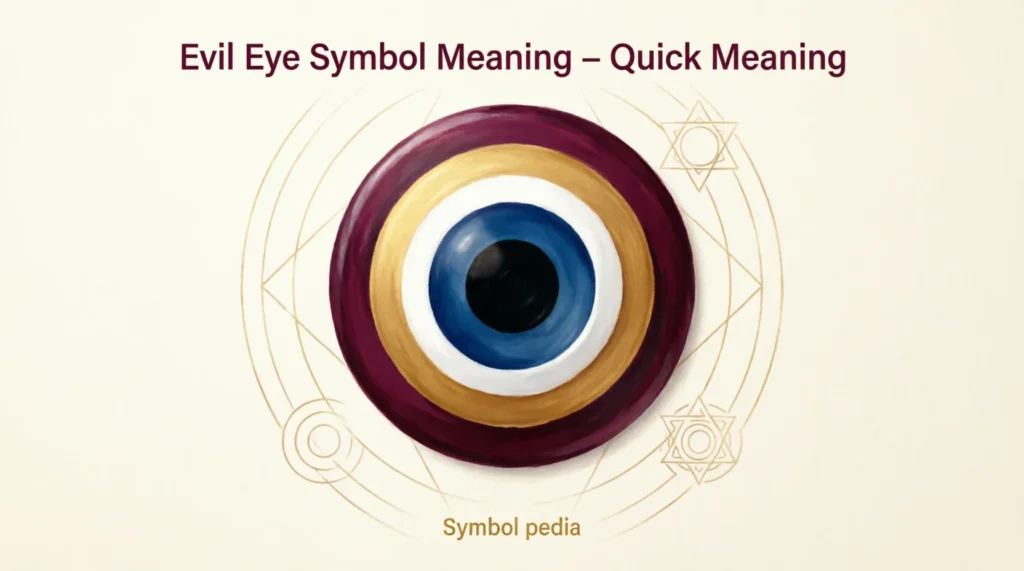
The simplest explanation of the evil eye symbol is:
The evil eye symbol is traditionally associated with protection from jealousy, envy, misfortune, and harmful intentions.
Its meaning can include:
- Protection – A reminder or charm intended to guard against negative energy or the evil eye.
- Awareness – The eye can symbolize vigilance and paying attention to what surrounds you.
- Good fortune – In some traditions, protective charms are connected with blessings and well-being.
- Spiritual protection – Some people use it as part of a broader spiritual or cultural practice.
- Cultural identity – For others, wearing it connects them with family history and tradition.
- Modern fashion – Today, many people wear it simply because they like its appearance.
For example, someone might say:
“I wear this evil eye bracelet for protection.”
Another person may use it more casually:
“I bought this 🧿 necklace because I love the design.”
On social media, someone might comment:
“Sending you good energy 🧿.”
The same symbol can therefore carry personal, spiritual, cultural, or purely aesthetic meaning.
Origin & Background of the Evil Eye Symbol
The belief in the evil eye is extremely old. Versions of the idea have appeared across different societies surrounding the Mediterranean, Middle East, North Africa, South Asia, and other regions.
The central belief is that a person’s gaze, particularly one motivated by envy or ill will, can bring misfortune to another person.
Historically, the fear was not necessarily limited to deliberate harm. In some traditions, even excessive admiration or praise could be considered dangerous if it attracted unwanted attention.
This helps explain why protective customs developed around the belief.
The Eye as a Protective Image
The eye is a natural symbol of awareness. It watches, observes, and notices what is happening.
Over time, eye-shaped amulets became associated with protection against harmful looks. One of the best-known forms is the blue-and-white nazar, commonly recognized as the evil eye charm.
The traditional design often features concentric circles resembling an eye. Blue is particularly associated with many versions of the charm, although colors and designs vary.
It is important not to assume that every culture understands the symbol in exactly the same way.
Some communities treat it as a meaningful protective amulet. Others may view the underlying belief as superstition. Still others appreciate it mainly as a cultural design.
Cultural Influence
The symbol became especially visible through Mediterranean and Middle Eastern traditions and later spread widely through travel, migration, jewelry, interior decoration, fashion, and popular culture.
Today, you can find evil eye imagery far beyond the regions where related traditions originated.
It appears on:
- Bracelets
- Necklaces
- Rings
- Wall decorations
- Clothing
- Tattoos
- Phone cases
- Home accessories
- Social media graphics
- Emojis
How Social Media Changed Its Meaning
Social media has made the symbol easier to recognize globally.
The 🧿 emoji is often used alongside phrases about protection, blessings, good luck, or avoiding jealousy. Someone might post a photo of a new home followed by “🧿,” suggesting a wish for protection or positive energy.
At the same time, social media has made the symbol more fashionable.
A person may wear an evil eye necklace without practicing the tradition behind it. This creates an interesting modern distinction between cultural meaning and personal meaning.
Real-Life Conversations About the Evil Eye Symbol
The meaning becomes clearer when you see how people actually use it.
WhatsApp Conversation
Person A:
“Why did you send me the blue eye emoji?”
Person B:
“Your new apartment looks amazing! 🧿 Just wishing you protection and good vibes.”
Person A:
“Ohhh, I thought you meant something bad!”
Person B:
“No, the opposite. It’s usually used as a protective symbol.”
Here, the symbol expresses goodwill rather than something threatening.
Instagram DM
Person A:
“That evil eye bracelet is beautiful. Does it mean something?”
Person B:
“Yes. My grandmother always believed it helped protect against jealousy and bad energy.”
Person A:
“That makes it even more special.”
The bracelet carries personal and family meaning in this example.
TikTok Comments
Person A:
“Your new business is doing so well!”
Person B:
“Thank you! 🧿❤️”
The response does not necessarily mean the creator thinks someone is literally trying to harm them. It can simply express a culturally familiar wish to protect good fortune from envy.
Text Message
Person A:
“I finally got the job!”
Person B:
“Congratulations!! 🧿✨”
Person A:
“Why the eye?”
Person B:
“Just protecting the good news from bad vibes 😂.”
This is a good example of how younger internet users may use the symbol playfully while still drawing from its traditional association with protection.
Emotional & Psychological Meaning
Symbols often become powerful because they give people a simple way to express complicated feelings.
The evil eye can represent the desire to protect something valuable: happiness, health, relationships, success, family, or personal peace.
Psychologically, a protective object can also function as a symbolic reminder.
Someone wearing an evil eye bracelet may feel reassured because it represents safety or positive intentions. Whether or not a person believes the charm has supernatural power, the object can still have emotional significance.
Imagine someone who has recently achieved something important after years of effort. They share the news with friends but worry about attracting jealousy or unwanted attention.
Wearing an evil eye charm may give them a comforting sense that they are guarding something precious.
That emotional role should not be confused with scientific proof of supernatural protection. The cultural or personal meaning of a symbol can be genuine even when people disagree about its literal power.
In everyday communication, the symbol can therefore communicate a quiet message:
“I want to protect what matters to me.”
Usage in Different Contexts
Social Media
On Instagram, TikTok, Facebook, and messaging platforms, 🧿 is often used with good news, personal achievements, travel photos, relationships, weddings, new homes, or other positive moments.
Someone might write:
“New chapter begins 🧿✨.”
Here, the symbol suggests protection around a new beginning.
Friends & Relationships
Friends may use the evil eye symbol when congratulating each other.
It can appear after announcements about a new relationship, career success, pregnancy, a new home, or another meaningful milestone.
The exact intention depends on the people involved.
Work & Professional Settings
The symbol is less appropriate in formal professional communication unless you already know the audience is comfortable with it.
Sending a colleague “Congratulations 🧿” may be perfectly natural in a friendly workplace chat, but it could seem confusing or overly personal in a formal business email.
Casual vs. Serious Tone
The same symbol can be serious or playful.
A family member may use it because of a deeply held cultural belief, while a younger person may use it humorously after posting a successful achievement.
Context determines the tone.
When NOT to Use the Evil Eye Symbol
Although the evil eye symbol is generally harmless in casual communication, there are situations where caution makes sense.
Don’t Assume Everyone Shares the Belief
Not everyone believes in the evil eye. Some people consider it cultural tradition, while others view it as superstition or simply decoration.
Avoid telling someone that the symbol will definitely protect them as though this were an established fact.
Be Careful With Religious or Cultural Context
Symbols can have different meanings within different communities.
If you are using the symbol in a culturally sensitive setting, understand what it represents rather than treating it as a generic “good luck” icon.
Avoid Using It to Frighten Someone
Telling a person, “You have the evil eye,” can sound threatening depending on the context.
If they are unfamiliar with the expression, they may interpret it literally as an accusation or warning.
Think About Professional Communication
In a formal email, a straightforward “Congratulations” is usually safer than adding an unfamiliar cultural symbol.
Use it when the relationship and setting make the meaning clear.
Common Misunderstandings About the Evil Eye
One of the biggest misunderstandings is assuming that the evil eye symbol represents evil.
Usually, the protective charm is intended to guard against the evil eye rather than celebrate or promote evil.
Another misunderstanding is believing that everyone wearing the symbol has exactly the same religious or spiritual beliefs.
That is not necessarily true.
A person may wear the symbol because of family tradition. Another may wear it as a fashion accessory. Someone else may use 🧿 jokingly on social media.
There is also confusion between the evil eye itself and the evil eye amulet.
The evil eye is the traditional belief in a harmful gaze. The amulet is the object used by some people as protection against it.
Finally, the symbol does not automatically mean that the wearer thinks another person is jealous.
When someone posts “🧿,” they may simply be expressing a general desire to protect their happiness or success.
Evil Eye vs. Similar Symbols and Expressions
| Symbol or Expression | Common Meaning | Main Difference |
|---|---|---|
| 🧿 Evil eye | Protection from envy or harmful attention | Strong cultural and historical associations |
| 🍀 Four-leaf clover | Luck and good fortune | Primarily associated with luck rather than protection |
| 🪬 Hamsa | Protection, blessings, and warding off harm | A hand-shaped protective symbol |
| 🙏 | Prayer, gratitude, or respect | Communicates an action or emotion rather than specifically protection from the evil eye |
| ✨ | Positivity, excitement, or something special | Usually decorative and broadly positive |
| “Knock on wood” | Avoiding bad luck after positive statements | A phrase/custom rather than an eye-shaped symbol |
| “Good vibes” | Positive energy or intentions | Modern informal expression without the same historical symbolism |
| Bad luck | Misfortune | Opposite emotional direction from a protective charm |
Key Insight
The evil eye symbol belongs to a much older cultural tradition than many modern internet symbols. Its modern use can be spiritual, cultural, emotional, humorous, or fashionable, so context matters more than the image alone.
How to Respond When Someone Uses the Evil Eye Symbol
Your response depends on why they used it.
Casual Replies
- “Thank you! 🧿”
- “Good vibes only!”
- “I’ll take the protection 😂.”
- “Haha, appreciate it!”
Funny Replies
- “Keeping the jealousy away 😂🧿.”
- “The security system is activated.”
- “Protected and thriving 😂.”
Mature Replies
- “Thank you. I appreciate the good intention.”
- “That’s a meaningful symbol. Thank you.”
- “I appreciate the protection and positive wishes.”
Respectful Replies
If the person uses it because of their cultural or family tradition, acknowledging that meaning respectfully is appropriate.
You do not have to share the belief to appreciate what the gesture means to them.
Regional & Cultural Usage
Western Culture
In Western countries, the evil eye has become increasingly recognizable through jewelry, fashion, home decor, travel, and social media.
Many people use it as a general symbol of protection or positive energy, while others simply appreciate its appearance.
Asian Culture
Across parts of Asia, beliefs surrounding envy, spiritual protection, auspiciousness, and harmful attention vary considerably.
The evil eye may be recognized through global popular culture, but it should not be assumed to have one universal meaning across every Asian community.
Some cultures have their own protective traditions and symbols that are distinct from the Mediterranean and Middle Eastern evil eye tradition.
Middle Eastern Culture
The evil eye is particularly familiar across many Middle Eastern communities, where concepts surrounding the evil eye have a long cultural history.
Practices and interpretations differ between families, communities, and religious traditions.
For some people, protection from the evil eye is a meaningful part of everyday cultural life. For others, beliefs about it may be approached differently.
Global Internet Usage
Online, the symbol has become much more flexible.
A person in one country may use 🧿 as a traditional protective reference, while someone thousands of miles away may use it simply to mean “protect this blessing” or “don’t jinx it.”
The internet has essentially created a shared visual language around the symbol.
Gen Z vs. Millennials
Younger users often use 🧿 casually, particularly alongside achievements, relationship posts, travel photos, or exciting announcements.
Millennials may use it in similarly informal ways, although individual familiarity often depends more on cultural background and family traditions than age alone.
There is no universal generational rule.
Is the Evil Eye Symbol Safe for Kids?
Generally, the evil eye symbol itself is harmless for children.
The important factor is how adults explain it.
A child can understand it as a cultural symbol associated with protection without being taught that other people are dangerous simply because they look at them or feel jealous.
If a child asks what 🧿 means, a simple explanation is enough:
“Some people use this symbol because they believe it represents protection from jealousy or bad intentions.”
That leaves room for cultural understanding without presenting a supernatural belief as proven fact.
FAQs
What does the evil eye symbol mean?
The evil eye symbol is commonly associated with protection from envy, jealousy, harmful attention, and misfortune.
Is the evil eye symbol good or bad?
The protective evil eye charm is generally considered a positive symbol because it is used to represent protection rather than evil.
What does 🧿 mean in texting?
In texting, 🧿 can mean protection, avoiding jealousy, protecting good fortune, or sending positive wishes. Its exact meaning depends on context.
What does an evil eye bracelet symbolize?
An evil eye bracelet commonly symbolizes protection from the evil eye. It can also represent cultural heritage, personal belief, or a meaningful reminder of positivity.
Is the evil eye a religious symbol?
The evil eye is connected to traditions found across multiple cultures and religious communities, but the symbol itself should not automatically be classified as belonging exclusively to one religion.
Why do people wear the evil eye?
People wear it for different reasons, including cultural tradition, spiritual beliefs, personal comfort, protection symbolism, family heritage, and fashion.
Can the evil eye symbol mean jealousy?
Yes, jealousy and envy are central to the traditional concept of the evil eye. However, wearing or sending the symbol does not necessarily mean the person is accusing someone of being jealous.
Conclusion
The evil eye symbol meaning is much richer than a simple blue eye on a bracelet or a 🧿 in a text message.
At its heart, the symbol is connected with an ancient human concern: protecting the things we value from harm, envy, and unwanted attention.
For one person, an evil eye necklace may carry family memories. For another, a bracelet may represent spiritual protection. Someone else may simply love the design. On social media, 🧿 can become an easy way to say, “Protect this good thing,” “Keep the negativity away,” or “I’m wishing you well.”
That flexibility is part of what has allowed the symbol to survive and travel across generations.
The most respectful way to understand it is not to assume that everyone believes the same thing. Instead, look at the context, culture, relationship, and intention behind the symbol.
Once you understand that distinction, the evil eye becomes much easier to recognize—not as a symbol of evil, but as an enduring representation of protection, awareness, hope, and the desire to keep something precious safe.
descover more post
What Does the ® Symbol Mean A Complete Guide to the …
What Does the Triangle Symbol Mean on My Car Warning …
What Does R Symbol Mean Real Meaning Uses Examples …

Orvian is a passionate researcher and dedicated content creator focused on exploring the deeper meanings behind symbols, signs, and cultural interpretations. With a strong interest in symbolism and human psychology, Orvian simplifies complex ideas into clear, engaging, and easy-to-understand content for readers around the world.
Through consistent research and thoughtful writing, Orvian aims to provide accurate, insightful, and meaningful information that helps users connect with symbols on a deeper level—whether for personal growth, curiosity, or knowledge.
Known for a hardworking mindset and attention to detail, Orvian believes that every symbol carries a story, and every story deserves to be understood.