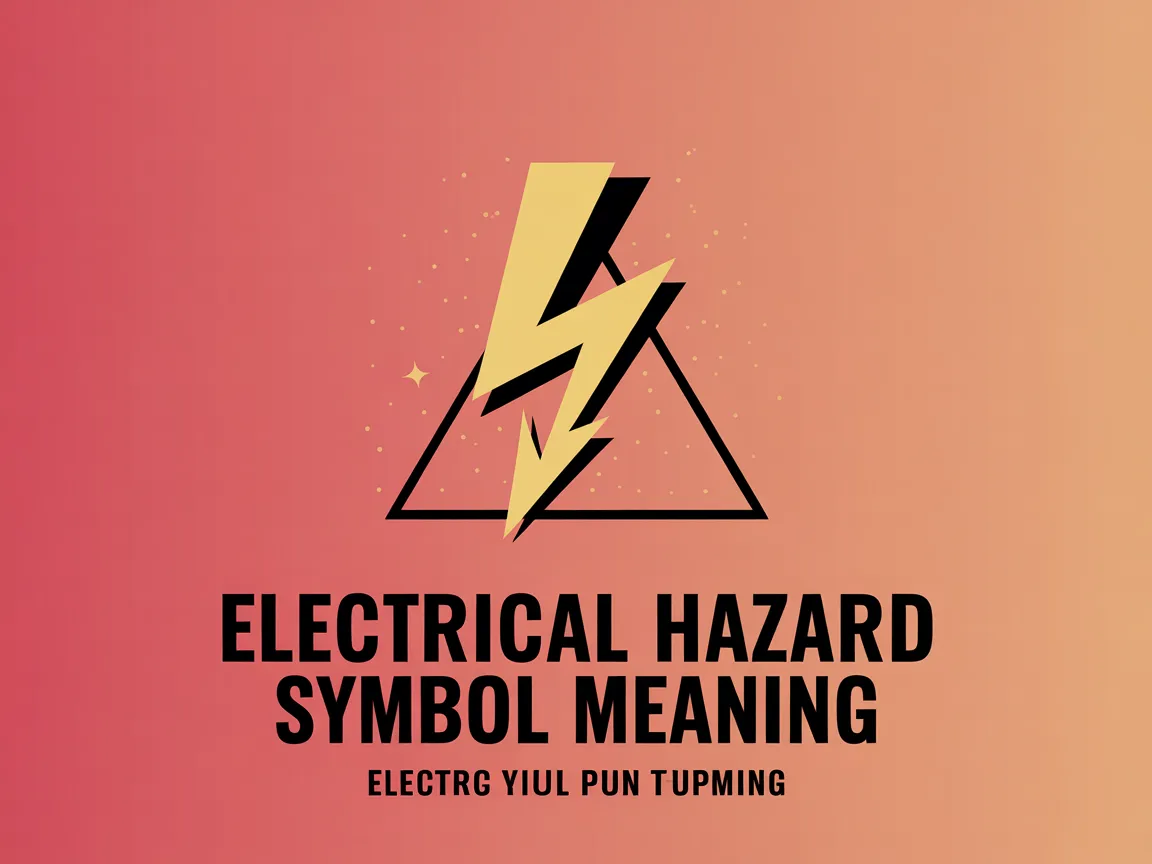
You’ve probably seen it on power boxes, construction sites, or even on everyday appliances—a bold lightning bolt inside a triangle or warning sign. It’s simple, striking, and hard to ignore. But what exactly does it mean?
The electrical hazard symbol isn’t just a design choice. It’s a universal warning that something nearby could seriously harm you if handled carelessly. People often search for its meaning because they’ve encountered it in real life and want to know: Is this dangerous? What should I do?
This article clears that confusion. We’ll go beyond the basic definition and explore how this symbol works, why it matters, and how it connects to real human behavior and decision-making.
⚡ Electrical Hazard Symbol Meaning – Quick Answer
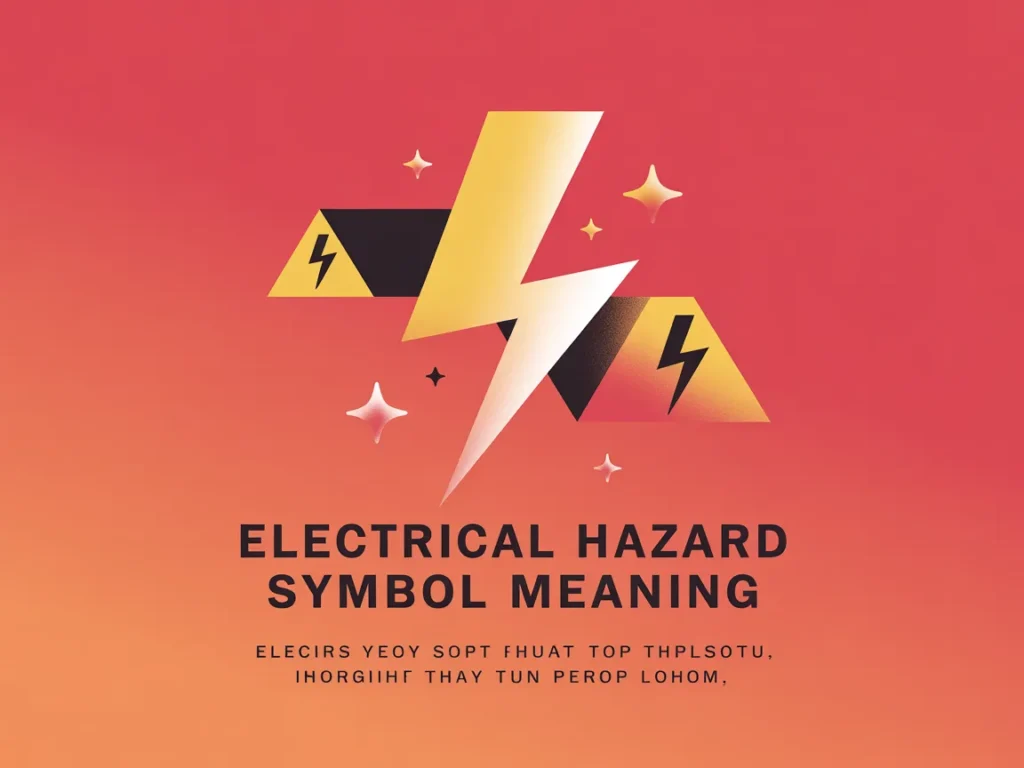
The electrical hazard symbol is a safety warning that indicates the presence of dangerous electrical energy.
In simple terms:
- ⚡ It warns of risk of electric shock
- ⚡ It may indicate high voltage equipment
- ⚡ It signals potential injury or death if mishandled
Common visual:
- A lightning bolt inside a yellow triangle with a black border
Real-life examples:
“Do not open this panel—electrical hazard.”
“Stay clear of the wires. There’s a shock risk.”
“Warning: High voltage area.”
It’s not decorative. It’s a direct message: Be careful—this can hurt you.
Origin & Background
The electrical hazard symbol didn’t appear randomly. It evolved alongside industrial growth, especially during the rise of electricity in the late 19th and early 20th centuries.
As electricity became widely used in homes, factories, and public spaces, accidents increased. Workers and the general public needed a fast, visual way to recognize danger, regardless of language.
That’s where the lightning bolt came in.
It symbolized:
- Speed
- Power
- Sudden impact
Over time, safety organizations standardized it, making it globally recognizable. Today, it’s part of international safety systems like ISO and OSHA guidelines.
Cultural influence
The lightning bolt has always carried meaning—strength, danger, even divine power in ancient myths. That emotional weight makes the symbol more effective. When people see it, they instinctively pause.
Modern impact
In the age of social media and digital awareness, this symbol appears not just on physical objects but also in:
- Infographics
- Safety tutorials
- Awareness campaigns
It has become part of a universal visual language.
Real-Life Conversations
WhatsApp Chat
Person A:
Hey, I saw a lightning sign on the meter box. Is that serious?
Person B:
Yeah, don’t touch it. That’s an electrical hazard warning.
Instagram DM
Person A:
Why do they put that ⚡ sign everywhere?
Person B:
It means high voltage. Basically, “don’t mess with this.”
TikTok Comments
User1:
What does that symbol mean on my charger?
User2:
It’s warning you about electric shock risk.
Text Message
Person A:
The repair guy said not to open the panel.
Person B:
If it has that lightning sign, just stay away.
These conversations reflect how naturally the symbol shows up in everyday life—and how often people rely on quick explanations.
Emotional & Psychological Meaning
At its core, the electrical hazard symbol triggers instant caution.
It works because it taps into basic human instincts:
- Fear of pain
- Desire to stay safe
- Awareness of invisible danger
Electricity is not something we can see directly. That uncertainty makes it more intimidating. The symbol fills that gap—it gives a visible warning for an invisible threat.
Why people rely on it
In fast-moving environments, people don’t read long instructions. They react to symbols. The lightning bolt becomes a mental shortcut for danger.
A real-life scenario
Imagine you’re helping someone fix a broken switch at home. You open the panel and notice the lightning symbol.
Even if you’re confident, something inside you pauses.
That moment of hesitation? That’s the symbol doing its job.
Usage in Different Contexts
Social Media
The ⚡ emoji sometimes represents energy or excitement, but when used in safety posts, it retains its warning meaning.
Example:
“⚡ Be careful around exposed wires!”
Friends & Relationships
Rarely used literally in conversations, but can appear jokingly:
“Don’t touch that, bro—it’s a hazard ⚡”
Work / Professional Settings
Here, the meaning is serious and non-negotiable.
- Construction sites
- Electrical panels
- Industrial machinery
It signals strict safety protocols.
Casual vs Serious Tone
- Casual: Light jokes or exaggeration
- Serious: Real warnings with real consequences
Context determines whether it’s playful or critical.
When NOT to Use It
Even though the symbol is widely recognized, misuse can cause confusion.
Avoid using it:
- ❌ In jokes about real danger
- ❌ In professional documents without actual risk
- ❌ As decoration where safety is not involved
- ❌ In misleading social media posts
Cultural sensitivity
In some environments, safety symbols are taken very seriously. Misusing them can appear careless or disrespectful.
Common Misunderstandings
1. “It just means electricity is present”
Not exactly. It means dangerous levels of electricity.
2. “It’s safe if I don’t touch anything”
Incorrect. Even proximity can be risky in some cases.
3. “It’s just a general warning”
No—it specifically relates to electric shock hazards.
4. Emoji confusion
People sometimes confuse the ⚡ emoji with excitement, forgetting its original meaning is tied to danger.
Comparison Table
| Symbol / Expression | Meaning | Usage Context |
|---|---|---|
| ⚡ Electrical Hazard | Risk of electric shock | Safety warnings |
| 🔥 Fire Hazard | Risk of fire | Flammable materials |
| ☢ Radiation Symbol | Exposure to radiation | Nuclear environments |
| ⚠ Warning Sign | General caution | Broad situations |
| 💡 Light Bulb | Idea or creativity | Informal use |
Key Insight
While many symbols warn of danger, the electrical hazard symbol stands out because it represents an invisible threat. You can’t see electricity—but the consequences are immediate and severe.
How to Respond When Someone Uses It
Casual Replies
- “Got it, I’ll stay away.”
- “Yeah, not touching that!”
Funny Replies
- “Nope, I choose life ⚡”
- “That’s a hard pass from me.”
Mature Replies
- “Thanks for the warning. Safety first.”
- “Let’s handle it properly.”
Respectful Replies
- “I appreciate the heads-up.”
- “I’ll follow the safety instructions.”
Regional & Cultural Usage
Western Culture
Strong emphasis on workplace safety. The symbol is widely recognized and strictly followed.
Asian Culture
High respect for warning systems, especially in industrial and urban environments.
Middle Eastern Culture
Common in construction-heavy regions. Often paired with multilingual warnings.
Global Internet Usage
The ⚡ emoji has expanded into meanings like:
- Energy
- Speed
- Excitement
But its original warning meaning still applies in serious contexts.
Generational Differences
Gen Z:
- Uses ⚡ more creatively (energy, hype)
Millennials:
- Understand both symbolic and literal meanings
Older generations:
- Associate it strongly with danger and safety
Is It Safe for Kids?
Yes—but with guidance.
Children should be taught that the symbol means:
- “Do not touch”
- “Stay away”
- “Ask an adult”
It’s actually one of the most effective tools for teaching safety awareness early on.
FAQs
1. What does the electrical hazard symbol mean?
It warns of dangerous electrical energy that can cause shock, injury, or death.
2. Is the lightning bolt always dangerous?
In safety signs, yes. It indicates a real hazard.
3. Where is this symbol commonly used?
On electrical panels, machinery, construction sites, and appliances.
4. Can I ignore it if I’m careful?
No. It’s there because risk exists even with caution.
5. Is ⚡ emoji the same as the hazard symbol?
Not always. Context matters—online it can mean excitement.
6. Why is yellow used in the sign?
Yellow grabs attention and signals caution universally.
7. What should I do when I see it?
Stay away, avoid contact, and follow safety instructions.
Conclusion
The electrical hazard symbol may look simple, but it carries a powerful message: respect what you can’t see.
Electricity is part of everyday life, yet it demands awareness and caution. That small lightning bolt is more than a warning—it’s a silent protector, guiding your decisions in moments that matter.
Once you understand its meaning, you don’t just recognize it—you respond to it. And that awareness can make all the difference.
descover more post
Rune Symbol Meaning Hidden Messages Ancient Power 2026
Horned God Symbol Meaning A Deep Guide to Its Origins …
Expiry Date Symbol Meaning What It Really Says About Time …

Orvian is a passionate researcher and dedicated content creator focused on exploring the deeper meanings behind symbols, signs, and cultural interpretations. With a strong interest in symbolism and human psychology, Orvian simplifies complex ideas into clear, engaging, and easy-to-understand content for readers around the world.
Through consistent research and thoughtful writing, Orvian aims to provide accurate, insightful, and meaningful information that helps users connect with symbols on a deeper level—whether for personal growth, curiosity, or knowledge.
Known for a hardworking mindset and attention to detail, Orvian believes that every symbol carries a story, and every story deserves to be understood.