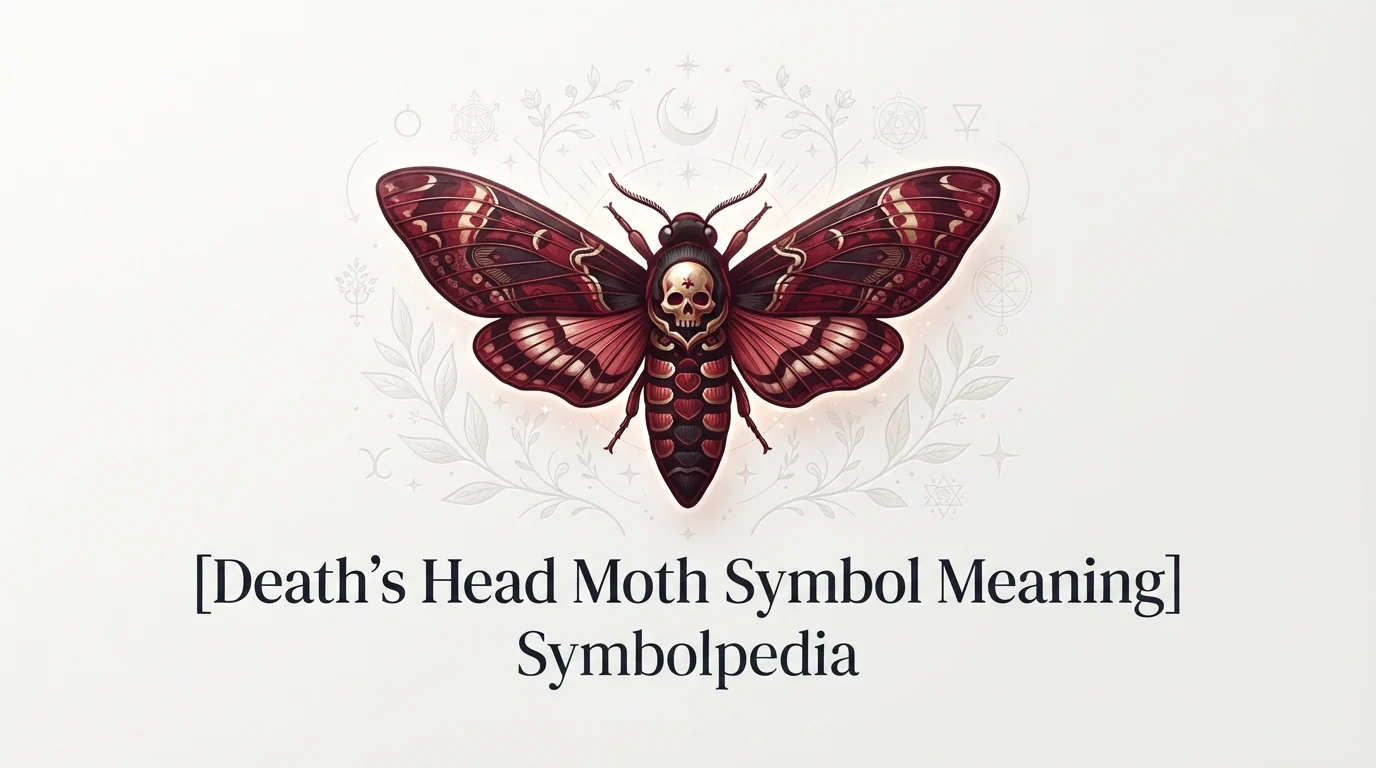
Few insects have an appearance as striking and unsettling as the death’s head moth. With its dark wings, powerful body, and skull-like marking on its thorax, this unusual moth looks almost like a creature taken from a gothic painting or a mysterious dream.
For centuries, its distinctive appearance has inspired curiosity, fear, and fascination. Some people associate it with death and bad omens, while others see it as a symbol of transformation, courage, mystery, and the beauty hidden within darkness.
The Death’s Head Moth symbol meaning depends largely on cultural beliefs, personal experiences, and the context in which the image appears. It may represent mortality, the acceptance of life’s temporary nature, spiritual change, or an attraction to the darker side of human existence.
Today, the symbol appears in tattoos, gothic artwork, fashion, jewelry, literature, films, and online communities. People are often drawn to it because it combines an unsettling image with deeper questions about life, identity, and change.
But does seeing a death’s head moth actually mean something bad will happen? Is it a spiritual sign, a reminder of death, or simply an extraordinary insect with a memorable appearance?
Understanding its natural history and symbolic associations helps separate established facts from folklore and personal interpretation.
Death’s Head Moth Symbol Meaning — Quick Meaning
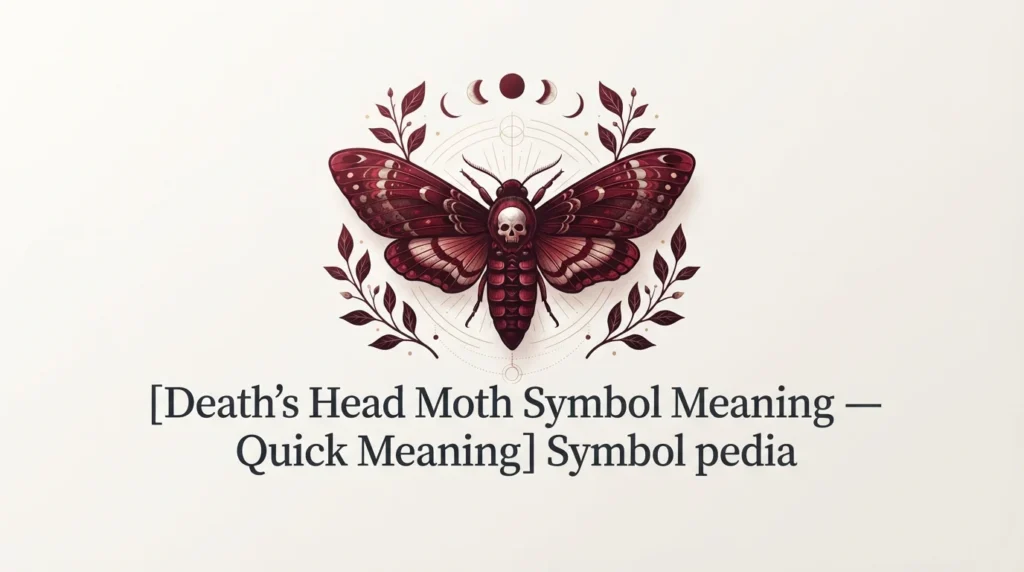
The death’s head moth commonly symbolizes mortality, transformation, mystery, fear, resilience, and the relationship between life and death.
Its most recognizable feature is a marking resembling a human skull on the upper body. This visual detail has influenced its reputation, but the moth itself is a real animal, not an inherently supernatural sign.
Here are the most common symbolic interpretations:
- Death and mortality: A reminder that life is temporary and precious.
- Transformation: An association with metamorphosis, personal growth, and changing identities.
- Mystery: A connection to the unknown, hidden truths, and unexplained experiences.
- Fear and courage: A symbol of confronting uncomfortable thoughts rather than avoiding them.
- Rebirth: A representation of moving through one stage of life into another.
- Independence: An expression of individuality and resistance to conventional expectations.
- Dark beauty: An appreciation for things that appear frightening but possess their own unusual beauty.
For example, someone might explain a tattoo by saying, “It reminds me that life is short, so I want to live honestly.”
An artist might use the image to communicate, “Beauty can exist in things people fear.”
Someone else might simply say, “I love its mysterious, gothic appearance.”
All three interpretations are possible. The symbol has no single universal meaning, and personal intention often matters more than any fixed definition.
Origin and Background of the Death’s Head Moth
The death’s head moth is the common name associated with moths in the genus Acherontia. The best-known species include Acherontia atropos, Acherontia styx, and Acherontia lachesis.
The skull-like marking is especially associated with Acherontia atropos, often called the African death’s head hawkmoth. Its appearance and unusual behavior have contributed to its place in folklore.
Why is it called the death’s head moth?
The name comes from the pale marking on its thorax, which can resemble a human skull. Depending on the individual moth, the pattern may look more or less like a recognizable face.
The word “death’s head” reflects this visual resemblance. It does not mean the insect causes death or predicts misfortune.
Ancient mythology and symbolism
The scientific name Acherontia atropos draws on figures associated with Greek mythology.
Acheron is the name of a river connected with the underworld in Greek tradition. Atropos is one of the three Fates, associated with the cutting of the thread of life.
These mythological associations make the moth’s name particularly evocative. They also help explain why the insect fits naturally into stories about mortality, fate, and the boundaries between life and death.
However, the scientific name should not be mistaken for proof that the moth carries a supernatural message.
Folklore and the fear of bad omens
In parts of European folklore, the moth became associated with misfortune, death, or disturbing events. Its unusual appearance and its ability to produce a squeaking sound when disturbed helped strengthen its eerie reputation.
Its appearance in popular horror culture further established it as a memorable image of unease.
A particularly famous example is the film The Silence of the Lambs, which used the death’s head hawkmoth as a disturbing visual motif. The image became recognizable to audiences who might never have encountered the actual insect.
Social media and modern symbolism
On platforms such as Instagram, Pinterest, and TikTok, the moth appears in tattoo designs, alternative fashion, dark illustrations, and symbolic artwork.
Its meaning has expanded beyond fear. Modern interpretations often emphasize transformation, self-acceptance, mortality, and the courage to embrace one’s individuality.
For some people, the image is spiritual. For others, it is artistic, psychological, or simply visually compelling.
Real-Life Conversations: How People Interpret the Symbol
These fictional examples illustrate how the same image can mean different things to different people.
1. WhatsApp: Choosing a Tattoo
Person A: “I’m thinking about getting a death’s head moth tattoo.”
Person B: “Isn’t that supposed to mean death or bad luck?”
Person A: “Maybe in some stories. I see it as a reminder that life doesn’t last forever.”
Person B: “That’s actually a powerful way to look at it.”
Meaning: The conversation shows how a symbol associated with fear can become a personal reminder to value life.
2. Instagram DMs: A Mysterious Artwork
Person A: “I saw your moth drawing. Why did you put a skull on it?”
Person B: “It’s a death’s head moth. I wanted to explore the idea of beauty and mortality.”
Person A: “It feels dark, but I can’t stop looking at it.”
Person B: “That’s the feeling I wanted to create.”
Meaning: In art, the symbol can create tension between attraction and discomfort. Its power comes partly from the way those feelings coexist.
3. TikTok Comments: Spiritual Interpretation
Person A: “A death’s head moth landed near my window. Does that mean something spiritually?”
Person B: “Some people interpret moths as symbols of transformation.”
Person C: “I think it can also be a reminder to appreciate life, but I wouldn’t automatically call it an omen.”
Person A: “That makes me feel better. It was beautiful, honestly.”
Meaning: This conversation distinguishes personal spiritual interpretation from claims about what an encounter can objectively predict.
4. Text Messages: A Difficult Life Change
Person A: “I want a moth tattoo because this year changed me completely.”
Person B: “Why that particular moth?”
Person A: “The skull reminds me that things end. The wings remind me that something can still change.”
Person B: “I like that. It’s about surviving the ending, not just the ending itself.”
Meaning: The death’s head moth can represent the emotional process of leaving an old identity behind and building a new one.
Emotional and Psychological Meaning
The death’s head moth can provoke several emotional reactions at once. Its appearance is unsettling, yet its wings and unusual markings can also be beautiful.
This combination makes it a compelling symbol for people interested in the complicated parts of human experience.
Facing mortality
The skull-like marking naturally invites thoughts about death. For some people, this represents fear or grief. For others, it serves as a reminder that time is limited.
Thinking about mortality can encourage people to reconsider their priorities, appreciate their relationships, and make choices that reflect their values.
The symbol does not need to predict an ending to make someone reflect on life.
Transformation after hardship
Like other moths, the death’s head moth develops through metamorphosis. This biological process makes moths powerful symbols of change.
People may connect the image with recovering from a difficult relationship, rebuilding confidence, leaving a harmful environment, or discovering a different sense of identity.
The skull adds another layer: transformation can involve letting go of something that once felt essential.
Accepting the uncomfortable
Some people are attracted to symbols that challenge conventional ideas of beauty. The death’s head moth can represent the willingness to acknowledge fear, sadness, imperfection, and uncertainty.
Rather than pretending difficult experiences do not exist, the symbol may express a desire to face them honestly.
A personal-style scenario
Imagine someone who has spent years trying to meet other people’s expectations. After a major life change, they decide to get a death’s head moth tattoo.
For them, the design is not a celebration of death. It marks the end of a version of themselves that no longer feels authentic.
The skull represents what they have left behind, while the moth represents the possibility of becoming something different.
This interpretation is personal rather than universal, but it illustrates why the image can hold emotional significance.
Death’s Head Moth Symbolism in Different Contexts
Tattoos and body art
A death’s head moth tattoo can represent mortality, transformation, resilience, individuality, or an interest in gothic aesthetics.
Some people combine it with flowers to contrast life and death. Others add a clock, moon, dagger, candle, or skeletal elements to explore time, mystery, or personal struggle.
The design alone does not reveal the wearer’s beliefs. If you are curious about someone’s tattoo, asking what it means to them is more reliable than making assumptions.
Social media and online identity
On social platforms, the image may appear in profile pictures, illustrations, edits, and alternative fashion content.
It can communicate a preference for dark aesthetics, horror imagery, symbolism, or unconventional art. Some creators use it to explore mental and emotional themes through visual storytelling.
Not every post has a deeper spiritual meaning. Sometimes, the attraction is simply artistic.
Friends and relationships
In personal relationships, the moth may symbolize a shared experience, a difficult period that has ended, or a reminder of a meaningful connection.
A couple or group of friends might choose matching designs to represent surviving change together.
However, the image does not have a standard meaning for love, loyalty, or commitment. Those associations depend on the individuals involved.
Work and professional settings
The death’s head moth may be appropriate for creative projects, fashion design, illustration, or brands that use dark or alternative aesthetics.
In more conservative professional environments, its skull-like appearance may be interpreted as unsettling or unsuitable for the intended audience.
The right choice depends on the project, audience, and purpose rather than a universal rule against the symbol.
Spiritual and personal reflection
Some people view an encounter with the moth as an invitation to reflect on change, intuition, or mortality.
Others do not attach spiritual significance to it. Both perspectives can coexist without treating personal beliefs as scientific facts.
When NOT to Use the Death’s Head Moth Symbol
Although the image can be meaningful, it is worth considering the setting and the audience.
1. When the imagery may distress someone
The skull-like marking and associations with death may upset people who are grieving or uncomfortable with horror imagery. Consider the context before using it in a sensitive message or memorial.
2. When you want to communicate a universally positive message
The moth can symbolize hope or transformation, but it does not communicate those ideas clearly to everyone. If clarity matters, explain the meaning or choose a more familiar symbol.
3. When presenting folklore as fact
Avoid claiming that the moth definitely predicts death, brings bad luck, or carries a supernatural warning. Such claims belong to folklore or personal belief, not established scientific evidence.
4. When the symbolism could be misunderstood
A skull-themed design might be interpreted as threatening, gothic, or connected with horror rather than personal growth. Explain your intention when the distinction matters.
5. When using the symbol in another culture’s context
Research the particular audience and setting instead of assuming the same interpretation applies everywhere. Cultural associations can differ considerably.
Common Misunderstandings About the Death’s Head Moth
Misunderstanding 1: It always means death
Death is one of its strongest symbolic associations, but it is not the only one. The moth can also represent transformation, resilience, mystery, or an appreciation for dark beauty.
Misunderstanding 2: Seeing one is a bad omen
There is no reliable scientific evidence that seeing a death’s head moth predicts a death or future misfortune.
The insect has a natural life cycle and biological behaviors that do not require a supernatural explanation.
Misunderstanding 3: The moth is dangerous because it looks frightening
Its appearance is dramatic, but the skull-like marking does not indicate that it is a threat to humans.
Death’s head hawkmoths are known for unusual feeding behavior, including entering beehives to feed on honey. They are not venomous creatures that attack people.
As with any wild insect, it is sensible to observe it without unnecessary handling.
Misunderstanding 4: Every tattoo has the same meaning
One person may choose the moth to represent grief, another to celebrate survival, and another because they love gothic art.
A symbol can have established cultural associations while still carrying a unique personal meaning.
Misunderstanding 5: The symbol is exclusively negative
Its association with mortality may feel dark, but mortality can also inspire gratitude, courage, and a renewed appreciation of life.
The moth’s symbolic meaning depends on whether the viewer focuses on the skull, the wings, the metamorphosis, or the contrast between them.
Comparison Table: Death’s Head Moth and Related Symbols
| Symbol | Common symbolic meaning | Difference from the death’s head moth |
|---|---|---|
| Butterfly | Transformation, hope, renewal | Often emphasizes beauty and positive change |
| Ordinary moth | Mystery, intuition, attraction to light | Usually lacks the distinctive skull association |
| Skull | Mortality, danger, remembrance | Focuses more directly on death and human impermanence |
| Raven | Mystery, intelligence, death in some traditions | Draws meaning from bird folklore and cultural stories |
| Phoenix | Rebirth, renewal, rising after hardship | More explicitly represents recovery and renewed life |
| Black butterfly | Change, mystery, grief in some interpretations | Meanings vary widely by culture and tradition |
| Hourglass | Time, impermanence, urgency | Emphasizes the passage of time rather than metamorphosis |
| Snake | Renewal, danger, healing, transformation | Often associated with shedding skin and changing form |
| White dove | Peace, hope, remembrance | Usually carries gentler, more peaceful associations |
| Crescent moon | Cycles, change, mystery | Emphasizes recurring phases and transitions |
Key Insight
The death’s head moth combines several themes that other symbols often express separately: mortality, transformation, mystery, and striking beauty. Its distinctive appearance makes it especially effective for people who want to represent the tension between endings and new beginnings.
How to Respond When Someone Uses the Symbol
If someone shares a death’s head moth image, tattoo, or artwork, the best response depends on your relationship and the conversation.
Casual replies
- “That’s such a fascinating design.”
- “I love the contrast between the skull and the wings.”
- “What made you choose that symbol?”
- “The details are incredible.”
Funny replies
- “Dark aesthetic, beautiful execution.”
- “A little spooky, a lot of style.”
- “That moth definitely has a dramatic entrance.”
Keep the humor friendly and avoid mocking someone’s personal beliefs.
Mature replies
- “I like how the design explores life and mortality.”
- “Does the symbol have a personal meaning for you?”
- “It’s interesting how one image can represent both endings and change.”
Respectful replies
If the symbol is connected with grief or a major life experience, avoid assuming that the person chose it merely for its appearance.
You could say, “That looks meaningful. Would you feel comfortable sharing the story behind it?”
A thoughtful question gives the person room to explain their own interpretation.
Regional and Cultural Usage
The death’s head moth does not have one universal meaning across cultures. Its symbolism has been shaped by folklore, art, horror, and contemporary personal expression.
Western culture
In parts of Europe and North America, the moth has become associated with death, bad omens, gothic imagery, and horror.
Its appearance in popular films and artwork has strengthened those associations. Contemporary tattoo culture also uses it to represent transformation and individuality.
Asian culture
Asian cultures are diverse, and there is no single traditional interpretation of the death’s head moth that applies throughout the region.
Moths, butterflies, and other insects can carry different associations in different languages and artistic traditions. A modern death’s head moth tattoo may reflect global gothic aesthetics rather than a specific local belief.
Middle Eastern culture
Interpretations vary across Middle Eastern communities, religious backgrounds, and personal experiences.
Some people may view the skull-like image as dark or unsettling, while others may appreciate it as artwork. It would be inaccurate to assign one universal spiritual meaning to the moth throughout the region.
Global internet culture
Online, the death’s head moth is widely recognizable as an image associated with dark aesthetics, horror, transformation, and unusual natural beauty.
Its meaning can change depending on whether it appears in an educational post, a tattoo portfolio, a memorial artwork, or a fictional horror story.
Gen Z versus Millennials
Younger internet users may encounter the moth through alternative fashion, tattoo inspiration, short-form videos, and gothic art communities. Millennials may encounter it through similar online spaces, horror films, or established tattoo culture.
These are broad trends, not strict generational rules. Individual taste and personal experience matter more than age alone.
Is the Death’s Head Moth Symbol Safe for Kids?
The death’s head moth symbol is not inherently harmful to children. It represents a real insect, and learning about its biology can be an opportunity to explore nature, metamorphosis, and folklore.
However, the skull-like marking and associations with death may be frightening to some younger children.
Parents and teachers can explain that the insect is not a supernatural warning and that its appearance does not predict bad events. If the image appears in a horror film or mature artwork, consider the child’s age and comfort level.
The symbol itself is generally harmless; the surrounding content and the way it is explained determine whether it is appropriate.
Frequently Asked Questions
1. What does the death’s head moth symbolize spiritually?
Some people interpret it as a symbol of transformation, mortality, intuition, or personal growth. These meanings reflect spiritual beliefs and individual interpretations rather than a universally established message.
2. Is the death’s head moth a symbol of death?
Yes, death and mortality are among its strongest symbolic associations because of its skull-like marking. However, it can also represent change, courage, mystery, and renewal.
3. Is seeing a death’s head moth a bad omen?
There is no scientific evidence that seeing one predicts death or misfortune. The moth is a real insect, and any spiritual meaning attached to an encounter is a matter of personal belief.
4. What does a death’s head moth tattoo mean?
A tattoo may represent mortality, transformation, resilience, gothic beauty, or a meaningful life change. Its specific meaning depends on the wearer and the design.
5. Why does the death’s head moth have a skull on its back?
The moth has a naturally occurring pattern on its thorax that resembles a human skull. The pattern’s appearance varies between individuals and is responsible for much of its distinctive reputation.
6. Does the death’s head moth represent rebirth?
It can represent rebirth metaphorically because moths undergo metamorphosis. People may use the image to express recovery, personal growth, or the beginning of a new chapter.
7. Is the death’s head moth dangerous to humans?
Death’s head hawkmoths are not venomous and are not known for attacking people. They are best observed without unnecessary handling, as with other wild insects.
Conclusion
The death’s head moth is a striking symbol because it brings together ideas that may initially seem contradictory. Its skull-like marking evokes mortality and mystery, while its wings and life cycle suggest movement, change, and transformation.
For some people, it represents a reminder to appreciate life. For others, it expresses resilience, independence, gothic beauty, or the courage to confront uncomfortable truths.
Its folklore and cultural history explain why it can feel mysterious, but the insect itself is not evidence of a bad omen or supernatural warning.
Ultimately, the Death’s Head Moth Symbol Meaning is shaped by context and personal intention. Whether you encounter it in nature, see it in artwork, or consider it for a tattoo, you can appreciate its symbolism without assuming that it predicts your future.
Sometimes, its most powerful message is simply that endings and beginnings are part of the same human experience.
discover more post
What Does the Rose Mean in Text Real Meaning 2026
What Do TTU Mean in Text Real Meaning Examples 2026
What Does ML Mean in Slang Text Real Meaning 2026

Orvian is a passionate researcher and dedicated content creator focused on exploring the deeper meanings behind symbols, signs, and cultural interpretations. With a strong interest in symbolism and human psychology, Orvian simplifies complex ideas into clear, engaging, and easy-to-understand content for readers around the world.
Through consistent research and thoughtful writing, Orvian aims to provide accurate, insightful, and meaningful information that helps users connect with symbols on a deeper level—whether for personal growth, curiosity, or knowledge.
Known for a hardworking mindset and attention to detail, Orvian believes that every symbol carries a story, and every story deserves to be understood.