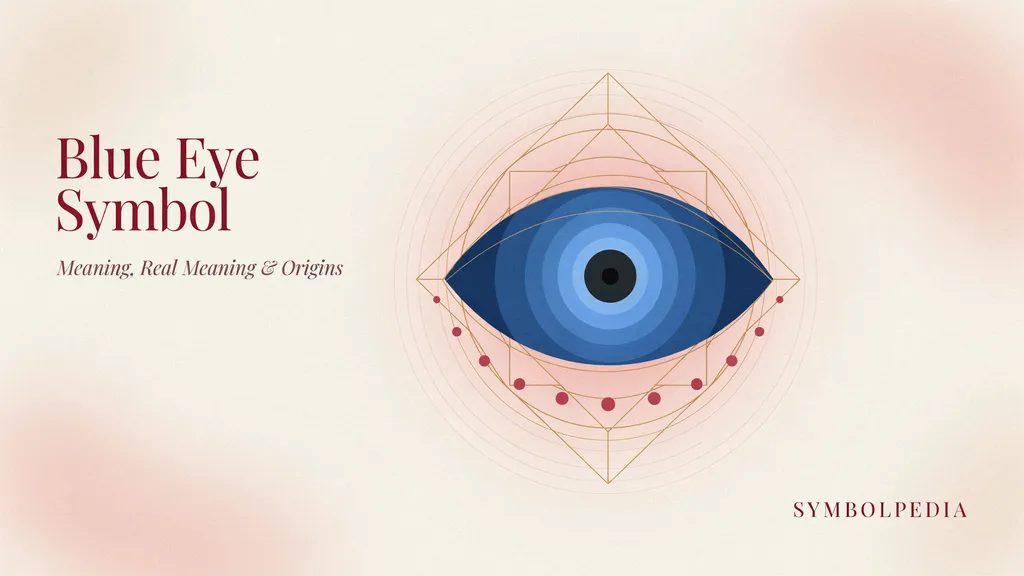
Have you ever seen a bright blue eye symbol like 🧿 in someone’s Instagram bio, WhatsApp message, jewelry, or tattoo and wondered what it actually means?
The blue eye symbol is most commonly associated with the evil eye, protection, good luck, and the belief that negative energy or jealousy can be turned away. It is especially recognizable as the blue-and-white circular charm often called the Nazar or Nazar amulet.
But there is more to this symbol than simply “protection.”
Depending on where you see it, the blue eye can communicate safety, spiritual awareness, cultural identity, affection, or even a simple aesthetic preference. On social media, someone may use 🧿 without following any particular spiritual belief.
That is why understanding the context matters.
In this guide, we will explore what does the blue eye symbol mean, where it comes from, how people use it in everyday communication, what it can represent emotionally, and why its meaning sometimes changes between cultures and generations.
What Does the Blue Eye Symbol Mean? – Quick Meaning
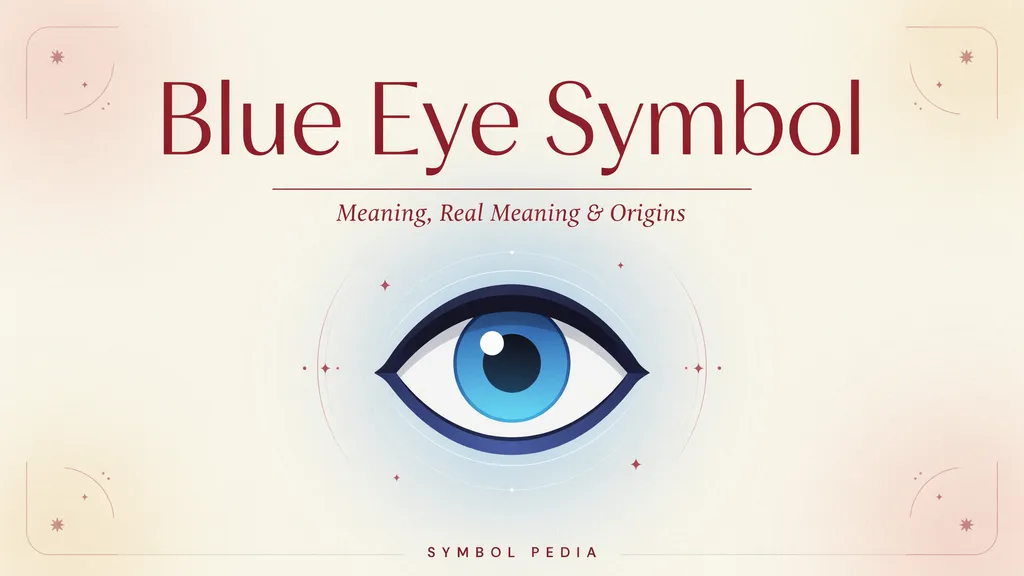
The blue eye symbol 🧿 most commonly represents protection from the evil eye, jealousy, negative intentions, or harmful energy.
It is often connected with the traditional Nazar amulet, which features an eye-like design made from concentric blue, white, and dark circles.
In simple terms, the blue eye can mean:
- Protection from negativity or the evil eye
- Good luck and positive energy
- Spiritual awareness
- Guarding against jealousy
- Safety and blessings
- Cultural or family tradition
- Aesthetic or decorative symbolism
For example:
“Keeping you protected 🧿”
“Beautiful family, mashallah 🧿”
“May no bad energy come near you 🧿”
The exact meaning depends heavily on the conversation.
If someone sends you 🧿 after complimenting you, they may be expressing a wish that you remain protected from jealousy or the evil eye. If someone simply places it in their Instagram bio, it may represent protection, spirituality, culture, or personal style.
Origin & Background of the Blue Eye Symbol
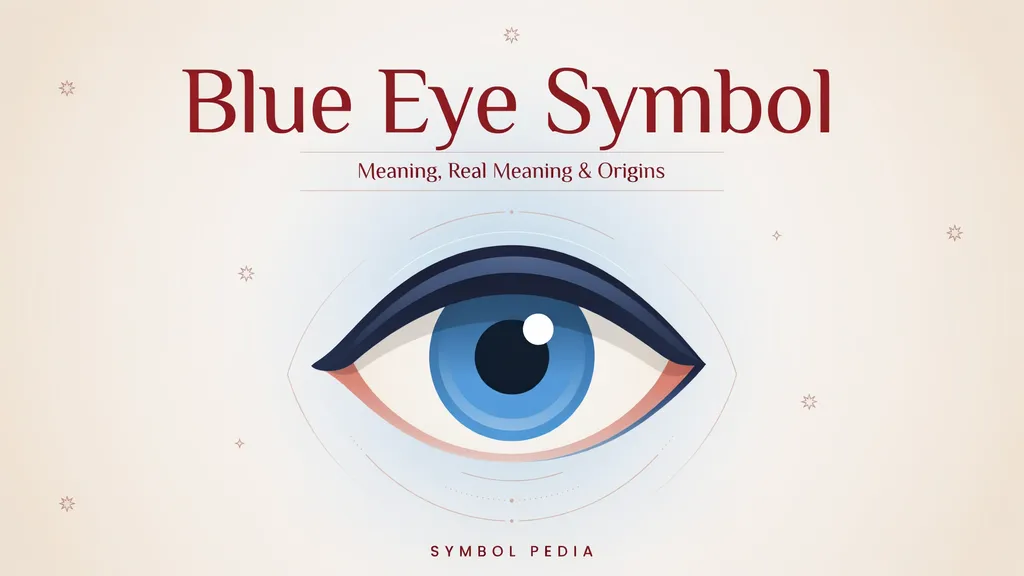
The blue eye symbol has deep roots in traditions surrounding the evil eye, a belief found in numerous cultures across the Mediterranean, Middle East, North Africa, South Asia, and other parts of the world.
The evil eye is traditionally understood as harmful influence caused by another person’s envy, jealousy, or intense admiration. The concept is ancient and has appeared in different forms across civilizations.
The blue-and-white eye-shaped charm commonly recognized today is particularly associated with Nazar traditions in Turkey and surrounding regions.
The word “Nazar” is related to looking or sight, and the amulet is traditionally worn, displayed, or carried as a protective object.
The familiar design usually contains several circles. A dark central circle resembles a pupil, surrounded by lighter rings that create the appearance of an eye.
Why Is It Blue?
Blue became strongly associated with the Nazar amulet, particularly in Turkish cultural traditions.
The color also gives the symbol its instantly recognizable appearance. Over time, the combination of blue, white, and black became so familiar that many people now recognize 🧿 immediately, even without knowing its historical background.
From Traditional Charm to Digital Symbol
The meaning of the blue eye changed somewhat when it moved into modern fashion, jewelry, tattoos, home decoration, and social media.
Today, people may wear a blue eye bracelet because their family has always done so. Someone else might use 🧿 because they associate it with positive energy.
On Instagram, TikTok, WhatsApp, and other platforms, the symbol has become a compact visual way of saying something that would otherwise require a sentence.
That is one reason the emoji has become so useful in casual digital communication.
Real-Life Conversations Using the Blue Eye Symbol
The easiest way to understand 🧿 is to see how people actually use it.
1. WhatsApp Conversation
Person A:
“Finally got the new job! I’m so happy 😭”
Person B:
“Congratulations!! You deserve it 🧿❤️”
Person A:
“Aww thank you!”
Here, the blue eye expresses more than congratulations. Person B is also symbolically wishing protection and continued good fortune.
2. Instagram DM
Person A:
“Your engagement pictures are gorgeous!”
Person B:
“Thank you so much 🥹🧿”
In this situation, 🧿 can suggest protection from jealousy or the evil eye, especially after receiving a lot of public attention.
3. TikTok Comments
Person A:
“She looks absolutely stunning in this video.”
Person B:
“Literally glowing 🧿✨”
The blue eye here works almost like a protective blessing. The commenter is complimenting the person while symbolically adding protection from negative attention.
4. Text Message
Person A:
“My little brother finally recovered and is doing great.”
Person B:
“That’s wonderful news 🧿❤️ May he stay healthy.”
Here, the symbol adds an emotional layer of protection and goodwill to the message.
These examples show an important point: 🧿 does not always have to be explained literally. In many conversations, it functions as an emotional symbol.
Emotional & Psychological Meaning of the Blue Eye Symbol
Symbols often communicate feelings faster than words.
When people use the blue eye, they may be expressing a desire to protect something they value. That could be their relationship, family, health, success, appearance, happiness, or personal peace.
There is also a psychological side to this.
When someone becomes successful or receives a great deal of attention, they may become conscious of jealousy or unwanted attention. Using 🧿 can provide a symbolic feeling of safety.
It can also be reassuring.
Imagine a friend posts a picture of her newborn baby. Instead of simply writing “cute,” someone comments:
“Absolutely precious 🧿❤️”
The comment communicates admiration while also symbolically wishing the baby protection.
From my perspective as someone who pays attention to everyday communication, this is what makes symbols like 🧿 interesting: their emotional meaning can be stronger than their literal meaning.
The person may not be making a formal spiritual statement. They may simply be saying, “This is beautiful, and I hope nothing bad happens to it.”
Usage of the Blue Eye Symbol in Different Contexts
Social Media
The blue eye is especially common on Instagram, TikTok, Facebook, Snapchat, and messaging platforms.
People may add 🧿 to:
- Profile bios
- Baby photos
- Wedding pictures
- Travel posts
- Achievement announcements
- Family photographs
- Fashion posts
- Captions about success
It can communicate protection while keeping the message short.
Friends and Relationships
Among friends, 🧿 can be affectionate.
For example:
“You’re finally getting the life you wanted 🧿❤️”
Here, it may mean, “I hope your happiness stays protected.”
In romantic relationships, it can sometimes accompany compliments, relationship announcements, or affectionate messages.
Work and Professional Settings
The symbol is less appropriate in formal professional communication.
A close colleague might understand it in a casual workplace chat, but it is usually better to avoid it in formal emails, business proposals, official documents, or serious workplace announcements unless you already know the communication style of the group.
Casual vs. Serious Tone
The blue eye is flexible.
In a casual message, it may simply mean:
“Stay blessed 🧿”
In a more serious cultural or family context, however, it may carry genuine spiritual or traditional significance.
The surrounding words tell you which interpretation makes more sense.
When NOT to Use the Blue Eye Symbol
Although 🧿 is generally harmless, context matters.
Avoid using it mockingly when someone is discussing their genuine cultural or spiritual beliefs.
For example, if someone explains that their family uses a Nazar charm for protection, responding with jokes about superstition could easily come across as disrespectful.
You should also be careful when using cultural symbols simply because they look fashionable.
The blue eye has genuine historical and cultural associations. Treating it as nothing more than decoration can sometimes overlook what it means to the people who use it traditionally.
In professional settings, avoid assuming everyone understands the symbol in the same way.
A simple sentence is often clearer when the situation is important.
Common Misunderstandings About the Blue Eye Symbol
“It Always Means Something Religious”
Not necessarily.
Some people use the blue eye for cultural reasons, some for spiritual reasons, and others simply because they like the symbolism.
“It Means Someone Is Watching You”
Usually, no.
The eye-like design does not generally mean surveillance. Its traditional association is much more closely connected with protection from the evil eye.
“Everyone Uses It the Same Way”
Definitely not.
Meaning changes according to culture, family tradition, personal belief, and online context.
“The Emoji Always Means the Nazar”
Often, but not absolutely.
A person might use 🧿 as a general symbol of protection or positive energy without specifically thinking about the historical Nazar tradition.
“It’s the Same as a Normal Eye Emoji”
No.
The ordinary eye emoji 👁️ and the blue eye amulet 🧿 can communicate very different ideas.
👁️ may simply refer to seeing, watching, noticing, or eyes.
🧿 is much more strongly connected with protection and the evil eye.
Blue Eye Symbol vs. Similar Expressions
| Symbol or Expression | Common Meaning | Main Difference |
|---|---|---|
| 🧿 Blue eye | Protection, evil eye, good fortune | Strong cultural and protective association |
| 👁️ Eye | Seeing, watching, noticing | Usually literal or observational |
| 🍀 Four-leaf clover | Luck | Focuses more directly on good fortune |
| 🤞 Fingers crossed | Hope or wishing for luck | Usually expresses hope rather than protection |
| ✨ Sparkles | Beauty, positivity, excitement | Decorative and emotional rather than protective |
| 🙏 Prayer/hoping | Blessing, prayer, gratitude | More directly associated with prayer or appeal |
| ❤️ Heart | Love, care, affection | Focuses on emotion rather than protection |
| 🛡️ Shield | Safety and defense | More literal representation of protection |
| 🧿✨ | Protection + positivity | Often used as a modern social-media combination |
| “Stay blessed” | Good wishes and protection | Communicates the idea verbally |
Key Insight
The blue eye is closest to the idea of “May this person or thing remain protected from negativity.” However, the person using it may intend anything from a serious traditional belief to a simple expression of affection and good wishes.
How to Respond When Someone Uses the Blue Eye Symbol
Your response depends on the context.
Casual Replies
- “Thank you! 🧿❤️”
- “Aww, appreciate you!”
- “Hopefully! 🙏”
- “Bless you too 🧿”
Funny Replies
- “Keeping the bad vibes away 😂🧿”
- “Protection mode activated 😂”
- “No bad energy allowed!”
Mature Replies
- “Thank you, that’s really thoughtful.”
- “I appreciate the good wishes.”
- “That’s very kind of you.”
Respectful Replies
If you know the person uses the symbol for cultural or spiritual reasons, a respectful response works best:
“Thank you for the blessing. I really appreciate it.”
You do not need to use the symbol yourself if you are unfamiliar with its meaning.
Regional & Cultural Usage of the Blue Eye Symbol
The blue eye has traveled across cultures, but it does not carry exactly the same meaning everywhere.
Western Culture
In Western social media, the blue eye is often interpreted as a symbol of protection, good luck, spirituality, or protection from negative energy.
Some people encounter it mainly through jewelry, fashion, tattoos, or emojis.
Asian Culture
Across different Asian communities, beliefs surrounding envy, harmful attention, blessings, and protective practices can overlap with the broader concept of the evil eye.
However, Asia is culturally diverse, so the blue eye should not be assumed to have one universal meaning throughout the continent.
Different countries and communities have their own protective symbols and traditions.
Middle Eastern Culture
The concept of the evil eye has a particularly strong cultural presence in many Middle Eastern communities.
At the same time, religious beliefs and traditional folk practices are not identical. Some people may use protective expressions, prayers, or other practices instead of an amulet.
Therefore, it is important not to assume that every person from the region believes the same thing about 🧿.
Global Internet Usage
Online, the symbol has become much more universal.
Someone in one country may recognize 🧿 immediately as “protection” even if they have never personally used a Nazar charm.
Social media has helped turn culturally specific symbols into globally understood visual shorthand.
Gen Z vs. Millennials
Younger users often combine 🧿 with other emojis:
“New chapter 🧿✨”
“Protecting my peace 🧿”
Millennials may also use it, particularly in cultural, family, spiritual, or lifestyle contexts.
The difference is usually not about age alone. Personal background and online habits matter more than generation.
Is the Blue Eye Symbol Safe for Kids?
Yes, the blue eye symbol itself is generally harmless.
For children, it can simply be explained as a cultural symbol associated with protection and the evil eye.
The more important lesson is context. Children should understand that symbols can mean different things to different people and that cultural traditions deserve respectful treatment.
Parents can also use the opportunity to explain the difference between a traditional belief and a universally established fact.
FAQs About the Blue Eye Symbol
What does the blue eye symbol mean?
The blue eye symbol 🧿 commonly represents protection from the evil eye, jealousy, negative energy, and misfortune. It can also symbolize good luck and blessings.
What does 🧿 mean in texting?
In texting, 🧿 usually suggests protection, positive energy, or a wish to keep negativity and jealousy away.
Is the blue eye symbol the evil eye?
The blue eye symbol is commonly associated with the Nazar, a traditional amulet connected with protection from the evil eye. The evil eye itself refers to the belief that harmful effects can result from envy or a malicious gaze.
What does 🧿 mean on Instagram?
On Instagram, 🧿 can mean protection, good energy, cultural identity, spirituality, or a wish to avoid jealousy and negative attention.
What does a blue eye bracelet mean?
A blue eye bracelet is commonly worn or given as a protective charm associated with the evil eye. Some people wear it for cultural or traditional reasons, while others see it as a symbol of good luck.
What is the difference between 🧿 and 👁️?
🧿 is strongly associated with protection and the evil eye, while 👁️ usually represents an ordinary eye, seeing, watching, or observation.
Is the blue eye symbol religious?
Not necessarily. The symbol has cultural and traditional associations that cross different communities. Some people use it spiritually, while others use it culturally, symbolically, or decoratively.
Conclusion: What the Blue Eye Really Communicates
So, what does the blue eye symbol mean?
At its heart, 🧿 is most commonly a symbol of protection. It is associated with the desire to guard against jealousy, harmful attention, negative energy, or the evil eye.
But modern communication has given the symbol additional layers.
A person might use it to congratulate a friend, protect a happy moment, celebrate a new beginning, compliment a baby, or simply express the feeling, “I hope nothing bad touches this.”
That emotional meaning is what makes the symbol so powerful.
The next time you see 🧿 in a message or social media caption, don’t automatically assume that the sender is making a serious spiritual statement. Look at the words around it, the relationship you have with the person, and the cultural context.
A tiny blue eye can carry a surprisingly big message: admiration, care, protection, and the hope that something beautiful stays safe.
descover more post
What Does the Satellite Symbol Mean on iPhone Meaning …
Statistical Symbol for Mean What It Means How to Use It and …
What Does the Swastika Symbol Mean History Religion and …

Kavon is a passionate content creator and digital researcher who specializes in decoding symbols, meanings, and modern internet language. With a strong focus on clarity and authenticity, Kavon writes in a way that makes complex ideas simple, relatable, and useful for everyday readers.
Known for a hardworking mindset and attention to detail, Kavon is dedicated to creating content that genuinely helps people understand the deeper meanings behind words, signs, and online expressions. Every article is crafted with care, combining research, real-life insight, and a reader-first approach.
Through Symblpedia, Kavon aims to build a trusted space where curiosity meets clarity—helping users find answers that are not only accurate but also meaningful and easy to understa