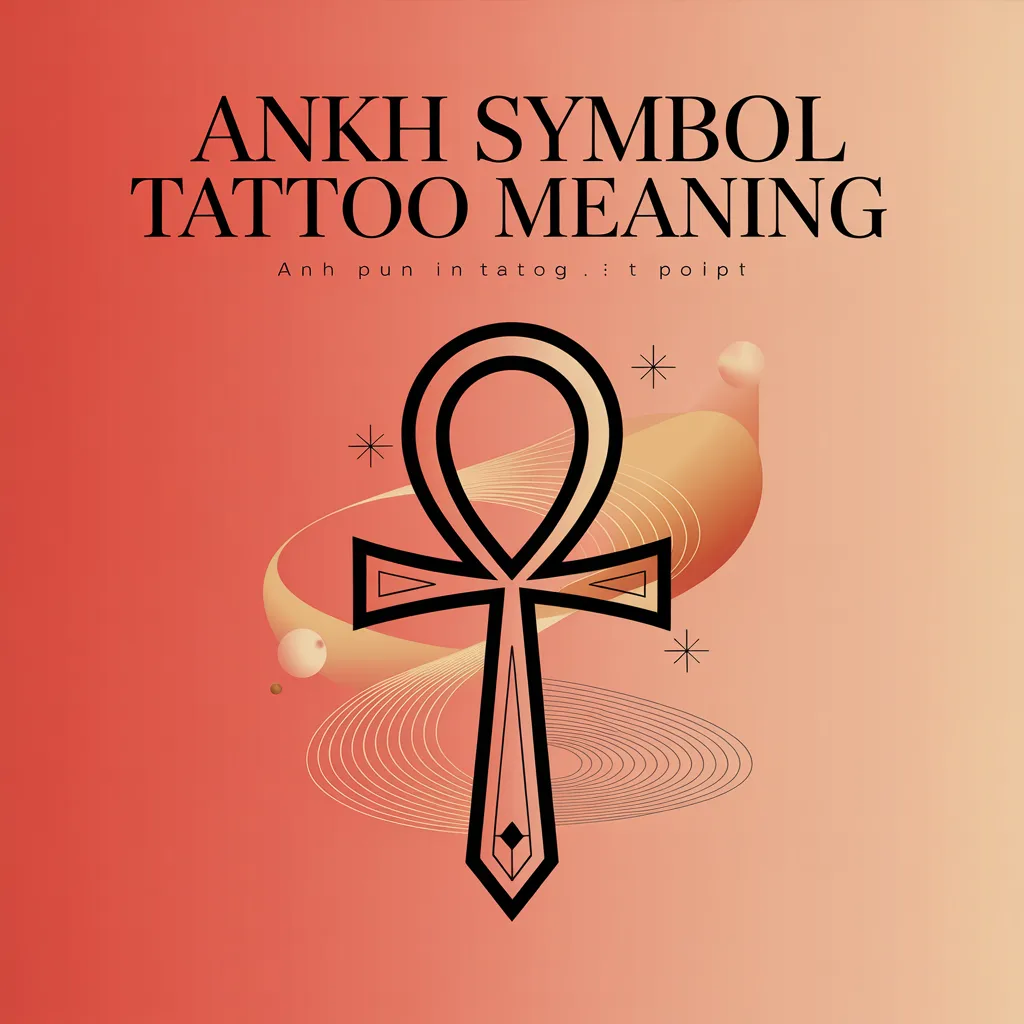
The ankh symbol tattoo meaning goes far beyond a simple ancient design inked on skin. It is one of those symbols that instantly catches attention—mysterious, elegant, and deeply spiritual.
At first glance, it looks like a cross with a loop on top. But for many people today, it represents something much more personal: life, eternity, protection, and inner strength.
People search for its meaning for different reasons. Some see it in movies or music videos. Others notice it in tattoos on celebrities or friends. And many are simply drawn to its spiritual aura without knowing why.
What makes the ankh especially interesting is how it connects ancient beliefs with modern identity. It’s not just decoration—it often tells a story about survival, faith, transformation, or connection to something bigger than life itself.
This article breaks it all down in a natural, real-world way—so you can fully understand what it means before deciding if it belongs on your skin.
2️⃣ Ankh Symbol Tattoo Meaning – Quick Meaning
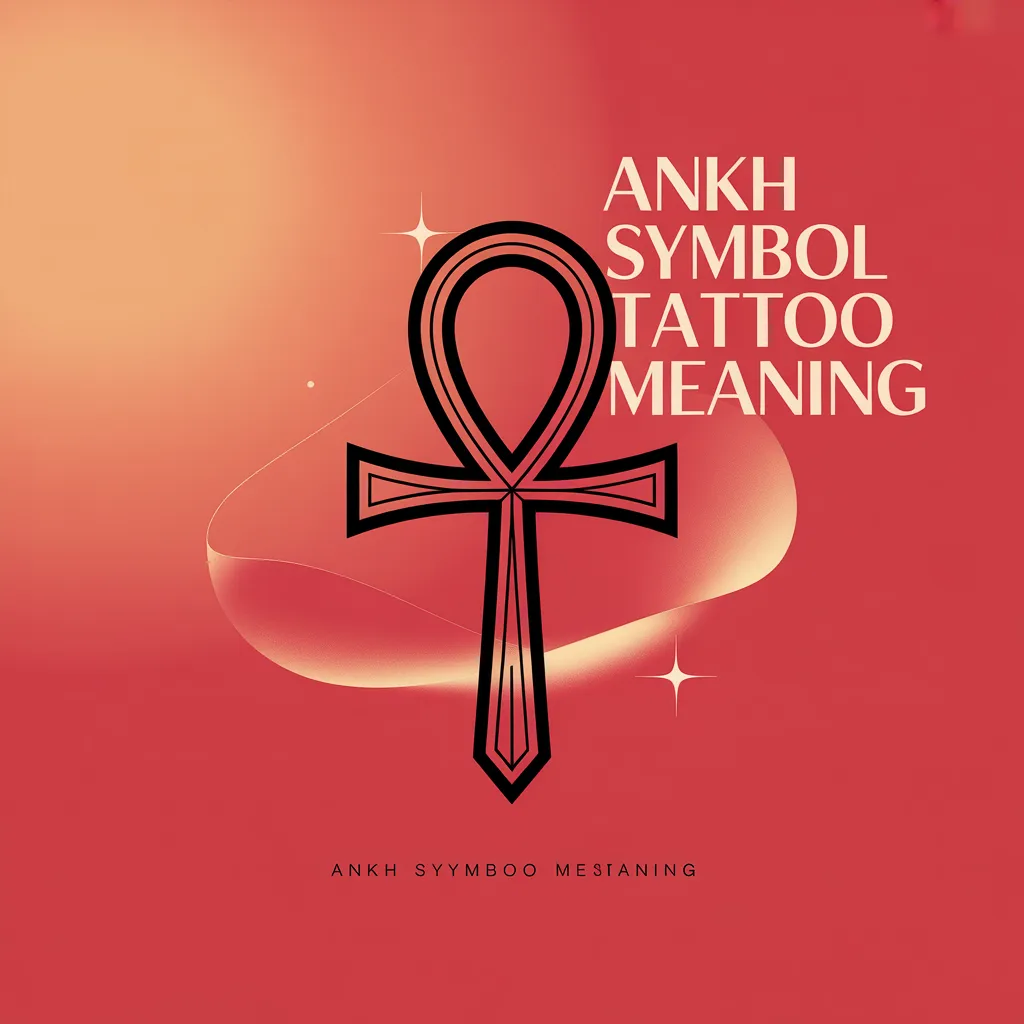
The ankh symbol tattoo meaning is commonly associated with:
- Eternal life
- Spiritual protection
- Balance between life and death
- Divine energy and rebirth
- Connection to ancient wisdom
In simple terms, it represents “life that never ends.”
You’ll often hear it described in different ways:
- “Life after death symbol”
- “Key of life”
- “Ancient Egyptian life cross”
Short real-style interpretations people use:
- “It reminds me that life is bigger than this moment.”
- “It feels like protection I carry with me.”
- “It represents my spiritual journey.”
Even though interpretations vary, the core idea stays the same: life, continuation, and energy beyond physical existence.
3️⃣ Origin & Background
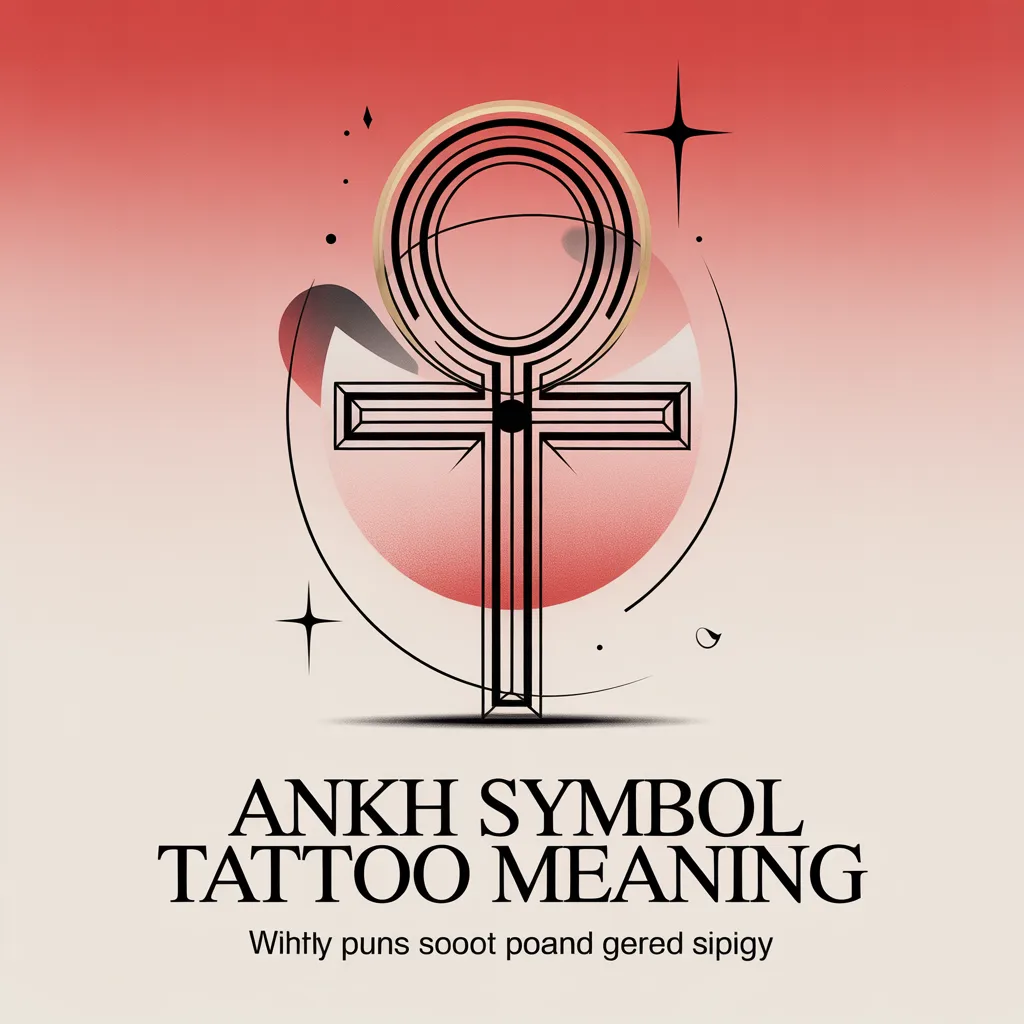
The ankh comes from Ancient Egypt, one of the oldest civilizations in human history. It was not originally a tattoo design—it was a sacred symbol.
Egyptian gods and pharaohs are often shown holding the ankh, usually near the nose or mouth. This symbolized giving life or breath.
Over time, it became connected to:
- Spiritual power
- Divine authority
- Protection in the afterlife
Ancient Egyptians believed the ankh was a “key of life”—something that unlocked eternal existence beyond death.
Cultural evolution
As centuries passed, the symbol didn’t disappear. Instead, it traveled through:
- African spiritual traditions
- Spiritual revival movements
- Modern pop culture
Today, it appears in tattoo culture, fashion, music, and even street art.
Social media has also played a big role. Platforms like Instagram and TikTok made spiritual tattoos trend globally, and the ankh became a popular choice among people who want meaningful ink rather than just aesthetics.
4️⃣ Real-Life Conversations (MANDATORY)
💬 WhatsApp Chat
Person A:
“I’m thinking of getting an ankh tattoo on my wrist.”
Person B:
“Doesn’t that mean like eternal life or something?”
Person A:
“Yeah, but for me it’s more like surviving everything I’ve been through.”
📩 Instagram DM
Person A:
“Your tattoo is so cool, what does it mean?”
Person B:
“It’s an ankh. Symbol of life and spiritual protection.”
Person A:
“Wow, that’s deeper than I thought. I just thought it was aesthetic.”
🎥 TikTok Comment Section
User1:
“Why does everyone suddenly have that cross with a circle tattoo?”
User2:
“It’s an ankh. Ancient Egyptian symbol of life.”
User3:
“I got mine after recovering from depression—it means I’m still here.”
📱 Text Message
Friend 1:
“Why did you choose that symbol?”
Friend 2:
“It reminds me life doesn’t really end. It just changes form.”
These small conversations show how the meaning shifts depending on personal experience. For some, it’s history. For others, it’s healing.
5️⃣ Emotional & Psychological Meaning
The ankh symbol tattoo meaning is not just cultural—it is deeply emotional.
Many people choose it during moments of transformation:
- After loss
- After recovery from illness
- After emotional breakdowns
- After spiritual awakening
Psychologically, it represents continuity of self—the belief that you are more than your current situation.
It often reflects:
- Hope during hardship
- Acceptance of life’s cycles
- Desire for protection
- Connection to something eternal
Personal-style scenario
A person going through a difficult breakup might choose an ankh tattoo not because of history, but because it quietly reminds them: “This is not the end of my story.”
That emotional layer is what makes it powerful—not just visually appealing.
6️⃣ Usage in Different Contexts
Social Media
On Instagram or TikTok, the ankh is often used as:
- Aesthetic tattoo showcase
- Spiritual identity symbol
- Fashion statement with deeper meaning
Friends & Relationships
Among friends, it usually sparks curiosity or admiration:
- “What does your tattoo mean?”
- “That looks spiritual, is it religious?”
Work / Professional Settings
In professional environments, it is generally:
- Neutral as body art
- Occasionally questioned in conservative spaces
- Often kept discreet depending on dress code
Casual vs Serious Tone
- Casual: “It’s just a cool ancient symbol”
- Serious: “It represents eternal life and spiritual protection”
The meaning changes depending on intention and audience.
7️⃣ When NOT to Use It
While the ankh is widely respected, there are situations where caution matters:
- Using it without understanding its cultural roots
- Treating it purely as a random fashion symbol
- Using it in disrespectful or mocking designs
- Combining it with unrelated sacred symbols carelessly
Cultural symbols carry emotional weight. Even if tattoo culture is modern, the origins are ancient and meaningful.
Respect always adds depth to the choice.
8️⃣ Common Misunderstandings
Many people misinterpret the ankh symbol tattoo meaning.
Common mistakes:
- Thinking it is just a decorative cross
- Confusing it with religious Christian symbolism
- Assuming it has only one fixed meaning
- Believing it is purely aesthetic
Tone confusion
Some people see it as:
- Religious symbol
- Fashion icon
- Spiritual energy sign
Literal vs figurative meaning
- Literal: Ancient Egyptian symbol of life
- Figurative: Personal meaning of survival, hope, or rebirth
The biggest misunderstanding is assuming it has one universal meaning—it actually evolves with the wearer.
9️⃣ Comparison Table
| Symbol | Meaning | Emotional Tone | Usage |
|---|---|---|---|
| Ankh | Life & eternity | Spiritual, deep | Tattoos, spiritual identity |
| Cross | Faith & Christianity | Religious | Worship, devotion |
| Yin-Yang | Balance | Philosophical | Harmony, duality |
| Infinity sign | Endless possibilities | Modern, emotional | Love, eternity |
Opposite meaning examples:
- Ankh vs Skull tattoo (life vs death symbolism)
- Ankh vs broken symbols (continuity vs ending)
Key Insight:
The ankh stands out because it blends life, spirituality, and identity into one symbol. Unlike modern icons, it carries thousands of years of cultural depth while still feeling personal today.
1️⃣2️⃣ How to Respond When Someone Uses It
Casual replies:
- “That symbol is actually ancient, cool choice!”
- “I like the meaning behind it.”
Funny replies:
- “So you’re basically carrying eternal life on your arm?”
- “That’s not a tattoo, that’s a life upgrade.”
Mature replies:
- “It’s a powerful symbol. It suits you.”
- “I respect the meaning you chose for it.”
Respectful replies:
- “That has deep cultural roots. Nice understanding of it.”
- “It’s beautiful when tattoos have meaning.”
1️⃣3️⃣ Regional & Cultural Usage
Western culture
- Popular in tattoo and fashion communities
- Often seen as spiritual or aesthetic symbol
Asian culture
- Less traditional knowledge, but growing interest
- Often linked to spirituality or mystery
Middle Eastern culture
- Viewed more cautiously due to symbolic interpretations
- Sometimes respected as ancient heritage
Global internet usage
- Widely shared on social media
- Trend-driven but increasingly meaning-focused
Generational differences
- Gen Z: aesthetic + personal identity
- Millennials: meaning + spirituality
- Older generations: cultural curiosity or skepticism
1️⃣4️⃣ Is It Safe for Kids?
As a tattoo symbol, the ankh is not harmful or offensive in itself. However:
- Tattoos are generally not suitable for minors
- The meaning may be too abstract for younger children
- Cultural understanding is important before use
It is safe as a symbol, but context matters.
1️⃣5️⃣ FAQs
1. What does an ankh tattoo mean?
It represents eternal life, spiritual protection, and continuity of existence.
2. Is the ankh religious?
It is spiritual and historical, not tied to one modern religion.
3. Why do people get an ankh tattoo?
For meaning, identity, healing, or connection to ancient symbolism.
4. Is it okay to wear as a tattoo?
Yes, as long as it is respected and understood.
5. Does it mean immortality?
Symbolically, yes—it represents life beyond physical death.
6. Is it only Egyptian?
It originates from Ancient Egypt but is now globally used.
7. Can men and women both get it?
Yes, it is gender-neutral.
1️⃣6️⃣ Conclusion
The ankh symbol tattoo meaning is not just about ancient history—it is about how people today connect to life, survival, and identity.
What makes it powerful is its flexibility. One person sees spiritual protection. Another sees personal rebirth. Someone else sees cultural heritage.
And that’s the beauty of it—it adapts to your story without losing its ancient roots.
If you’re considering it, don’t just think of it as ink. Think of it as a reminder—of life, resilience, and everything you’ve overcome so far.
Because in the end, the ankh doesn’t just represent life.
It represents your version of it.
descover more post
Neda Symbol Meaning What It Really Represents in Modern …
Rune Symbol Meaning Hidden Messages Ancient Power 2026
Expiry Date Symbol Meaning What It Really Says About Time …