The yin yang symbol is one of the most recognizable images in the world. You’ve probably seen it on jewelry, tattoos, clothing, artwork, social media posts, and even wellness brands. Yet despite its popularity, many people still wonder: what does the yin yang symbol mean?
Some believe it represents good versus evil. Others think it symbolizes male and female energy. While those ideas contain a small piece of the truth, the actual meaning goes much deeper.
The yin yang symbol comes from ancient Chinese philosophy and teaches a powerful lesson about balance. It reminds us that life is not simply black or white. Opposites exist together, influence each other, and create harmony when properly balanced.
Understanding the symbol can help explain relationships, emotions, nature, personal growth, and even modern communication. Whether you’re curious about its cultural origins, considering a yin yang tattoo, or simply want to understand why it appears so often online, this guide will explain everything in clear and practical terms.
What Does the Yin Yang Symbol Mean? – Quick Meaning
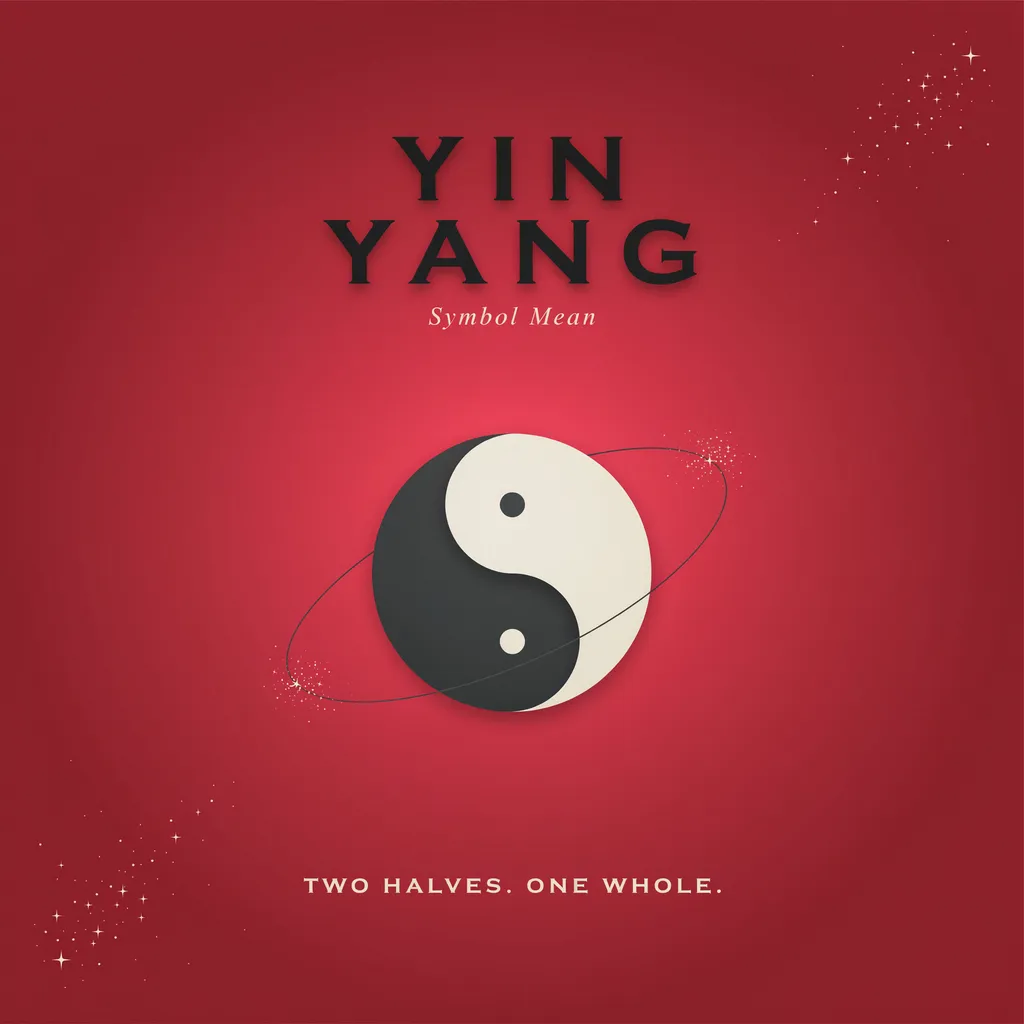
At its core, the yin yang symbol represents the balance of opposite forces that work together to create harmony.
Simple Definition
Yin and yang are complementary energies that exist in everything.
Yin typically represents:
- Darkness
- Calmness
- Reflection
- Femininity
- Rest
- Intuition
Yang typically represents:
- Light
- Action
- Masculinity
- Energy
- Movement
- Strength
The symbol teaches that neither side is superior. Both are necessary.
Quick Examples
“You need both work and rest to stay healthy.”
“Strong relationships require both giving and receiving.”
“Day and night seem opposite, but both are essential.”
The small circle inside each side of the symbol reminds us that every force contains a little of its opposite.
Origin & Background
The yin yang concept originated thousands of years ago in ancient China.
Its philosophical roots can be traced back to traditional Chinese thought and teachings that focused on understanding nature, balance, and the universe.
Ancient scholars observed patterns in the natural world:
- Day becomes night.
- Summer becomes winter.
- Activity becomes rest.
- Growth becomes decline.
Instead of seeing these changes as conflicts, they viewed them as natural cycles.
Over time, yin and yang became a foundational principle in Chinese philosophy, medicine, martial arts, and spiritual traditions.
Cultural Influence
The symbol influenced many aspects of East Asian culture, including:
- Traditional medicine
- Feng Shui
- Martial arts
- Meditation practices
- Philosophical teachings
Social Media Impact
Today, the symbol has gained new popularity through:
- Tattoo culture
- Wellness communities
- Spiritual content creators
- Instagram aesthetics
- TikTok self-improvement videos
Many people use it online to represent balance, healing, self-awareness, and personal growth.
While modern interpretations vary, the core message remains surprisingly consistent: life works best when opposing forces exist in harmony.
Real-Life Conversations
WhatsApp Conversation
Person A: I’m overwhelmed with work lately.
Person B: Maybe you’re spending too much time in “yang mode.”
Person A: What does that mean?
Person B: Constant action. You need some yin too—rest and recovery.
Instagram DM
Person A: Love your yin yang tattoo.
Person B: Thanks! It reminds me not to chase perfection.
Person A: That’s actually a beautiful meaning.
TikTok Comments
User 1: Why is there a white dot in the black side?
User 2: Because nothing is completely one thing. There’s always a little balance.
User 1: That makes way more sense now.
Text Message
Person A: We argue sometimes but somehow it works.
Person B: Sounds like yin and yang.
Person A: Opposites?
Person B: More like complementary differences.
Emotional & Psychological Meaning
One reason the yin yang symbol remains popular is that it reflects real human experiences.
Most people live between opposing emotions.
You can be:
- Strong and vulnerable
- Confident and uncertain
- Independent and connected
- Happy and sad
The symbol suggests that these emotional contradictions are normal.
Instead of forcing one side to disappear, it encourages acceptance.
Why People Connect With It
Psychologically, the symbol offers comfort.
Many people feel pressure to be perfect, positive, productive, or strong all the time.
The yin yang philosophy reminds us that balance matters more than perfection.
Personal-Style Scenario
Imagine someone who spends months pushing toward a career goal.
They work late, stay focused, and achieve success.
Eventually, exhaustion sets in.
At that moment, the yin yang principle becomes practical: growth requires recovery.
Without rest, progress becomes unsustainable.
This simple lesson resonates with millions of people today.
Usage in Different Contexts
Social Media
On social media, the symbol often represents:
- Inner peace
- Self-improvement
- Balance
- Spiritual growth
- Mindfulness
It frequently appears in motivational posts and wellness content.
Friends & Relationships
People use the concept to describe relationships where differences create strength.
Examples include:
- Introvert and extrovert friendships
- Different personalities working together
- Romantic partners with complementary traits
Work & Professional Settings
In professional environments, the concept may refer to:
- Work-life balance
- Strategic thinking versus action
- Leadership and collaboration
Casual vs Serious Tone
Casually, people may use it to describe opposites attracting.
In more serious discussions, it can represent philosophical or personal growth concepts.
When NOT to Use It
While the symbol is widely appreciated, there are situations where caution is helpful.
Cultural Sensitivity
Avoid treating the symbol as merely a trendy design without understanding its cultural significance.
Academic Discussions
If discussing Chinese philosophy, oversimplifying it as “good versus evil” can be inaccurate.
Serious Conflicts
Not every disagreement represents healthy balance.
Sometimes real problems require direct solutions rather than symbolic interpretations.
Potential Misunderstandings
Some people may assume you’re referring to spirituality when you’re simply discussing balance.
Context matters.
Common Misunderstandings
Mistake #1: It Means Good vs Evil
This is probably the biggest misconception.
Yin and yang are not enemies.
They are complementary forces.
Mistake #2: Yin Is Bad and Yang Is Good
Neither side is superior.
Both are equally necessary.
Mistake #3: Opposites Must Fight
The philosophy teaches cooperation rather than conflict.
Mistake #4: Balance Means Equality
Balance doesn’t always mean a 50/50 split.
It means the right proportion for a specific situation.
Mistake #5: It’s Only a Spiritual Symbol
The concept also applies to psychology, relationships, health, and everyday decision-making.
Comparison Table
| Expression | Meaning | Similarity to Yin Yang |
|---|---|---|
| Opposites Attract | Different people connect | Partial similarity |
| Balance | Harmony between forces | Very similar |
| Harmony | Peaceful coexistence | Closely related |
| Teamwork | Different strengths working together | Similar concept |
| Conflict | Opposition without harmony | Opposite idea |
| Competition | One side wins | Different from yin yang |
| Unity | Togetherness | Related but broader |
| Duality | Two opposing aspects | Strongly connected |
Key Insight
The yin yang symbol is unique because it doesn’t focus on winning, losing, or eliminating differences. Instead, it emphasizes how contrasting forces can coexist and strengthen each other.
How to Respond When Someone Uses It
Casual Replies
- “That’s a great way to look at it.”
- “Balance really is everything.”
- “Makes sense to me.”
Funny Replies
- “So you’re saying my laziness is actually yin energy?”
- “Guess my coffee addiction is pure yang.”
Mature Replies
- “I appreciate that perspective.”
- “Life definitely works better with balance.”
Respectful Replies
- “That’s an interesting philosophical idea.”
- “I can understand why that symbol means so much to people.”
Regional & Cultural Usage
Western Culture
In Western countries, the symbol often represents balance, wellness, self-care, and personal growth.
Many people encounter it through tattoos, yoga, or mindfulness communities.
Asian Culture
Across many Asian cultures, the symbol carries deeper historical and philosophical significance.
It is often connected to traditional teachings and cultural heritage.
Middle Eastern Culture
Many people view it as a symbol of balance and harmony, though interpretations can vary depending on cultural and religious perspectives.
Global Internet Usage
Online communities frequently use the symbol to discuss:
- Mental health
- Relationships
- Personal development
- Emotional balance
Gen Z vs Millennials
Gen Z:
- Often connects it with self-care and emotional wellness.
- Frequently encounters it through social media.
Millennials:
- Commonly associate it with spirituality, mindfulness, and life balance.
Both generations generally view it positively.
Is It Safe for Kids?
Yes, the yin yang symbol is generally safe and appropriate for children.
It promotes ideas such as:
- Balance
- Cooperation
- Respect for differences
- Emotional awareness
Parents and educators can use it as a simple way to discuss how different qualities can work together rather than compete.
Context remains important when discussing its cultural and philosophical origins.
FAQs
What does the yin yang symbol mean in simple words?
It represents balance between opposite but connected forces in life.
Is yin yang about good and evil?
No. It represents complementary energies, not a battle between good and evil.
Why are there dots inside the symbol?
The dots show that every force contains a small element of its opposite.
What does yin represent?
Yin is commonly associated with calmness, darkness, rest, intuition, and reflection.
What does yang represent?
Yang is associated with energy, action, light, strength, and movement.
Why is the yin yang symbol popular today?
People connect with its message of balance, self-awareness, and harmony in a fast-paced world.
Can the symbol represent relationships?
Yes. Many people use it to describe relationships where differences complement each other.
Conclusion
The answer to the question “what does the yin yang symbol mean” goes far beyond a simple black-and-white design.
It represents one of humanity’s most enduring ideas: balance. Rather than viewing opposites as enemies, the symbol teaches that differences often work together to create harmony.
Whether you’re navigating relationships, managing stress, pursuing goals, or simply trying to understand yourself better, the yin yang philosophy offers a valuable reminder. Life isn’t about choosing one side forever. It’s about knowing when to act, when to rest, when to lead, and when to listen.
That timeless message is exactly why the symbol continues to resonate across cultures, generations, and modern forms of communication. Understanding it allows you to appreciate not only an ancient philosophy but also a practical approach to everyday life.
descover more post
Earth Symbol Meaning Spiritual Cultural and Modern …
Ollin Symbol Meaning The Ancient Symbol of Movement …
Power Button Symbol Meaning The Hidden Message Behind …