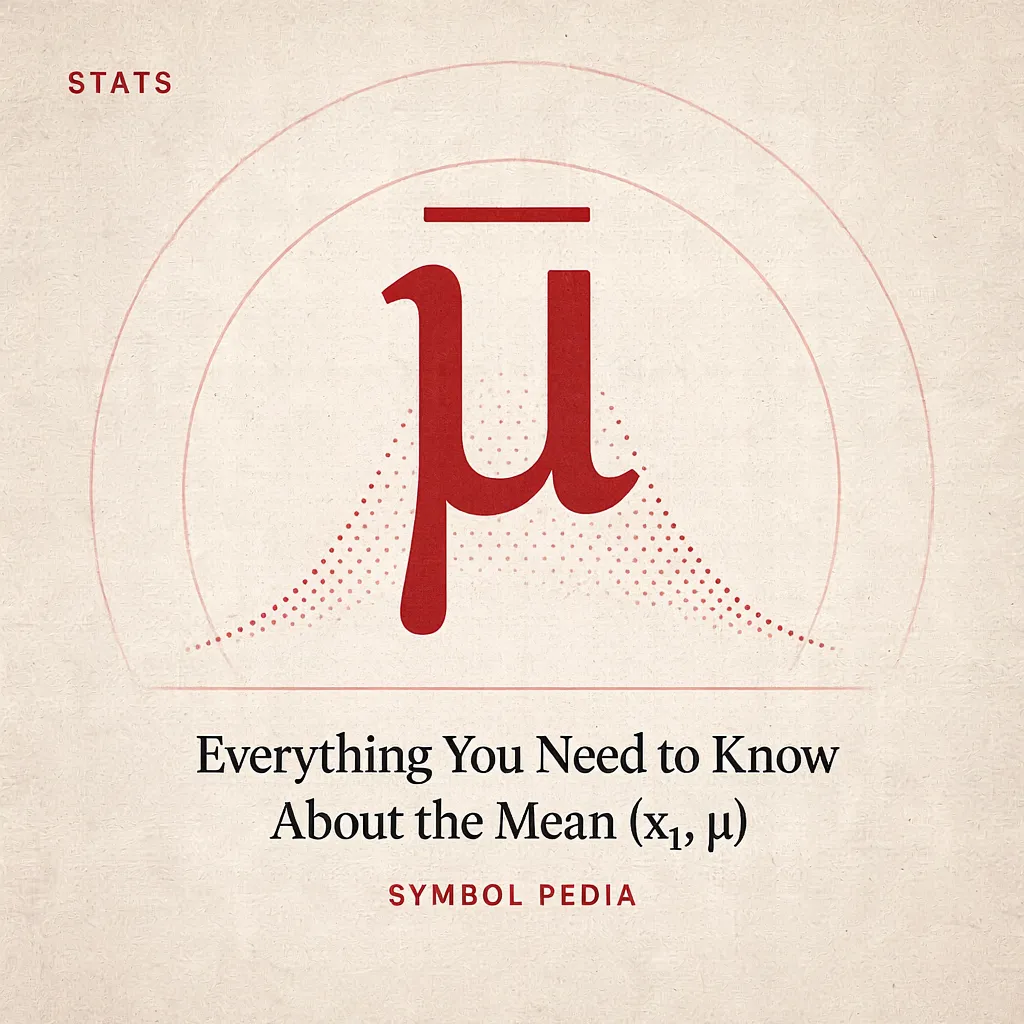
If you’ve ever taken a math class, analyzed survey results, or looked at research data, you’ve probably come across the mean symbol in statistics. While the concept of the mean itself is simple, the symbols used to represent it often confuse students, researchers, and anyone learning statistics for the first time.
Many people search for “mean symbol stats” because they see symbols like x̄ (x-bar) or μ (mu) in textbooks and wonder whether they mean the same thing. The short answer is yes—they both represent a type of mean, but they apply to different situations.
Understanding these symbols isn’t just about passing an exam. They appear in scientific studies, business reports, economics, psychology, healthcare, engineering, and countless other fields where data helps people make decisions.
This guide explains exactly what each mean symbol represents, where it came from, how it’s used, and why it matters in everyday statistics.
Mean Symbol Stats – Quick Meaning
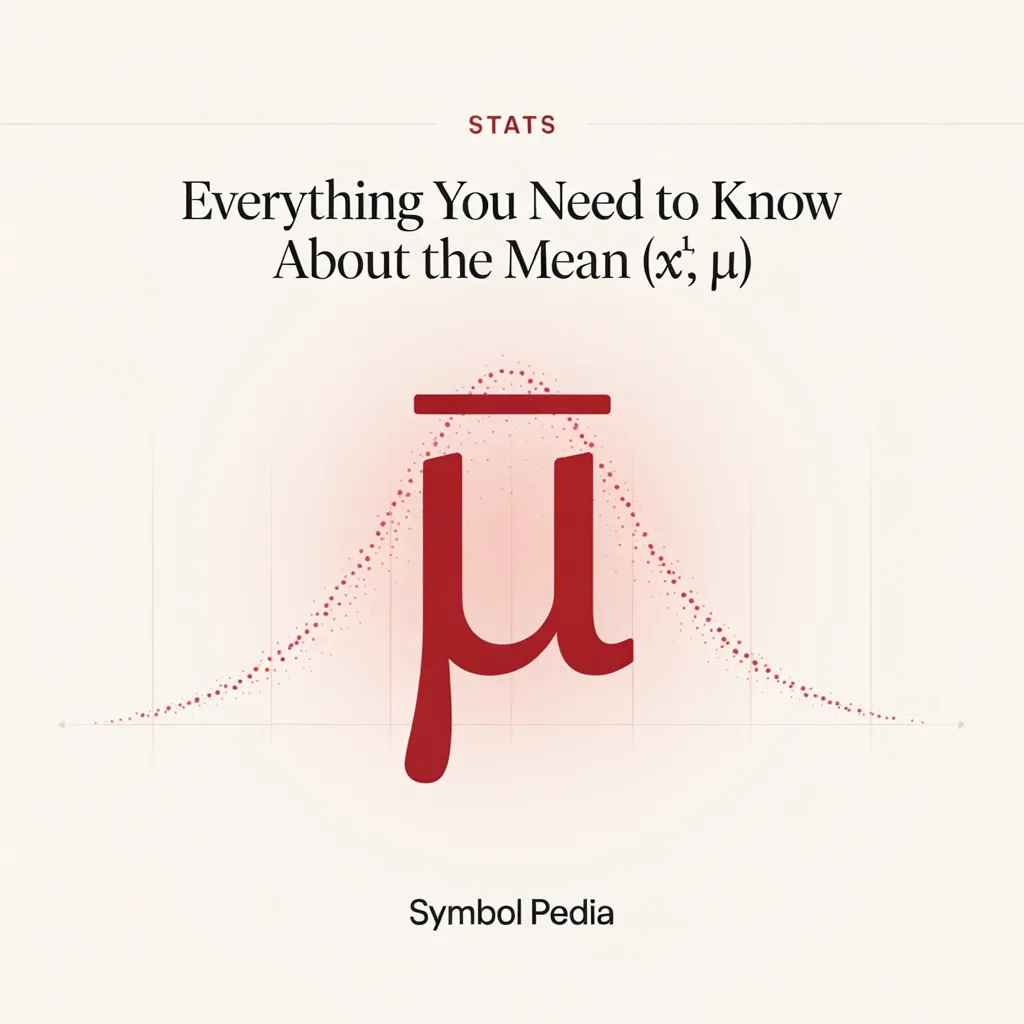
In statistics, the mean represents the average value of a dataset.
The two most common mean symbols are:
- x̄ (x-bar): Sample mean
- μ (Greek letter mu): Population mean
Simply put:
- x̄ = average of a sample
- μ = average of an entire population
Examples:
“The sample had an x̄ of 72.”
“The population mean μ is estimated to be 85.”
“Researchers compared x̄ with μ to measure sampling accuracy.”
Origin & Background
The idea of calculating averages dates back thousands of years. Ancient civilizations used simple averages for trade, astronomy, and taxation.
Modern statistical notation developed much later as mathematics became more formal. During the 18th and 19th centuries, statisticians began using symbols to make equations shorter and easier to understand.
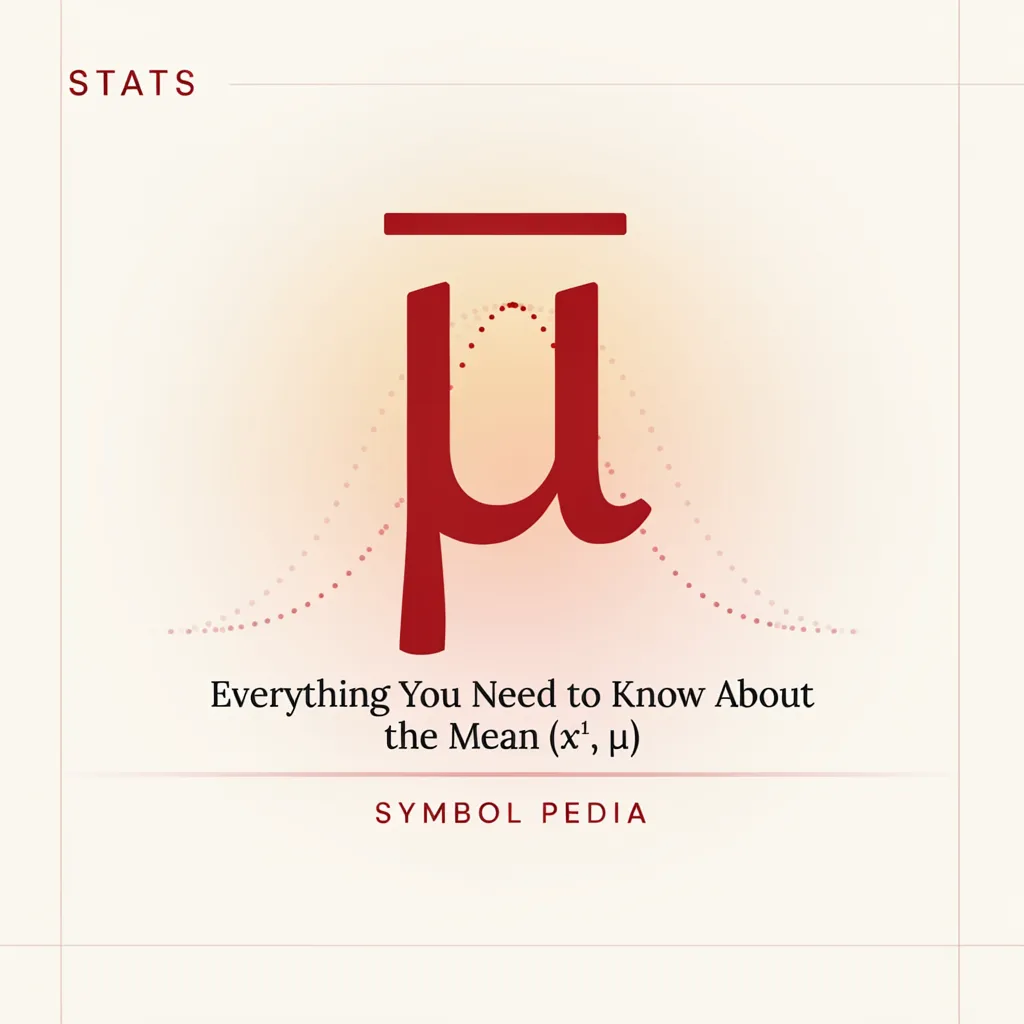
The Greek letter μ became the standard symbol for the population mean, while x̄ was introduced to distinguish the sample mean.
Today these symbols are used worldwide in:
- Scientific journals
- Medical research
- Business analytics
- Machine learning
- Psychology
- Education
- Government reports
With online education and digital learning platforms, these symbols are now familiar to millions of students across the world.
Real-Life Conversations
Person A:
I got x̄ = 68 in my assignment.
Person B:
Nice! That’s the sample mean, not the population mean.
Instagram DM
Person A:
Why does my textbook use μ instead of x̄?
Person B:
Because it’s talking about the whole population.
TikTok Comments
Person A:
I always mix up μ and x̄ 😭
Person B:
Same! Just remember x̄ is sample, μ is population.
Text Messages
Person A:
What’s the mean symbol in stats?
Person B:
Depends. x̄ for sample averages, μ for population averages.
Emotional & Psychological Meaning
Although statistical symbols don’t express emotions like internet slang, they do reduce confusion and improve communication.
Imagine working on a research project with several classmates. One person accidentally uses μ instead of x̄ in the final report. Everyone suddenly interprets the data differently because the symbol changes what the average actually represents.
That small symbol communicates important information without needing a lengthy explanation.
From experience, many beginners aren’t confused by calculating the average—they’re confused by the notation. Once the difference between x̄ and μ becomes clear, statistics feels much less intimidating.
Usage in Different Contexts
Social Media
Students often ask about mean symbols on educational forums, YouTube comments, Reddit, and study groups.
Example:
“What does x̄ mean?”
Friends & Study Groups
Classmates regularly discuss sample means while solving homework problems.
Example:
“My x̄ doesn’t match yours.”
Work & Professional Settings
Professionals use mean symbols in reports involving:
- Sales analysis
- Manufacturing
- Healthcare
- Marketing
- Finance
- Quality control
Casual vs Serious Usage
In casual conversation, people usually say “average.”
In technical writing, symbols like x̄ and μ are preferred for precision.
When NOT to Use It
Avoid statistical symbols when your audience isn’t familiar with statistics.
For example:
Instead of saying:
“The sample mean x̄ equals 46.”
Say:
“The average score was 46.”
Also avoid using μ or x̄ interchangeably. They represent different statistical concepts.
Common Misunderstandings
x̄ and μ mean exactly the same thing.
Not quite.
One refers to a sample.
The other refers to the population.
Every average uses x̄.
Many averages are simply written as “average” in everyday writing.
Statistical notation is mainly used in mathematics and research.
μ is harder than x̄.
The symbol looks unfamiliar, but the concept is simple.
It’s just another way of saying the population average.
Comparison Table
| Symbol | Meaning | Used For |
|---|---|---|
| x̄ | Sample Mean | Sample data |
| μ | Population Mean | Entire population |
| Median | Middle value | Ordered data |
| Mode | Most frequent value | Repeated values |
| Average | General term | Everyday language |
| Range | Highest minus lowest | Spread of data |
Key Insight
The biggest mistake learners make is assuming every average uses the same symbol. Knowing whether the data represents a sample or a population immediately tells you whether to use x̄ or μ.
How to Respond When Someone Uses It
Casual Replies
- That’s the average.
- You’re talking about x̄.
- Nice, I understand now.
Funny Replies
- Greek letters strike again.
- Statistics loves fancy symbols.
- Math is trying to confuse us!
Mature Replies
- That’s the sample mean.
- Are you referring to the population or a sample?
- Good distinction to make.
Respectful Replies
- Thanks for explaining.
- That makes much more sense.
- I appreciate the clarification.
Regional & Cultural Usage
Western Culture
Statistical notation is introduced early in many high school and university programs.
Asian Culture
Countries with strong STEM education often emphasize correct statistical notation from an early stage.
Middle Eastern Culture
Universities teaching science, engineering, medicine, and economics widely use x̄ and μ in English-language textbooks.
Global Internet Usage
Online courses and educational platforms have made statistical symbols familiar across the world.
Gen Z vs Millennials
Gen Z often learns these symbols through digital tutorials, interactive apps, and short educational videos.
Millennials were more likely to encounter them primarily through textbooks and classroom instruction.
Is It Safe for Kids?
Yes.
Mean symbols are purely educational and have no inappropriate meaning.
Children learning mathematics can safely use x̄ and μ as part of their statistics lessons.
Frequently Asked Questions
What is the mean symbol in statistics?
The two primary symbols are x̄ for the sample mean and μ for the population mean.
What does x̄ mean?
It represents the average calculated from a sample.
What does μ represent?
It represents the average of an entire population.
Is x̄ the same as average?
Yes. It specifically refers to the average of sample data.
Why do statisticians use symbols?
Symbols make equations shorter, clearer, and internationally consistent.
Which symbol appears most often in school?
Students usually encounter x̄ first because classroom exercises commonly use samples instead of complete populations.
Can μ ever be estimated?
Yes. Researchers often estimate the population mean using the sample mean when collecting data from everyone is impractical.
Conclusion
The mean symbol in statistics is one of the first concepts every statistics learner should master. Although x̄ and μ both represent averages, they serve different purposes. The distinction helps researchers, students, and professionals communicate data accurately and avoid misunderstandings.
Once you remember that x̄ represents a sample and μ represents an entire population, reading statistical formulas becomes much easier. Whether you’re preparing for an exam, analyzing research, or simply trying to understand a chart, recognizing these symbols gives you greater confidence and a stronger foundation in statistics.
descover more post
What Does the Hammer Symbol Mean in Curling A Simple …
Pachamama Symbol Meaning The Deep Spiritual Message …
Spiritual Meaning of Infinity Symbol A Deep Guide to Love Life …

Orvian is a passionate researcher and dedicated content creator focused on exploring the deeper meanings behind symbols, signs, and cultural interpretations. With a strong interest in symbolism and human psychology, Orvian simplifies complex ideas into clear, engaging, and easy-to-understand content for readers around the world.
Through consistent research and thoughtful writing, Orvian aims to provide accurate, insightful, and meaningful information that helps users connect with symbols on a deeper level—whether for personal growth, curiosity, or knowledge.
Known for a hardworking mindset and attention to detail, Orvian believes that every symbol carries a story, and every story deserves to be understood.