The phrase “self harm symbol tattoo meaning” often shows up in search bars when someone notices a simple, subtle tattoo and senses there’s a deeper story behind it.
Maybe it’s a semicolon on someone’s wrist.
Maybe a small line, a butterfly, or a heart stitched together.
At first glance, these tattoos look minimal. But emotionally, they can carry weight far beyond their size.
People search this topic for different reasons:
- Curiosity after seeing a symbol
- Concern for a loved one
- Personal connection or healing journey
- Or simply wanting to understand before judging
What makes it confusing is that there’s no single universal “self-harm symbol.” Instead, there are multiple symbols—each rooted in recovery, survival, or silent communication.
This article breaks down those meanings clearly, honestly, and with emotional depth—so you understand not just what they mean, but why they matter.
Self Harm Symbol Tattoo Meaning – Quick Meaning
A self harm symbol tattoo usually represents:
- Recovery from self-harm
- Ongoing mental health struggles
- Survival and resilience
- A reminder to keep going
- Silent communication of pain or healing
It’s important to understand:
These tattoos are rarely about promoting harm. They are more often about overcoming it.
Realistic Interpretations
“It’s not about what I did… it’s about the fact I’m still here.”
“This tattoo reminds me I chose to continue.”
“It’s my quiet way of saying I survived something hard.”
Origin & Background
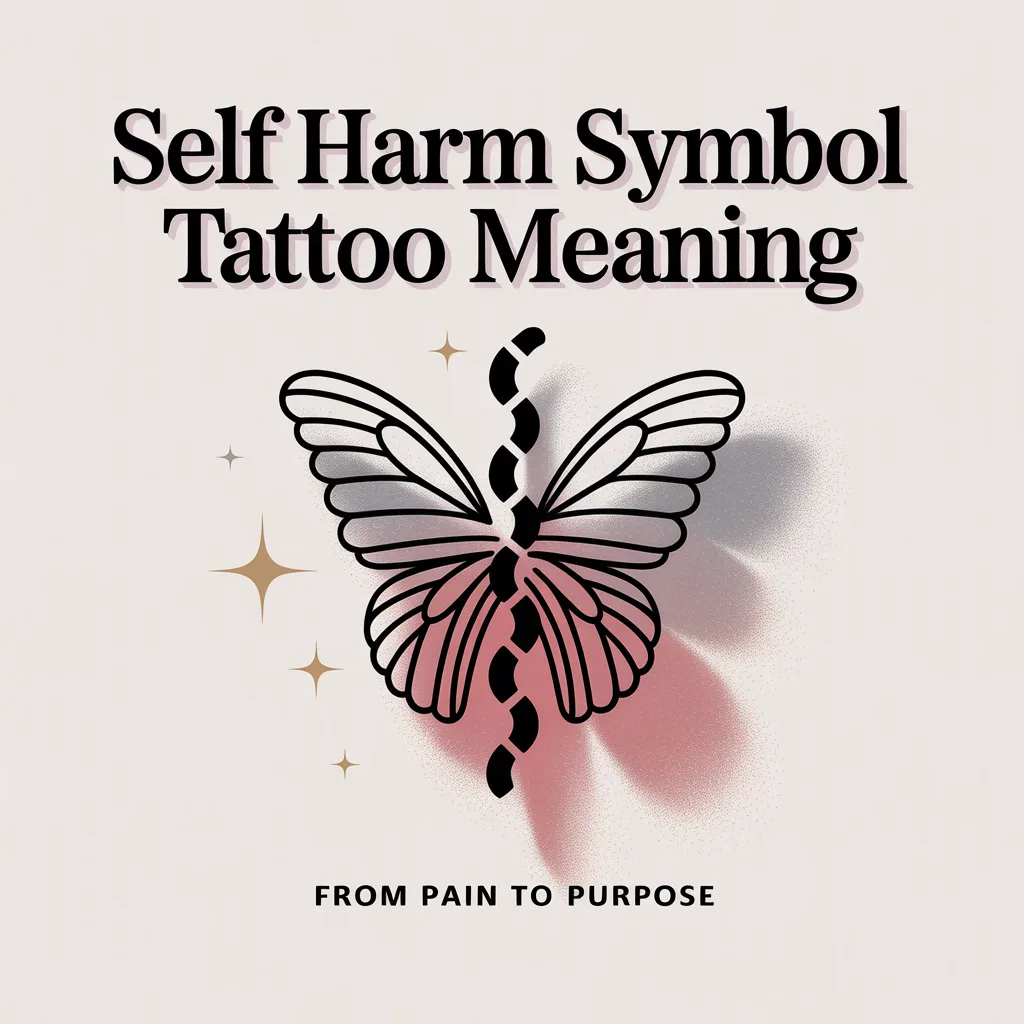
Self-harm–related symbols didn’t start as a single movement. They evolved over time, shaped by mental health awareness, online communities, and personal storytelling.
Early Influence
Before social media, people expressed emotional pain through:
- Journals
- Art
- Music
- Hidden scars
Tattoos became a more permanent and intentional form of expression.
The Rise of Symbolic Tattoos
One of the most recognized symbols is the semicolon tattoo, which gained attention through mental health awareness campaigns.
The idea behind it was simple but powerful:
A semicolon represents a sentence the author could have ended—but chose not to.
This message resonated deeply with people struggling with:
- Depression
- Anxiety
- Self-harm urges
- Suicidal thoughts
Social Media Impact
Platforms like TikTok, Instagram, and Reddit helped spread these meanings quickly.
People began sharing:
- Their tattoos
- Their recovery stories
- Their reasons for choosing specific symbols
Over time, the meaning expanded:
- From survival → to identity
- From pain → to empowerment
- From hidden → to shared
Real-Life Conversations
WhatsApp Chat
Person A:
Hey… I noticed your tattoo. Is that a semicolon?
Person B:
Yeah.
Person A:
What does it mean?
Person B:
It means I had a reason to stop… but I didn’t.
Instagram DMs
Follower:
Your tattoo is so simple but feels deep. What’s the story?
Creator:
It’s about recovery. Not perfect… just still trying.
TikTok Comments
Comment 1:
Is that a self-harm symbol?
Reply:
Not exactly. It’s more like… a reminder not to go back there.
Text Message
Friend:
I never asked before… but your tattoo, does it mean something serious?
You:
Yeah. It’s from a time I don’t talk about much… but I made it through.
Emotional & Psychological Meaning
At its core, a self harm symbol tattoo is about holding onto something when everything feels like slipping away.
It can represent:
- Control in chaos
- A visible mark of invisible struggles
- A promise to oneself
- Healing in progress—not perfection
Psychologically, these symbols often act as:
- Grounding tools during emotional distress
- Identity anchors after trauma
- Reminders of resilience
A Real-Life Scenario
Imagine someone who used to struggle quietly—hiding everything from friends and family.
Years later, they get a small tattoo. Nothing dramatic.
But every time they look at it, it says:
“You didn’t give up.”
No explanation needed. No validation required.
Just truth.
Usage in Different Contexts
Social Media
Used in:
- Personal stories
- Recovery posts
- Mental health awareness
Often subtle, rarely explained fully.
Friends & Relationships
- Can open deeper conversations
- Sometimes noticed, sometimes not
- Meaning is shared selectively
Work / Professional Settings
- Usually kept discreet
- Not openly discussed unless trust is built
Casual vs Serious Tone
- Casual: “It’s just a small tattoo.”
- Serious: “It represents something I went through.”
The difference depends on who’s asking.
When NOT to Use It
These symbols carry emotional weight, so they should be approached carefully.
Avoid:
- Getting one just because it looks trendy
- Using it as an aesthetic without understanding
- Making jokes about it
- Asking someone aggressively about their tattoo
Also be cautious in:
- Formal environments
- Sensitive conversations
- Situations where it may trigger others
Common Misunderstandings
1. “It means they still self-harm”
Not necessarily.
Often, it means they’ve stopped or are trying to stop.
2. “It’s attention-seeking”
In reality, many people keep the meaning private.
3. “All symbols mean the same thing”
Different designs = different stories.
4. “It’s a trend”
While it became popular online, its roots are deeply personal.
Comparison Table
| Expression / Symbol | Meaning | Tone |
|---|---|---|
| Semicolon tattoo | Survival & continuation | Hopeful |
| Butterfly tattoo | Transformation & healing | Positive |
| Broken heart stitch | Emotional recovery | Reflective |
| Dark aesthetic tattoos | Emotional expression | Ambiguous |
| No symbol | Private struggle | Hidden |
Key Insight
Symbols don’t define the struggle—they reflect it. What matters most is the intention behind them, not the design itself.
How to Respond When Someone Uses It
Casual Replies
- “That’s a really meaningful design.”
- “I like how simple it is.”
Funny Replies (Light & Safe)
- “Minimal tattoo, maximum meaning.”
- “Small ink, big story?”
Mature Replies
- “If you ever want to talk about it, I’m here.”
- “I respect what that represents.”
Respectful Replies
- “I won’t ask unless you’re comfortable sharing.”
- “That must mean a lot to you.”
Regional & Cultural Usage
Western Culture
More openly associated with mental health awareness and recovery.
Asian Culture
Still somewhat private; tattoos may carry stigma, so meanings are often hidden.
Middle Eastern Culture
Tattoos themselves can be sensitive; meanings are deeply personal and rarely discussed publicly.
Global Internet Usage
Online spaces normalize sharing stories, making these symbols more recognized worldwide.
Generational Differences
- Gen Z: More open, expressive, and aware
- Millennials: More private but understanding
Is It Safe for Kids?
It depends on context.
These symbols aren’t inherently harmful, but they are connected to serious emotional topics.
For younger audiences:
- Guidance and conversation are important
- Context matters more than the symbol itself
- It’s better approached with care, not fear
FAQs
1. Does a self harm symbol tattoo always mean someone is struggling?
No. Often it represents recovery or survival.
2. Is the semicolon tattoo the only symbol?
No. There are many symbols with similar meanings.
3. Should I ask someone about their tattoo?
Only if you have a close relationship and ask respectfully.
4. Are these tattoos a trend?
They became popular online, but their meaning is deeply personal.
5. Can I get one if I haven’t struggled?
It’s better to understand and respect the meaning before choosing it.
6. Do these tattoos help people?
For many, yes—they act as reminders and emotional anchors.
Conclusion
Understanding the self harm symbol tattoo meaning requires more than just recognizing a design.
It requires empathy.
These tattoos are not about showing pain—they’re about acknowledging survival.
Some stories are spoken.
Others are written quietly—in ink, on skin, and carried forward every day.
If you ever see one, remember:
You’re not just looking at a symbol.
You’re looking at a chapter someone chose to continue.
descover more post
Neptune Symbol Meaning Hidden Spiritual Power Mythology …
Hexagon Symbol Meaning Deep Spiritual Scientific 2026
Hummingbird Symbol Meaning Deep Spiritual Emotional 2026

Orvian is a passionate researcher and dedicated content creator focused on exploring the deeper meanings behind symbols, signs, and cultural interpretations. With a strong interest in symbolism and human psychology, Orvian simplifies complex ideas into clear, engaging, and easy-to-understand content for readers around the world.
Through consistent research and thoughtful writing, Orvian aims to provide accurate, insightful, and meaningful information that helps users connect with symbols on a deeper level—whether for personal growth, curiosity, or knowledge.
Known for a hardworking mindset and attention to detail, Orvian believes that every symbol carries a story, and every story deserves to be understood.