If someone sends you a message containing an emoji and you find yourself wondering, “What does mean in emoji text?”, you are not alone. Emojis can look simple, but their meanings often depend on the conversation, relationship, culture, and even the specific emoji combination being used.
A single emoji can communicate an emotion that would otherwise take an entire sentence to explain. A ❤️ can show affection, gratitude, or romantic interest. A 😂 may mean genuine laughter, but it can also soften an awkward comment. Even an apparently neutral emoji can carry sarcasm or a private meaning between friends.
This is why understanding emoji meaning in text messages is less about memorizing a dictionary and more about reading context.
People commonly search this question because they receive an emoji without knowing what the sender intended. Was it friendly? Flirty? Sarcastic? Supportive? Passive-aggressive? Or was the sender simply reacting quickly?
The good news is that most emoji messages become much easier to understand once you look at the words around them, the relationship between the people communicating, and the emotional situation.
What Does Mean in Emoji Text? – Quick Meaning
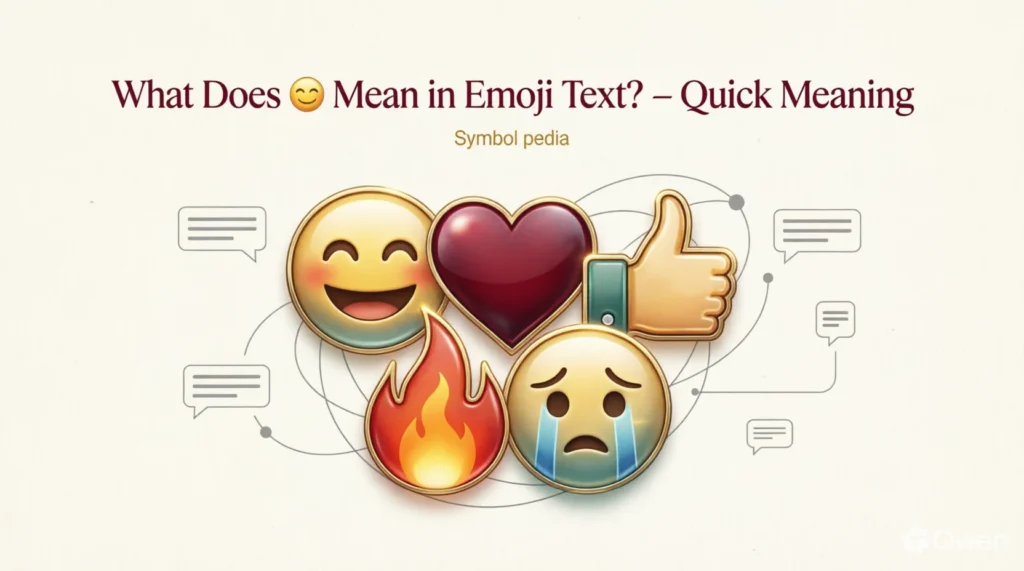
The phrase “what does mean in emoji text” generally refers to understanding what an emoji, emoji combination, or emoji reaction communicates in a text conversation.
In simple terms:
- Emoji can express emotions that words do not fully capture.
- The same emoji can have different meanings depending on context.
- Emoji combinations can create a completely different message from one emoji alone.
- Relationship and tone matter, especially in romantic or sensitive conversations.
- Online culture constantly changes emoji meanings.
For example:
“Good luck ❤️”
The heart may express warmth and encouragement.
“Okay 😂”
The laughing emoji could make the response playful rather than cold.
“Sure 🙂”
Depending on the conversation, the smiling face could be sincere—or slightly uncomfortable or passive-aggressive.
So, there is rarely one universal interpretation.
Origin & Background of Emoji Meanings
Emoji communication grew from the older tradition of using text-based symbols such as 🙂, :), :-(, and <3 to communicate emotion.
The modern emoji system developed in Japan during the late 1990s. Emojis were designed to add emotional and visual information to short digital messages, particularly when plain text could feel too ambiguous.
As smartphones and messaging platforms became global, emojis moved far beyond Japanese mobile communication. They became part of everyday communication across languages and cultures.
Social media played an enormous role in this evolution.
Instagram comments, WhatsApp messages, TikTok captions, Snapchat conversations, and other platforms helped turn emojis into a kind of informal visual language. Younger users, in particular, began developing meanings that were not always obvious from the emoji’s original design.
For example, an emoji traditionally associated with laughter might be used differently by different age groups. Some users prefer 😂, while others use 😭 to indicate that something is extremely funny.
This illustrates an important point: emoji meaning evolves through usage.
An emoji may begin with an official or commonly recognized meaning, but online communities can give it additional emotional or cultural meanings.
Real-Life Conversations
1. WhatsApp: Friendly Support
Person A:
“I finally finished my exams 😭”
Person B:
“Yesss!! ❤️ You did it!”
Here, the heart is most naturally interpreted as affection, encouragement, and emotional support. It does not necessarily indicate romantic feelings.
The relationship matters. Between close friends, ❤️ can simply mean “I care about you.”
2. Instagram DM: Possible Flirting
Person A:
“That picture is actually really nice 👀”
Person B:
“Really? 😂”
Person A:
“Yeah… very nice 👀❤️”
In this situation, the combination of 👀 and ❤️ creates a more suggestive tone.
The eyes can imply interest or curiosity, while the heart adds warmth or attraction. Neither emoji alone proves romantic interest, but together they may make the message feel flirtier.
3. TikTok Comments: Humor
Person A:
“I studied for five hours and remembered nothing.”
Person B:
“😭😭”
Here, the crying emoji usually does not mean genuine sadness.
It often means something like, “This is so funny,” “I can’t deal with this,” or “This is painfully relatable.”
This is a good example of why literal emoji interpretation can be misleading.
4. Text Message: Ambiguous Tone
Person A:
“Are you coming tonight?”
Person B:
“Maybe 🙂”
That smile could mean several things.
The sender might genuinely be friendly and undecided. They could also be trying to make an uncertain answer sound softer. If there was already tension in the conversation, the same 🙂 could even feel passive-aggressive.
The surrounding conversation determines the most likely meaning.
Emotional & Psychological Meaning
One reason emojis are so powerful is that text removes many of the signals we normally rely on during face-to-face communication.
When someone speaks to you in person, you can hear their voice and see their facial expression. In a text message, those signals disappear.
An emoji helps replace some of that emotional information.
A sender may add ❤️ because “thank you” feels too plain. They may add 😂 because they want you to know they are joking. They may use 🙂 because they want a potentially blunt response to sound softer.
In this sense, emojis function as emotional punctuation.
They can also reveal how people manage relationships digitally.
Someone might write:
“I’m fine.”
That sentence could sound cold.
But:
“I’m fine ❤️”
feels completely different.
The words haven’t changed, but the emotional framing has.
From experience with everyday digital communication, one of the biggest mistakes people make is treating emojis as fixed vocabulary. They are better understood as contextual signals.
Imagine receiving “Goodnight ❤️” from someone you recently started dating. You would probably read it differently from “Goodnight ❤️” sent by your sister.
The emoji is identical. The relationship changes the meaning.
Usage in Different Contexts
Social Media
On Instagram, TikTok, Facebook, and similar platforms, emojis often communicate reactions quickly.
A user may use:
- 😂 for humor
- ❤️ for appreciation or affection
- 🔥 for approval
- 👀 for interest or curiosity
- 😭 for overwhelming humor or emotion
- 🙏 for thanks, hope, or appreciation
Comments are usually shorter than private conversations, so emojis carry more of the emotional burden.
Friends & Relationships
Friends often develop their own emoji language.
Two friends might use a particular emoji ironically because of an inside joke. In that situation, the emoji’s meaning may be almost impossible for an outsider to understand.
In romantic relationships, emojis can become even more emotionally significant.
❤️, 😘, 🥰, 😍, and similar emojis can communicate affection, but their significance depends on the relationship and communication style.
Work & Professional Settings
Professional communication requires more caution.
A simple 👍 may be perfectly appropriate in a workplace chat, while ❤️ or 😘 could be inappropriate depending on the relationship and workplace culture.
A friendly emoji can make a professional message warmer, but too many emojis can make serious communication appear less formal.
Casual vs. Serious Tone
Emojis are especially useful when the words could otherwise sound ambiguous.
Compare:
“Fine.”
with:
“Fine 😂”
and:
“Fine ❤️”
They all contain the same basic word, but the emotional messages are very different.
When NOT to Use an Emoji
There are situations where emoji use can create unnecessary confusion.
Serious Professional Messages
If you are discussing a complaint, contract, disciplinary issue, or formal business matter, clear language is usually better than relying on emojis.
Sensitive Conversations
During arguments, grief, breakups, or emotionally difficult situations, an emoji may be interpreted differently than intended.
Cultural Differences
Not every culture interprets gestures and symbols in exactly the same way.
An emoji that seems harmless to one person may feel unusual, disrespectful, or overly familiar to another.
When You Need Precision
If the meaning of your message is important, don’t expect an emoji to explain something that your words leave unclear.
For example, instead of:
“I’ll think about it 🙂”
when making an important decision, consider simply explaining what you mean.
Common Misunderstandings About Emoji Text
1. Assuming One Emoji Has Only One Meaning
An emoji can have a common meaning without having a single meaning.
❤️ might mean love, friendship, appreciation, support, or affection.
2. Taking Emojis Literally
😭 does not necessarily mean someone is crying.
😂 does not always mean someone is laughing out loud.
🙏 may represent prayer, gratitude, pleading, or appreciation.
3. Ignoring the Relationship
The same message from a close friend and a romantic partner may feel completely different.
4. Ignoring the Conversation
If someone writes:
“Wow, that’s great 🙂”
after receiving bad news, the smile might be sarcastic.
The words surrounding the emoji matter.
5. Assuming Emoji Intent Is Obvious
Sometimes the sender simply chose an emoji without considering how another person would interpret it.
Digital communication is imperfect. Not every emoji has a hidden message.
Emoji Meaning Comparison Table
| Expression | Common Meaning | Possible Emotional Tone | Typical Context |
|---|---|---|---|
| ❤️ | Love, care, appreciation | Warm | Friends, family, relationships |
| 😂 | Laughter | Playful | Casual chats, social media |
| 😭 | Strong emotion or humor | Dramatic, funny | Social media, texting |
| 🙂 | Smile, friendliness | Warm or ambiguous | Everyday messages |
| 👀 | Interest, curiosity | Suggestive/playful | DMs, comments |
| 👍 | Agreement or approval | Neutral | Work and casual chats |
| 🔥 | Excellent, attractive, exciting | Enthusiastic | Social media |
| 🙏 | Thanks, hope, prayer | Respectful | Personal or cultural contexts |
| 😍 | Strong admiration or attraction | Affectionate | Relationships, compliments |
| 😘 | Kiss or affection | Flirty/warm | Romantic or close relationships |
Key Insight
Emoji meaning comes from context, not the symbol alone. The words, relationship, platform, timing, and emotional situation all influence how a message should be interpreted.
How to Respond When Someone Uses an Emoji
The best response depends on what you believe the sender intended.
Casual Replies
If the message is friendly:
“Haha 😂”
“Aww ❤️”
“Exactly 😂”
Funny Replies
If the conversation is playful:
“Why are you crying 😭😂”
“I knew you’d say that 😂”
“The drama 😭”
Mature Replies
If you’re unsure what the person means:
“What did you mean by that?”
“Haha, I’m not sure how to read that emoji.”
Asking is often better than making an assumption.
Respectful Replies
In a professional or unfamiliar relationship:
“Thanks, I appreciate it.”
“Got it 👍”
“Thank you for letting me know.”
When clarity matters, let your words carry the message and use emojis sparingly.
Regional & Cultural Usage
Western Culture
In many Western online spaces, emojis are deeply integrated into casual communication. People often use them to indicate humor, affection, sarcasm, excitement, or agreement.
However, meanings can differ significantly between individuals.
Asian Culture
Emoji use is widespread throughout Asian digital communication, but cultural interpretations can vary greatly between countries.
Some gestures or facial expressions may carry associations influenced by local customs, messaging traditions, and social expectations.
Middle Eastern Culture
Emojis are also common in Middle Eastern messaging and social media. Warm expressions, hearts, prayer-related symbols, and affectionate reactions can be particularly common in family and friendship conversations.
Still, the appropriate interpretation depends on the individual and cultural setting rather than geography alone.
Global Internet Culture
Internet culture has created a shared emoji vocabulary that crosses borders.
A person in one country can often understand 😂, ❤️, or 🔥 without needing the message translated.
At the same time, global communication can create misunderstandings because people bring different cultural expectations to the same symbols.
Gen Z vs. Millennials
Generational differences are especially noticeable in emoji communication.
Gen Z users may use certain emojis ironically or in ways that differ from their traditional meanings. Millennials may use the same symbols more literally.
This does not mean every Gen Z or Millennial uses emojis the same way. Online communities and individual habits matter more than age alone.
Is It Safe for Kids?
Generally, ordinary emojis are safe for children because they are simply visual communication symbols.
The important issue is context.
Some emoji combinations can have adult, sexual, insulting, or culturally sensitive interpretations. Children may also misunderstand sarcasm or hidden meanings used by older users.
Parents and educators can help by teaching children that emojis do not always mean exactly what their pictures appear to show.
More importantly, children should understand that digital communication can be misunderstood and that they should ask a trusted adult when something online makes them uncomfortable or confused.
FAQs
What does an emoji mean in a text?
An emoji usually adds emotion, tone, reaction, or emphasis to a text message. Its exact meaning depends on the conversation and relationship.
Can one emoji have different meanings?
Yes. The same emoji can communicate affection, humor, sarcasm, support, or another emotion depending on context.
Why do people use emojis in text messages?
People use emojis to make messages more expressive, clarify tone, show emotion, react quickly, and make conversations feel more personal.
Does ❤️ always mean romantic love?
No. A red heart can represent romantic love, friendship, family affection, gratitude, support, or general appreciation.
Why does 😭 sometimes mean something is funny?
Internet users often use 😭 figuratively to express overwhelming laughter, embarrassment, excitement, or emotional intensity rather than literal crying.
Can emojis be misunderstood?
Absolutely. An emoji can make a message warmer, but it can also create confusion when the sender and recipient interpret it differently.
How can I know what an emoji really means?
Look at the words around it, the relationship with the sender, the conversation history, and the platform. If you’re still unsure, ask the sender directly.
Conclusion
Understanding what “mean” in emoji text really involves understanding something bigger than individual symbols. Emojis have become a flexible emotional language, and their meanings continue to change as people use them in new ways.
A heart can show love, friendship, appreciation, or encouragement. A crying face can represent sadness—or uncontrollable laughter. A smile can be genuinely warm or, in the right context, surprisingly sarcastic.
The safest approach is to avoid treating emojis like fixed definitions in a dictionary.
Instead, read the whole conversation. Consider who sent the message, what was being discussed, and how that person normally communicates. When the meaning is genuinely unclear, asking is usually more reliable than guessing.
Once you start paying attention to context, emoji conversations become much easier to understand—and you can use these tiny symbols more confidently without accidentally sending the wrong emotional message

Orvian is a passionate researcher and dedicated content creator focused on exploring the deeper meanings behind symbols, signs, and cultural interpretations. With a strong interest in symbolism and human psychology, Orvian simplifies complex ideas into clear, engaging, and easy-to-understand content for readers around the world.
Through consistent research and thoughtful writing, Orvian aims to provide accurate, insightful, and meaningful information that helps users connect with symbols on a deeper level—whether for personal growth, curiosity, or knowledge.
Known for a hardworking mindset and attention to detail, Orvian believes that every symbol carries a story, and every story deserves to be understood.