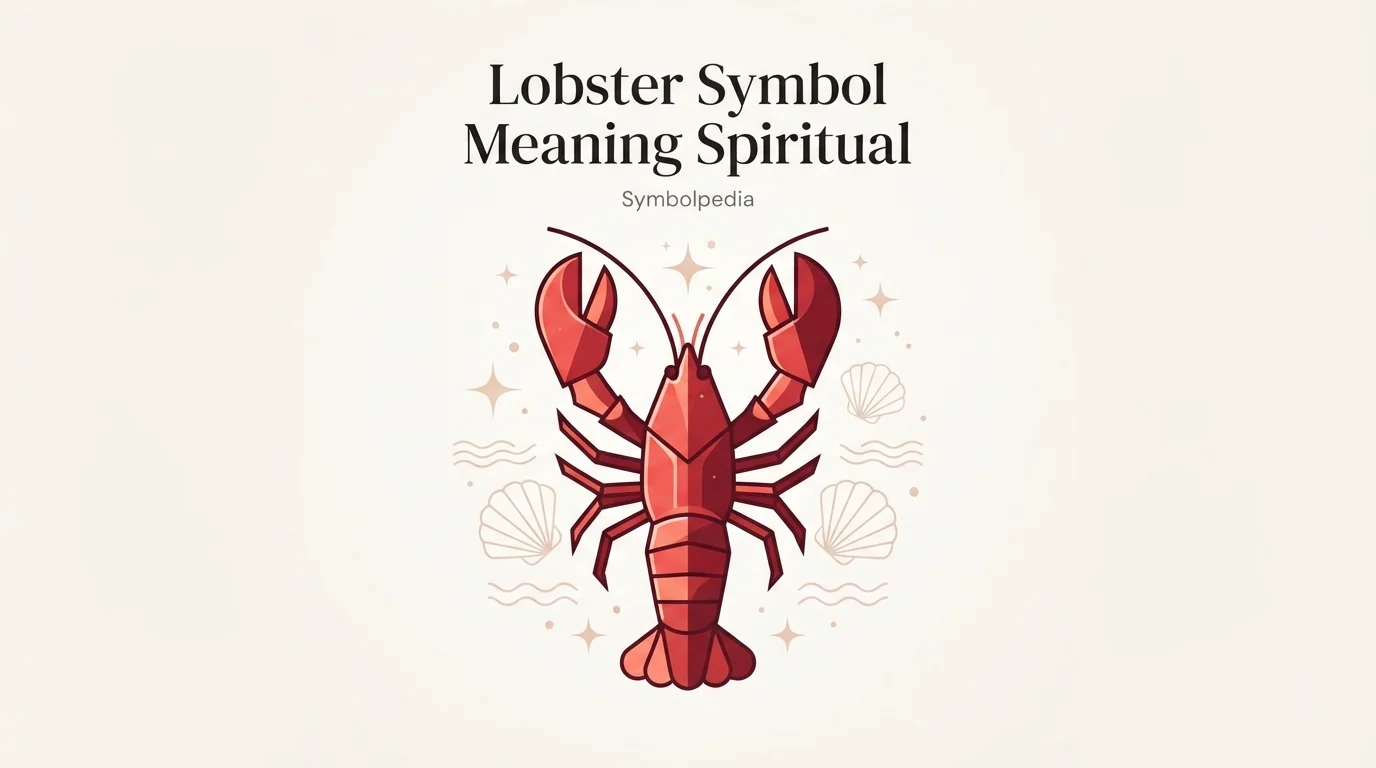
The lobster is a fascinating sea creature with a meaning that goes far beyond its unusual appearance. With its powerful claws, hard outer shell, ability to survive on the ocean floor, and remarkable process of shedding its shell, the lobster has become an interesting symbol of strength, protection, transformation, and emotional resilience.
But what does the lobster symbolize spiritually and emotionally?
The lobster symbol meaning is commonly associated with inner strength, self-protection, personal growth, independence, and the courage to face difficult situations. Its hard shell represents emotional boundaries, while its soft body underneath reminds us that even the strongest individuals have sensitive sides.
People search for lobster symbolism for different reasons. Some may have seen a lobster in a dream, noticed one repeatedly in artwork, received a lobster-themed gift, or simply feel connected to this unusual marine animal.
Others are interested in what a lobster represents in tattoos, spirituality, relationships, and personal development.
The interesting thing is that the lobster carries both protective and transformative meanings. It reminds us that protecting ourselves is sometimes necessary, but remaining inside our comfort zone forever can prevent us from growing.
In this guide, we will explore lobster symbolism from spiritual, emotional, psychological, cultural, and everyday perspectives so you can understand what this remarkable creature may represent in different situations.
2. Lobster Symbol Meaning – Quick Meaning

The lobster generally symbolizes strength, protection, transformation, resilience, emotional boundaries, independence, and survival.
Its symbolism comes largely from its physical characteristics and behavior.
Here are the most common interpretations:
- Strength: Represents the ability to face difficult circumstances.
- Protection: Symbolizes emotional safety and personal boundaries.
- Transformation: Reflects growth, renewal, and leaving old versions of yourself behind.
- Resilience: Represents surviving challenges without losing your identity.
- Independence: Encourages self-reliance and confidence.
- Emotional sensitivity: Reminds us that a strong exterior can hide vulnerable feelings.
- Patience: Represents gradual progress and personal development.
- Courage: Symbolizes standing your ground when necessary.
Consider these examples:
- “The lobster reminds me to protect my peace.”
- “I’m entering a new chapter, just like a lobster shedding its shell.”
- “Stay strong, but never be afraid to show your softer side.”
At its heart, the lobster represents an important balance: being strong enough to protect yourself while remaining open enough to grow.
3. Origin & Background of Lobster Symbolism
Lobsters have been part of human history for thousands of years. Their appearance in ancient artwork, literature, food traditions, and coastal communities has influenced how people understand and interpret them.
According to historical research published in the ICES Journal of Marine Science, lobster remains, artwork, and written records demonstrate that humans interacted with these animals in ancient civilizations and prehistoric communities.
One particularly interesting historical detail is that an early depiction of a lobster-like animal appears in an Egyptian temple mural associated with Queen Hatshepsut’s trading expedition approximately 3,500 years ago. OUP Academic
Ancient Cultural Connections
In ancient Greek and Roman societies, lobsters were studied for their physical characteristics, habitats, movements, and behavior.
Writers such as Aristotle and Pliny the Elder discussed their biology, including their claws, movements, and ability to escape danger.
These observations helped establish the lobster as a recognizable part of ancient natural history. PubMed Central (PMC)+1
Although there was no single universal spiritual meaning attached to lobsters, their unusual appearance made them interesting subjects in art and cultural expression.
Lobsters as Symbols of Wealth
Interestingly, the lobster’s association with luxury developed over time.
In parts of Europe and North America, lobster was once considered inexpensive food, sometimes associated with poverty. During the nineteenth century, however, demand increased, transportation improved, and lobster gradually became a fashionable seafood.
Its image eventually became associated with expensive dining, celebration, and prosperity. OUP Academic+1
Influence on Art and Modern Culture
Artists have also used lobster imagery to express unusual ideas.
Lobsters have appeared in surrealist artwork, decorative designs, fashion, and literature. Their symbolism can include extravagance, sensuality, maritime nostalgia, and even violence or social hierarchy. ELEPHANT+1
Today, social media has expanded these interpretations.
People may use lobster illustrations, emojis, jewelry, and tattoos to communicate confidence, individuality, humor, or a personal connection with the ocean.
The modern lobster symbol therefore has several possible meanings rather than one fixed historical definition.
4. Real-Life Conversations: How People Use Lobster Symbolism
Lobster symbolism is not limited to spiritual discussions. It can also appear naturally in conversations about relationships, personal development, and emotional experiences.
Here are four realistic examples.
Example 1: WhatsApp Conversation – Personal Growth
Person A: I’ve been feeling different lately. I don’t think the old version of me exists anymore.
Person B: Maybe you’re growing into someone new.
Person A: That’s why I got a lobster tattoo. It reminds me of transformation.
Person B: That’s actually beautiful. Keep growing.
Meaning: Here, the lobster represents personal transformation and the courage to move beyond an old identity.
Example 2: Instagram DM – Emotional Protection
Person A: Why do you always keep your feelings to yourself?
Person B: I guess I’m like a lobster. Hard outside, soft inside.
Person A: You don’t always have to hide your emotions.
Person B: I’m learning that.
Meaning: The lobster represents emotional sensitivity hidden behind a protective personality.
Example 3: TikTok Comments – Strength
Person A: This lobster video is strangely motivating.
Person B: How? 😂
Person A: It survives in a difficult environment and keeps going.
Person B: Honestly, that’s a whole life lesson.
Meaning: The lobster symbolizes resilience, persistence, and the ability to handle challenges.
Example 4: Text Messages – Setting Boundaries
Person A: You need to stop letting everyone disturb your peace.
Person B: Easier said than done.
Person A: Think of the lobster. Protect yourself when necessary.
Person B: I think I finally understand what that means.
Meaning: This conversation uses lobster imagery to represent boundaries, self-respect, and emotional protection.
5. Emotional & Psychological Meaning of a Lobster
One of the most interesting aspects of lobster symbolism is its connection to human emotions.
The lobster has a hard external shell, but its body underneath is much softer. This physical characteristic creates a powerful metaphor for people who appear confident and independent while privately experiencing emotional sensitivity.
Emotional Protection
A lobster’s shell can represent the protective barriers people build around themselves.
Someone who has experienced disappointment, rejection, or betrayal may become more careful about trusting others.
In this interpretation, the lobster encourages emotional awareness rather than complete isolation.
Protecting your feelings is healthy, but refusing to let anyone get close can eventually become lonely.
Personal Transformation
Lobsters periodically shed their hard outer shells as they grow. This biological process, called molting, provides one of the strongest natural foundations for lobster symbolism.
The old shell becomes too restrictive, so the animal must leave it behind and develop a new one.
Symbolically, this can represent releasing outdated beliefs, habits, relationships, or expectations.
Sometimes personal growth requires leaving behind something that once made you feel safe.
Courage During Vulnerability
After molting, a lobster’s new shell is initially soft and takes time to harden.
This creates an interesting emotional lesson: growth can temporarily make us feel vulnerable.
Starting a new career, ending an unhealthy relationship, or learning to trust again may feel uncomfortable.
Yet temporary vulnerability can be part of becoming stronger.
A Personal-Style Scenario
Imagine someone who spent years avoiding difficult conversations because they were afraid of rejection.
Eventually, they decide to communicate honestly, establish boundaries, and stop accepting disrespect.
At first, the change feels uncomfortable. They worry about losing relationships.
Over time, however, they become more confident and emotionally balanced.
The lobster provides a useful metaphor for this experience: sometimes you must leave behind an old form of protection to develop a healthier one.
6. Lobster Symbolism in Different Contexts
The meaning of a lobster can change depending on where and how it appears.
On Social Media
On Instagram, TikTok, and Pinterest, lobster imagery may communicate:
- Confidence and individuality.
- A love of ocean life.
- Transformation and personal growth.
- Luxury and celebration.
- Humor and unusual personal style.
A lobster illustration might be decorative, meaningful, or simply funny. Context matters.
In Friendships
In friendship, a lobster can represent loyalty, emotional protection, and the importance of respecting personal boundaries.
It may remind someone that genuine friendship requires both strength and vulnerability.
In Romantic Relationships
In relationships, lobster symbolism can represent:
- Protecting your heart.
- Learning to trust again.
- Building emotional security.
- Growing together through difficult experiences.
- Maintaining healthy personal boundaries.
The hard shell can represent caution, while the softer body represents the emotional connection underneath.
In Work and Professional Settings
In professional environments, lobster imagery can be used as a metaphor for determination, adaptability, and personal development.
It may represent the willingness to move beyond outdated habits and develop new skills.
However, lobster symbolism is not a standard professional expression, so its meaning should be explained when used in formal communication.
Casual vs. Serious Meaning
| Context | Possible Meaning |
|---|---|
| Casual conversation | Humor or individuality |
| Spiritual discussion | Transformation and resilience |
| Relationships | Emotional protection |
| Personal development | Growth and renewal |
| Professional setting | Adaptability and determination |
| Artwork | Luxury, surrealism, or ocean life |
7. When NOT to Use Lobster Symbolism
Although lobster imagery generally has positive interpretations, it is not appropriate for every situation.
1. Serious emotional conversations
If someone is discussing grief, trauma, or personal difficulties, responding with a lobster metaphor may sound dismissive unless they already appreciate symbolic language.
2. Professional communication
Avoid assuming everyone understands lobster symbolism. Explain your intended message instead of relying on an unfamiliar metaphor.
3. Cultural or religious discussions
Do not present personal spiritual interpretations as universal religious beliefs.
Different communities have different relationships with seafood and marine animals.
4. Sensitive dietary situations
A lobster image may have different associations for people who avoid shellfish for religious, ethical, cultural, or dietary reasons.
5. Emotional misunderstandings
Calling someone a lobster because they appear emotionally distant might sound insulting rather than supportive.
The best approach is to understand the audience before using symbolic language.
8. Common Misunderstandings About Lobster Symbolism
People sometimes misunderstand what the lobster represents because they focus on only one characteristic.
Here are some common mistakes.
Misunderstanding 1: Lobsters only represent strength.
Strength is one interpretation, but lobsters can also symbolize vulnerability, emotional boundaries, and transformation.
Misunderstanding 2: A lobster always represents wealth.
Its association with luxury comes partly from its changing history as a food commodity. It does not automatically symbolize financial success.
Misunderstanding 3: A lobster represents emotional coldness.
The hard shell can suggest protection, but it does not necessarily mean someone lacks affection or empathy.
Misunderstanding 4: Lobster symbolism has one universal spiritual meaning.
There is no single established interpretation shared by every spiritual or cultural tradition.
Misunderstanding 5: Seeing a lobster guarantees a life change.
Some people interpret lobster encounters spiritually, but seeing one does not scientifically predict future events.
Misunderstanding 6: Lobster and crab symbolism are identical.
Both animals have protective exoskeletons and claws, but their biological characteristics and cultural associations are not exactly the same.
9. Lobster Symbol Meaning Compared With Other Symbols
Lobster symbolism shares similarities with several other animals and natural symbols.
However, each has its own distinctive interpretation.
| Symbol | Common Meaning | Connection to Lobster |
|---|---|---|
| Crab | Protection and emotional sensitivity | Both have hard external shells |
| Turtle | Patience and security | Both represent protection |
| Butterfly | Transformation and renewal | Both can represent change |
| Snake | Rebirth and transformation | Both connect with renewal |
| Shark | Confidence and power | Both suggest strength |
| Octopus | Intelligence and adaptability | Both represent survival |
| Eagle | Freedom and independence | Both can symbolize self-reliance |
| Phoenix | Rebirth and overcoming difficulties | Both can represent a fresh beginning |
Opposite Symbolic Meanings
Some symbols communicate qualities that contrast with the lobster’s protective nature.
For example:
- Open flower: Represents openness and emotional expression.
- Dove: Often symbolizes peace and gentleness.
- Butterfly: Emphasizes freedom and visible transformation.
- Open door: Represents welcoming opportunities and new experiences.
Key Insight
The lobster is particularly interesting because it combines two seemingly opposite qualities: a strong exterior and a vulnerable interior. Unlike symbols that focus primarily on freedom or beauty, lobster symbolism highlights the importance of protecting yourself while continuing to grow.
11. How to Respond When Someone Uses Lobster Symbolism
Your response should depend on the situation and the meaning the other person intends.
Here are some natural replies.
Casual Replies
- “That’s an interesting way to look at it!”
- “I like that meaning.”
- “Never thought about lobsters that way.”
- “That’s actually pretty cool.”
Funny Replies
- “So basically, I’m a lobster with feelings?”
- “Hard shell, soft personality!”
- “Guess it’s time for me to upgrade my shell.”
- “Protective mode activated!”
Mature Replies
- “I think personal growth sometimes requires leaving our comfort zones.”
- “Protecting your emotions is important, but so is remaining open.”
- “That’s a meaningful reminder about resilience.”
Respectful Replies
- “I appreciate the symbolism behind that.”
- “That’s a beautiful personal interpretation.”
- “I can understand why that animal represents something meaningful to you.”
The most important thing is to respond to the person’s intended message rather than assuming that every lobster reference has a spiritual meaning.
12. Regional & Cultural Usage of Lobster Symbolism
Lobsters have different cultural associations depending on geography, history, and local traditions.
It is important to remember that these are broad cultural observations, not beliefs shared by everyone in a particular region.
Western Culture
In North America and parts of Europe, lobsters are strongly associated with coastal life, seafood traditions, luxury dining, and maritime identity.
In Maine, for example, the lobster became an important regional cultural symbol.
Its association with prosperity and exclusivity developed partly through changing food markets and tourism. tile.loc.gov+1
In contemporary Western artwork, lobster imagery may also communicate extravagance, humor, sensuality, or surreal creativity.
Asian Culture
Across Asia, lobster symbolism is not uniform.
In places where lobster is associated with festive meals and special occasions, it may suggest celebration, hospitality, and prosperity.
However, these meanings depend on local food traditions and artistic conventions rather than one universal Asian spiritual belief.
Middle Eastern Culture
In Middle Eastern communities, interpretations can differ according to religion, local customs, and personal experiences.
Some people may associate lobster with seafood, coastal traditions, or luxury dining, while others may avoid it for religious or dietary reasons.
It is better not to assign one spiritual meaning to lobster symbolism across the entire region.
Global Internet Usage
Online, lobster imagery has become flexible and highly personal.
People use it in:
- Memes and humorous posts.
- Ocean-themed illustrations.
- Tattoo designs.
- Fashion and accessories.
- Personal growth discussions.
- Decorative artwork.
A lobster can communicate anything from confidence to playful individuality, depending on the image and surrounding conversation.
Gen Z vs. Millennials
Younger internet users may encounter lobster imagery through memes, emojis, aesthetic content, and unusual animal-themed humor.
Millennials may be more familiar with its use in food culture, nostalgic coastal imagery, and decorative designs.
However, these are general tendencies, not strict generational rules.
Both generations can interpret the lobster as a symbol of strength, humor, transformation, or personal identity.
13. Is Lobster Symbolism Safe for Kids?
Yes. Lobster symbolism is generally child-friendly and can be used in educational, creative, and personal development activities.
Children can learn several positive lessons from the animal.
- Protection: Understand why personal boundaries matter.
- Growth: Learn that changing and developing is natural.
- Courage: Recognize the importance of facing challenges.
- Individuality: Appreciate that being different can be special.
- Adaptability: Understand the importance of adjusting to new situations.
Parents and teachers can use lobster illustrations, stories, and nature-based activities to introduce these ideas.
One important lesson is that being strong does not mean hiding every emotion.
Children should understand that asking for help, expressing sadness, and showing kindness are also signs of strength.
14. Frequently Asked Questions (FAQs)
1. What does a lobster symbolize spiritually?
A lobster can spiritually symbolize protection, transformation, resilience, emotional strength, and personal growth. Its molting process is often used as a metaphor for leaving old limitations behind.
2. What does seeing a lobster mean?
Seeing a lobster may remind you of strength, self-protection, or personal development. Some people interpret it as encouragement to establish boundaries or embrace change, although it does not predict future events.
3. What does a lobster symbolize in a dream?
A lobster in a dream may represent emotional protection, defensiveness, hidden feelings, or personal transformation. Its meaning depends on the dream’s circumstances and your personal associations.
4. What does a lobster tattoo mean?
A lobster tattoo can represent resilience, individuality, protection, personal growth, or a connection to coastal life. Its meaning ultimately depends on the person wearing it.
5. What does a blue lobster symbolize?
A blue lobster can represent uniqueness, individuality, rarity, and embracing your differences. Its unusual natural appearance makes it a popular metaphor for standing out.
6. What does a lobster symbolize in love?
In romantic relationships, a lobster may symbolize emotional boundaries, trust, loyalty, and the balance between protecting your heart and allowing someone to become emotionally close.
7. Is a lobster a symbol of strength?
Yes, lobster imagery is commonly interpreted as a symbol of strength and resilience. Its protective shell and powerful claws provide natural inspiration for this meaning.
15. Conclusion
The lobster symbol meaning offers a fascinating reminder of the relationship between strength, protection, and personal transformation.
Its hard outer shell represents the importance of emotional boundaries, while its softer body reminds us that vulnerability is a natural part of being human.
Its molting process offers another meaningful lesson: sometimes, growing into a better version of yourself requires leaving behind what once made you feel comfortable.
Whether you encounter a lobster in a dream, tattoo, illustration, conversation, or spiritual discussion, its symbolism can encourage you to protect your peace without closing yourself off from life.
The most meaningful lesson of the lobster is simple: you can be strong without becoming emotionally closed, and you can embrace change without losing who you are.
Let its symbolism remind you that personal growth takes patience, courage, and the willingness to move forward, even when the next chapter feels unfamiliar.
discover more post
Bullfrog Symbol Meaning Spiritual Symbolism 2026
Newt Symbol Meaning Transformation Healing Renewal 2026
Iguana Symbol Meaning Spiritual Messages Strength 2026