The Iron Cross is one of those symbols that instantly catches attention—bold, symmetrical, and loaded with history. But what does it actually mean?
If you’ve seen it on jewelry, tattoos, military insignia, or even in pop culture, you might have wondered whether it represents strength, rebellion, nationalism, or something more controversial.
The confusion is real—and justified.
The Iron Cross carries multiple layers of meaning, depending on context, culture, and intent. For some, it symbolizes honor and bravery. For others, it raises concerns due to its association with darker periods of history.
This article breaks it down clearly—so you can understand what the Iron Cross symbol truly means, where it comes from, and how it’s used today without misunderstanding or miscommunication.
Iron Cross Symbol Meaning – Quick Definition
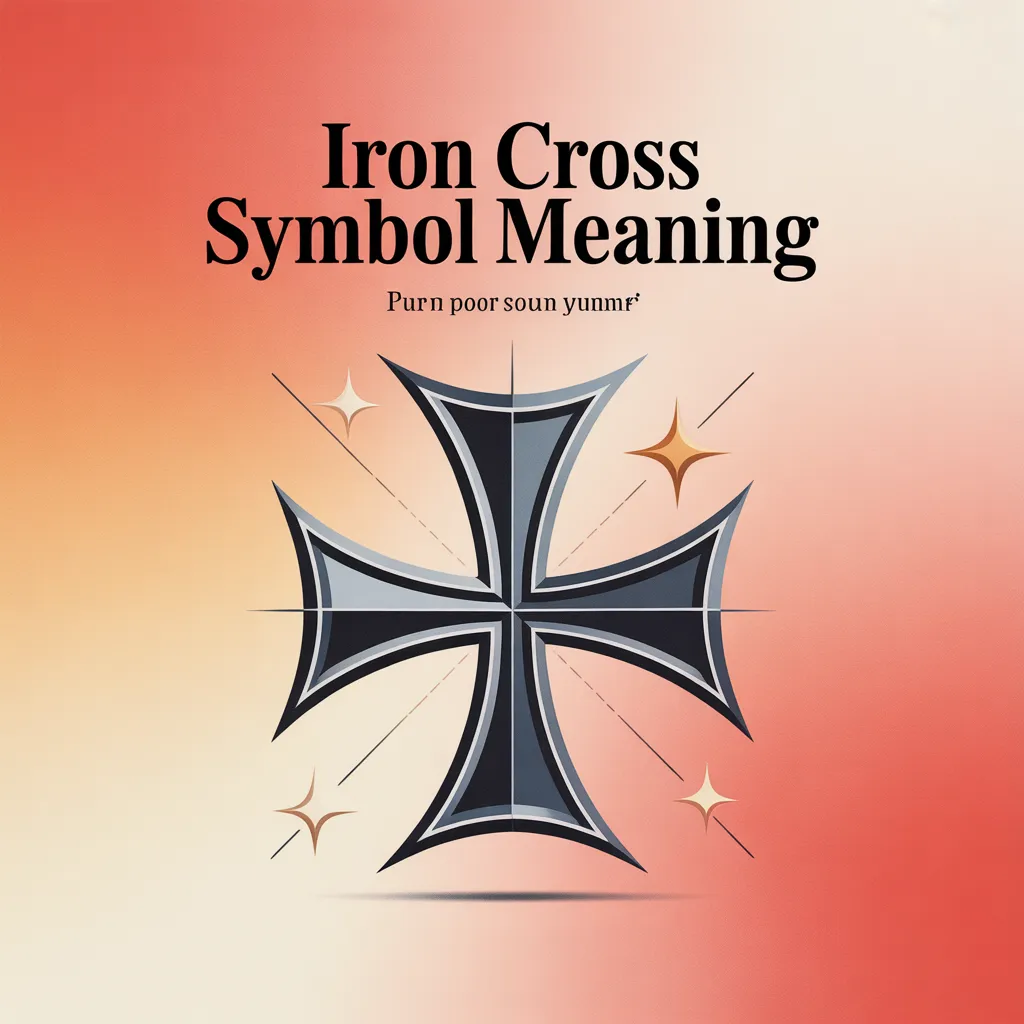
At its core, the Iron Cross is a military decoration and symbolic emblem that originated in Germany.
Simple Meaning:
- A symbol of bravery, honor, and military achievement
- Historically awarded to soldiers for valor in battle
- Visually recognized by its black cross with white or silver outline
In modern usage:
- Can represent strength, resilience, and individuality
- Sometimes used in fashion or subcultures
- May carry controversial interpretations depending on context
Example usage:
“He got an Iron Cross tattoo to represent strength after everything he survived.”
“That symbol looks cool, but do you know its history?”
“It’s not just a design—it has a deep meaning behind it.”
Origin & Background
The Iron Cross dates back to early 19th-century Prussia.
It was first introduced during the Napoleonic Wars by King Frederick William III in 1813. The idea was simple but powerful: create a military medal that honored bravery regardless of rank.
Unlike gold or jeweled awards, the Iron Cross was deliberately made from iron, symbolizing humility and sacrifice.
Evolution Over Time
- 1813: First issued during wars against Napoleon
- 1870 & 1914: Reintroduced during major European wars
- 1939: Revived during World War II under Adolf Hitler
This last period is where things get complicated.
The symbol became associated with Nazi Germany, which changed how many people perceive it today.
Modern-Day Usage
Today, the Iron Cross is still used by the German military (in a modified, non-political form) and appears in:
- Fashion and streetwear
- Motorcycle culture
- Tattoos
- Graphic design
Its meaning has shifted from purely military honor to a mix of heritage, rebellion, and aesthetic identity.
Real-Life Conversations
WhatsApp Chat
Person A:
Bro, why did you get that cross tattoo?
Person B:
It’s an Iron Cross. For me, it means strength and survival.
Person A:
Oh… I thought it had a political meaning.
Person B:
It can, but mine is personal.
Instagram DMs
Person A:
That necklace looks intense. What’s the symbol?
Person B:
Iron Cross. I like its history and bold look.
Person A:
Isn’t it controversial though?
Person B:
Depends how you use it and what you stand for.
TikTok Comments
User1:
That logo looks like an Iron Cross 😳
User2:
Yeah, but not everything with that shape is political
User3:
Context matters, people
Text Message
Person A:
Do you think wearing an Iron Cross ring is okay?
Person B:
It’s fine if you understand the meaning and aren’t promoting anything harmful.
Emotional & Psychological Meaning
Symbols aren’t just visual—they carry emotional weight.
The Iron Cross often represents:
- Inner strength
- Endurance through struggle
- Individual identity
- Rebellion against norms
For some, wearing it feels like saying:
“I’ve been through something—and I came out stronger.”
Why People Use It
In modern communication, people gravitate toward symbols that feel bold and meaningful. The Iron Cross stands out because it’s:
- Minimal yet powerful
- Historically rich
- Visually striking
Personal Scenario
A friend once shared why he wore an Iron Cross pendant. It wasn’t about history or politics. He had gone through a tough period—loss, failure, rebuilding—and the symbol reminded him of resilience.
That’s how symbols evolve: people give them new meanings based on lived experiences.
Usage in Different Contexts
Social Media
- Used in bios, profile pictures, or designs
- Often aesthetic, sometimes symbolic
- Can be misunderstood without explanation
Friends & Relationships
- Seen in tattoos or jewelry
- Usually represents personal strength or identity
- Conversations often start from curiosity
Work / Professional Settings
- Risky or inappropriate in formal environments
- May be misunderstood as political or extremist
- Best avoided unless clearly contextualized
Casual vs Serious Tone
- Casual: Style or aesthetic
- Serious: Historical or ideological meaning
When NOT to Use It
There are situations where using the Iron Cross can backfire.
Avoid it when:
- You’re in professional or corporate environments
- The audience may associate it with extremism
- You don’t fully understand its history
- You’re in sensitive cultural or political discussions
Cultural Sensitivity Matters
In some regions, the symbol may still be strongly linked to World War II and its consequences.
Using it casually in those contexts can seem insensitive—even if that wasn’t your intention.
Common Misunderstandings
1. “It always represents extremism”
Not true. Its original meaning is military honor, though associations vary.
2. “It’s just a cool design”
It may look aesthetic, but ignoring its history can lead to misunderstandings.
3. “Everyone sees it the same way”
Interpretation depends heavily on culture and personal perspective.
4. Tone Confusion
What you intend as “strength” might be perceived as “political alignment.”
Comparison Table
| Expression / Symbol | Meaning | Tone | Usage Context |
|---|---|---|---|
| Iron Cross | Strength, honor, history | Serious / Bold | Military, personal symbolism |
| Peace Sign | Harmony, anti-war | Positive | Social, activism |
| Skull Symbol | Danger, rebellion | Edgy | Fashion, art |
| Cross (Christian) | Faith, spirituality | Respectful | Religious contexts |
| Broken Chain | Freedom, liberation | Empowering | Activism, storytelling |
Key Insight
The Iron Cross stands apart because it blends historical weight with modern reinterpretation. It’s not just a symbol—you’re also communicating how you understand its past.
How to Respond When Someone Uses It
Casual Replies
- “That’s a bold symbol—what does it mean to you?”
- “Interesting choice, I’ve seen that before.”
Funny Replies
- “That cross looks like it has a whole history lesson attached 😄”
- “That’s not just fashion—that’s a conversation starter!”
Mature Replies
- “It has a complex background. I’m curious how you interpret it.”
- “Symbols like that carry a lot of meaning depending on context.”
Respectful Replies
- “I respect your perspective—thanks for explaining it.”
- “It’s always good to understand the history behind symbols.”
Regional & Cultural Usage
Western Culture
Mixed perception. Some see it as historical or aesthetic, while others connect it strongly to World War II.
Asian Culture
Often viewed more as a design element, though awareness is increasing.
Middle Eastern Culture
Interpretation varies. Some associate it with Western military history, others may see it as politically sensitive.
Global Internet Usage
Online, meaning depends heavily on context. It can be:
- Aesthetic
- Symbolic
- Controversial
Generational Differences
- Gen Z: More likely to reinterpret it as style or identity
- Millennials: More aware of historical implications
Is It Safe for Kids?
Not always.
While the symbol itself isn’t inherently harmful, its historical associations make it important for kids to understand context.
Parents should guide discussions around:
- History
- Symbolism
- Cultural sensitivity
It’s less about banning it—and more about teaching awareness.
FAQs
1. Is the Iron Cross a Nazi symbol?
No, it existed long before that period. However, it was used during that time, which affects perception.
2. What does it mean in tattoos?
Usually strength, resilience, or personal identity.
3. Is it offensive?
It can be, depending on context and audience.
4. Why do bikers use it?
Often as a symbol of rebellion and independence.
5. Is it still used officially?
Yes, in a modern, non-political form by Germany’s military.
6. Can I wear it casually?
You can, but understanding its meaning is important to avoid misinterpretation.
Conclusion
The Iron Cross isn’t a simple symbol—and that’s exactly why it sparks so much curiosity.
It carries centuries of history, layers of meaning, and a mix of admiration and controversy. For some, it represents courage and resilience. For others, it serves as a reminder of a difficult past.
What matters most is awareness.
When you understand the symbol, you use it differently. You communicate more clearly. And you avoid sending messages you didn’t intend.
Symbols don’t just show who we are—they show what we understand.
Use them wisely.
descover more post
Pachamama Symbol Meaning The Deep Spiritual Message …
Hummingbird Symbol Meaning Deep Spiritual Emotional 2026
Expiry Date Symbol Meaning What It Really Says About Time …

Orvian is a passionate researcher and dedicated content creator focused on exploring the deeper meanings behind symbols, signs, and cultural interpretations. With a strong interest in symbolism and human psychology, Orvian simplifies complex ideas into clear, engaging, and easy-to-understand content for readers around the world.
Through consistent research and thoughtful writing, Orvian aims to provide accurate, insightful, and meaningful information that helps users connect with symbols on a deeper level—whether for personal growth, curiosity, or knowledge.
Known for a hardworking mindset and attention to detail, Orvian believes that every symbol carries a story, and every story deserves to be understood.