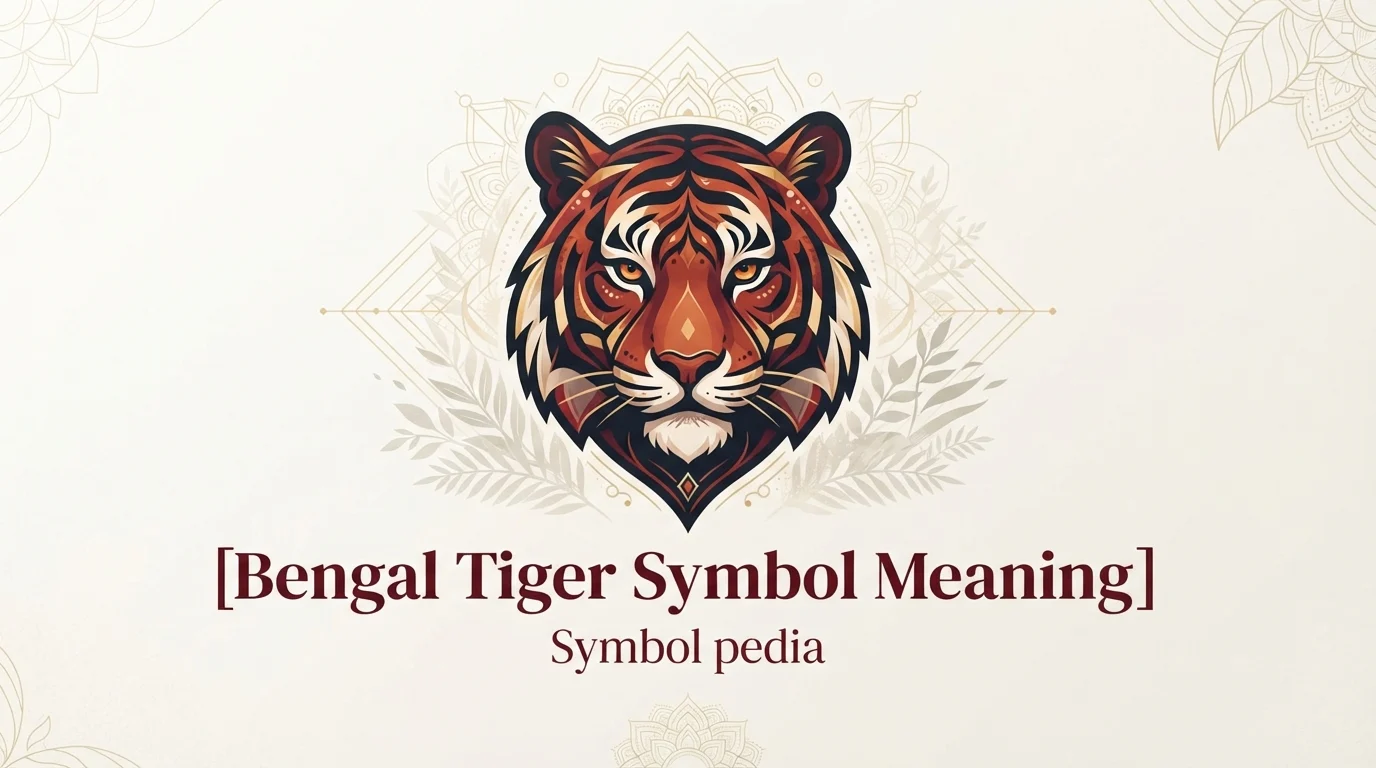
The Bengal tiger is more than a beautiful wild animal. With its powerful body, striking orange coat, black stripes, and intense gaze, it has become a symbol of strength, courage, independence, and the untamed spirit of nature.
When people search for the Bengal tiger symbol meaning, they may be looking for something different from a simple description of the animal. Some want to understand its spiritual significance, while others are curious about its cultural importance, appearance in tattoos, or use in art, logos, and personal symbolism.
The Bengal tiger can represent the courage to face challenges, the confidence to stand alone, and the determination to protect what matters. In some cultural and spiritual traditions, tigers also represent guardianship, authority, and a connection with the natural world.
However, its meaning is not identical everywhere. A tiger used as a national emblem, a spiritual image, a sports mascot, or a tattoo can communicate different ideas depending on its setting.
Understanding these differences helps you appreciate why the Bengal tiger continues to capture people’s imagination. Its symbolism combines the animal’s real qualities with the values and stories that humans have attached to it over generations.
In this guide, we will explore the Bengal tiger’s symbolism, historical background, emotional significance, cultural associations, and modern uses, including tattoos and social media.
Bengal Tiger Symbol Meaning – Quick Explanation
The Bengal tiger commonly symbolizes strength, courage, power, independence, protection, and resilience. Its meaning can change according to cultural traditions, artistic choices, and personal beliefs.
Here are the most common interpretations:
- Strength: The ability to face demanding situations and overcome obstacles.
- Courage: Standing firm when circumstances are frightening or uncertain.
- Independence: Trusting your own judgment and moving forward without constant approval.
- Protection: Defending loved ones, personal boundaries, or something valuable.
- Authority: Confidence, leadership, and a commanding presence.
- Resilience: Recovering from setbacks and continuing despite difficulties.
- Wild freedom: Living authentically rather than allowing others to control every decision.
For example, someone might explain a tiger tattoo by saying:
- “The tiger reminds me to stay strong when life gets difficult.”
- “I chose the Bengal tiger because it represents courage and independence.”
- “For me, the tiger symbolizes protecting the people I love.”
These are personal interpretations rather than fixed definitions. The meaning becomes more specific when you consider the person’s experiences and the context in which the image appears.
Origin and Background of the Bengal Tiger Symbol


The Bengal tiger in history
The Bengal tiger, also called the Royal Bengal tiger, is a tiger subspecies native to the Indian subcontinent. Its historical range includes India, Bangladesh, Nepal, and Bhutan.
Its physical power and striking appearance have made it an important subject in regional art, folklore, literature, and national identity. In India, the tiger is the national animal, representing qualities commonly associated with strength, grace, and the country’s natural heritage.
Over time, the animal’s image has developed meanings beyond its biological identity. It can represent authority, bravery, wilderness, and the importance of protecting wildlife.
Cultural and spiritual influence
In Hindu religious imagery, the tiger is associated with Goddess Durga, who is commonly depicted riding a tiger or a lion depending on the artistic tradition. This imagery connects the animal with divine power, courage, and the ability to confront destructive forces.
The tiger’s significance is not limited to religious imagery. Folklore and regional traditions have also shaped how people understand the animal.
In the Sundarbans, the vast mangrove forest shared by India and Bangladesh, the tiger is part of a living cultural landscape. Local stories, music, and folk performances reflect the complex relationship between people, the forest, and an animal that can inspire both respect and fear. The tradition of Bonbibi, a guardian figure in Sundarbans folklore, is one example of how stories express the need for protection in a challenging natural environment.
These traditions show why it is important not to reduce every Bengal tiger image to a generic symbol of aggression. In some settings, the tiger represents sacred power or protection; in others, it represents the beauty and vulnerability of the natural world.
Modern symbolism and social media
Today, Bengal tiger imagery appears in tattoos, clothing, sports branding, posters, digital artwork, and motivational content.
On social media, a tiger photograph may accompany a message about confidence or personal growth. A tattoo may commemorate survival through a difficult period. A national or conservation campaign may use the tiger to encourage pride in wildlife and support for habitat protection.
The interpretation depends on the purpose of the image. A tiger roaring toward the viewer may communicate boldness, while a tiger resting peacefully may suggest self-control, patience, and quiet confidence.
Real-Life Conversations: How People Interpret the Bengal Tiger Symbol
The following fictional conversations show how people might discuss the tiger’s symbolism in everyday life.
1. WhatsApp: Choosing a meaningful tattoo
Person A: I’m thinking about getting a Bengal tiger tattoo.
Person B: That’s a powerful choice. Does it mean something personal to you?
Person A: Yes. I want it to remind me that I can get through difficult times.
Person B: Then it sounds like a symbol of resilience, not just strength.
Person A: Exactly. I want the reminder to be there even when I feel discouraged.
What this means: The tiger represents the person’s determination to keep moving forward. Its meaning comes from an individual experience rather than a universal rule.
2. Instagram DMs: Understanding a spiritual image
Person A: I saw a tiger beside Goddess Durga in an artwork. Is there a meaning behind it?
Person B: In many depictions, the tiger is connected with power and courage.
Person A: So it’s not just decoration?
Person B: Right. In that religious context, it can carry a much deeper meaning.
What this means: Religious imagery needs to be understood within its own tradition. The tiger’s symbolism may be connected to divine power rather than simply personal confidence.
3. TikTok comments: Confidence and independence
Person A: Why do people use tiger pictures for motivational posts?
Person B: Tigers are often associated with courage, strength, and independence.
Person A: That explains the caption about not giving up.
Person B: Exactly. The image reinforces the message.
What this means: Social media frequently uses animal imagery to express an emotion or personal ideal quickly.
4. Text messages: A family connection
Person A: Dad gave me a picture of a Bengal tiger before I left for university.
Person B: That’s thoughtful. Did he tell you why?
Person A: He said to be brave but also to think before I act.
Person B: I like that. Strength doesn’t have to mean being aggressive.
Person A: That’s how I see it now, too.
What this means: A tiger can symbolize courage balanced with judgment. Personal associations often make a symbol more meaningful than a general definition.
Emotional and Psychological Meaning of the Bengal Tiger
The Bengal tiger often appeals to people because it represents qualities they want to develop or preserve in themselves.
Its symbolism can be understood through several emotional themes.
Courage during uncertainty
The tiger’s confident presence makes it a natural image for bravery. Someone facing a new job, a major life change, or a difficult personal decision might connect with the idea of moving forward despite fear.
Courage does not mean feeling no fear. In a personal symbolic sense, the tiger can represent acting thoughtfully even when circumstances are uncomfortable.
Independence and personal boundaries
Tigers are generally solitary animals, although their behavior varies with age, reproduction, and other circumstances. This natural characteristic can inspire a symbolic association with independence.
For people, that may mean learning to make decisions without constant approval, setting healthy boundaries, or becoming comfortable spending time alone.
It should not be taken to mean that isolation is always healthy or that strong people never need support.
Protection and loyalty
A tiger’s strength may also symbolize the desire to protect family, friends, or personal values.
For example, someone who has taken responsibility for supporting loved ones might choose tiger imagery as a reminder to remain dependable under pressure.
This interpretation is personal rather than a claim that tigers follow human ideas of loyalty.
A personal-style scenario
Imagine someone who has spent years doubting their abilities. After working through a difficult period, they choose a Bengal tiger image for their journal.
They do not see it as a promise that life will become easy. Instead, it reminds them that confidence can grow through repeated effort, patience, and better decisions.
That is one of the most meaningful ways to use symbolism: as a reminder of values you want to practice rather than as a guarantee of future success.
Bengal Tiger Symbolism in Different Contexts
Social media
A tiger image can make a post feel bold, motivational, or connected to wildlife. Captions about resilience, ambition, and courage often pair naturally with the animal.
However, a tiger photograph does not automatically reveal someone’s personality. It may simply reflect an interest in animals, photography, or conservation.
Friends and relationships
In personal relationships, the Bengal tiger can symbolize a protective nature, independence, or the strength to recover after heartbreak.
Someone might give a tiger-themed gift to encourage a friend before an important challenge. The intended meaning becomes clearer when the gift includes a personal explanation.
Work and professional settings
In business, a tiger may represent ambition, competitive energy, leadership, or a strong organizational identity.
A company, sports team, or institution may use the animal as a mascot. In that setting, the image communicates branding and group identity rather than a spiritual message.
Casual versus serious symbolism
In casual use, a tiger emoji or illustration might simply communicate confidence or excitement.
In a serious setting, such as a religious artwork, memorial tattoo, or wildlife conservation campaign, the image may carry deeper cultural, personal, or ecological significance.
Always consider where the symbol appears before assigning it a meaning.
When Not to Use the Bengal Tiger Symbol
Although the Bengal tiger has many positive associations, there are situations where its use may be misunderstood.
- In religious contexts: If using imagery associated with Goddess Durga or another cultural tradition, learn about its significance instead of treating it as a generic decoration.
- When discussing wildlife: Avoid portraying tigers only as dangerous predators. They are endangered wildlife in need of habitat protection, not simply symbols of aggression.
- In sensitive conversations: Sending an aggressive-looking tiger image to someone who is already upset may communicate intimidation rather than encouragement.
- In professional branding: Check whether a tiger design resembles an existing organization’s logo or uses culturally significant imagery inappropriately.
- When interpreting someone else’s tattoo: Do not assume that a tiger tattoo means the person is fearless, dominant, or aggressive. Ask about its personal significance if the conversation allows.
The key is to respect both the cultural context and the individual meaning behind the image.
Common Misunderstandings About Bengal Tiger Symbolism
1. The tiger always represents aggression
The tiger’s physical power can suggest danger, but its symbolism extends beyond aggression. It can represent grace, patience, confidence, protection, and resilience.
2. A Bengal tiger tattoo has one fixed meaning
There is no universal interpretation for every tiger tattoo. One person may associate it with overcoming hardship, while another may choose it because of family heritage, wildlife conservation, or appreciation of the animal’s appearance.
3. Tiger symbolism is identical across cultures
Cultural traditions differ. Religious imagery, folklore, national identity, and contemporary fashion can give the same animal different meanings.
4. A tiger image predicts success
Some people use the tiger as a good-luck or motivational symbol. However, there is no reliable evidence that displaying a tiger image guarantees wealth, protection, or success.
5. Bengal tigers and all other tigers have completely different symbolic meanings
Many tiger-related themes overlap across artistic and cultural traditions. The Bengal tiger’s specific geographic and cultural associations can add significance, but not every symbolic interpretation is exclusive to this subspecies.
Comparison Table: Bengal Tiger and Related Animal Symbols

Bengal tiger
Common symbolism: courage, independence, resilience, physical power, and protection.

Lion
Common symbolism: leadership, royalty, authority, bravery, and dignity.

Eagle
Common symbolism: freedom, vision, aspiration, and perspective.

Elephant
Common symbolism: wisdom, memory, patience, family bonds, and stability.

Wolf
Common symbolism: instinct, loyalty, independence, and community.
Key Insight
These animal associations are broad symbolic conventions, not universal rules. The Bengal tiger is particularly well suited to expressing a combination of individual strength and untamed independence, while a lion may be chosen to emphasize leadership and an elephant to convey wisdom. Personal experience and cultural context can change any of these interpretations.
How to Respond When Someone Uses the Bengal Tiger Symbol
If someone shares a Bengal tiger image, tattoo, or post, your response can depend on your relationship and the context.
Casual replies
- “That tiger looks incredible!”
- “I love the strength behind this design.”
- “The artwork is so detailed.”
- “That’s a powerful animal.”
Funny replies
- “Main character energy!”
- “Someone woke up feeling fearless.”
- “That’s one serious jungle boss.”
- “Definitely not an ordinary cat!”
Use playful replies when you know the other person will appreciate the humor.
Mature replies
- “I like how the design represents resilience.”
- “The symbolism behind this image is interesting.”
- “It has a strong connection with nature and independence.”
- “I appreciate the balance between power and grace.”
Respectful replies
If the image has religious or cultural significance, you could say:
- “Could you tell me more about what the tiger represents in this artwork?”
- “I would love to understand the cultural meaning behind this image.”
- “Is there a personal story connected to your tattoo?”
Asking thoughtful questions allows the other person to explain their interpretation without feeling that you have made assumptions.
Regional and Cultural Usage of Bengal Tiger Symbolism
Western cultures
In many Western settings, tiger imagery appears in sports, fashion, tattoos, entertainment, and motivational artwork.
It is commonly associated with strength, confidence, and a bold personality. These associations are widespread, but they do not represent every individual’s interpretation.
Asian cultures
The Bengal tiger has particularly important associations across the Indian subcontinent. It is India’s national animal and appears in religious imagery, folklore, and wildlife conservation.
In parts of East Asia, tiger symbolism also has deep cultural roots, including associations with courage and protection. However, East Asian tiger traditions should not automatically be treated as specifically Bengal tiger traditions; they involve different regional histories and artistic conventions.
Middle Eastern cultures
In Middle Eastern settings, a tiger image may be interpreted through broader associations with strength, bravery, beauty, and authority. Its meaning can depend on local artistic influences, personal beliefs, and the purpose of the design.
There is no single interpretation shared by everyone across the region, and it would be inaccurate to assign one universal spiritual meaning to Bengal tiger imagery in Middle Eastern culture.
Global internet culture
Online, the Bengal tiger has become a recognizable image for wildlife appreciation, motivational posts, tattoos, and artistic expression.
Its striking appearance makes it easy to use as a visual shorthand for confidence or power. At the same time, conservation organizations use tiger imagery to raise awareness about endangered wildlife and the protection of natural habitats.
Gen Z versus Millennials
Gen Z and Millennials may encounter tiger symbolism through different online trends, fashion choices, and tattoo styles. Some use it to express personal identity, while others appreciate its cultural or environmental significance.
There is no fixed generational meaning. A tiger image might represent independence to one person and simply be a favorite animal to another.
Is the Bengal Tiger Symbol Safe for Kids?
Yes, Bengal tiger imagery is generally appropriate for children when presented in a suitable context.
For young children, it can introduce ideas such as courage, respect for wildlife, and the importance of protecting nature. Educational books and conservation activities can also help children understand the tiger’s place in its ecosystem.
Some designs portray tigers as aggressive or frightening, so parents may want to consider the child’s age and sensitivity.
It is also useful to explain that real tigers are wild animals deserving of respect and protection, not pets or creatures that should be approached in the wild.
Frequently Asked Questions
1. What does the Bengal tiger symbolize spiritually?
The Bengal tiger may symbolize courage, power, protection, and inner strength. In Hindu religious imagery, it is associated with Goddess Durga and can represent divine power. Interpretations vary by tradition.
2. What does a Bengal tiger tattoo mean?
A Bengal tiger tattoo can represent resilience, independence, courage, protection, or personal transformation. Its precise meaning depends on the design and the person wearing it.
3. Is the Bengal tiger a symbol of good luck?
Some individuals interpret tiger imagery as a positive symbol of confidence, strength, or protection. However, there is no universal belief that a Bengal tiger guarantees good luck.
4. What does a roaring Bengal tiger symbolize?
A roaring tiger often represents assertiveness, courage, and a powerful presence. In artwork, it can communicate a willingness to stand firm or make oneself heard.
5. What does the Bengal tiger represent in Hinduism?
In Hindu imagery, Goddess Durga is often depicted riding a tiger or a lion. The tiger in these depictions can be associated with power, courage, and the ability to overcome destructive forces. Specific imagery varies across traditions.
6. Is the Bengal tiger a symbol of India?
Yes. The tiger is India’s national animal, representing the country’s natural heritage and the importance of protecting wildlife. The Bengal tiger is one of the most recognizable tiger subspecies associated with the Indian subcontinent.
7. What is the difference between Bengal tiger and lion symbolism?
A Bengal tiger is often associated with independence, resilience, and untamed strength, while a lion is commonly associated with leadership, royalty, and authority. These are broad symbolic associations, and their meanings can overlap.
Conclusion
The Bengal tiger symbol meaning reaches far beyond physical strength. It can express courage during uncertainty, independence when making difficult choices, protection for loved ones, and a deep appreciation for the natural world.
Its significance also depends on culture and context. In religious artwork, the tiger may represent sacred power; in a tattoo, it may commemorate a personal struggle; and in conservation campaigns, it can stand for the urgent need to protect endangered wildlife.
What makes the Bengal tiger such a compelling symbol is the combination of power and grace. It reminds us that strength does not always need to be loud, and independence does not have to mean standing alone.
If you are drawn to the Bengal tiger, consider what it represents to you personally. Whether it inspires courage, reflects your heritage, or reminds you to protect what matters, the most meaningful interpretation is one that respects the animal’s cultural significance while connecting honestly with your own values.
discover more post
What’s FT Mean in Text Real Meaning Examples 2026
What Do NB Mean in Text Real Meaning Examples 2026
What Is DD Mean in Text Real Meaning Examples 2026