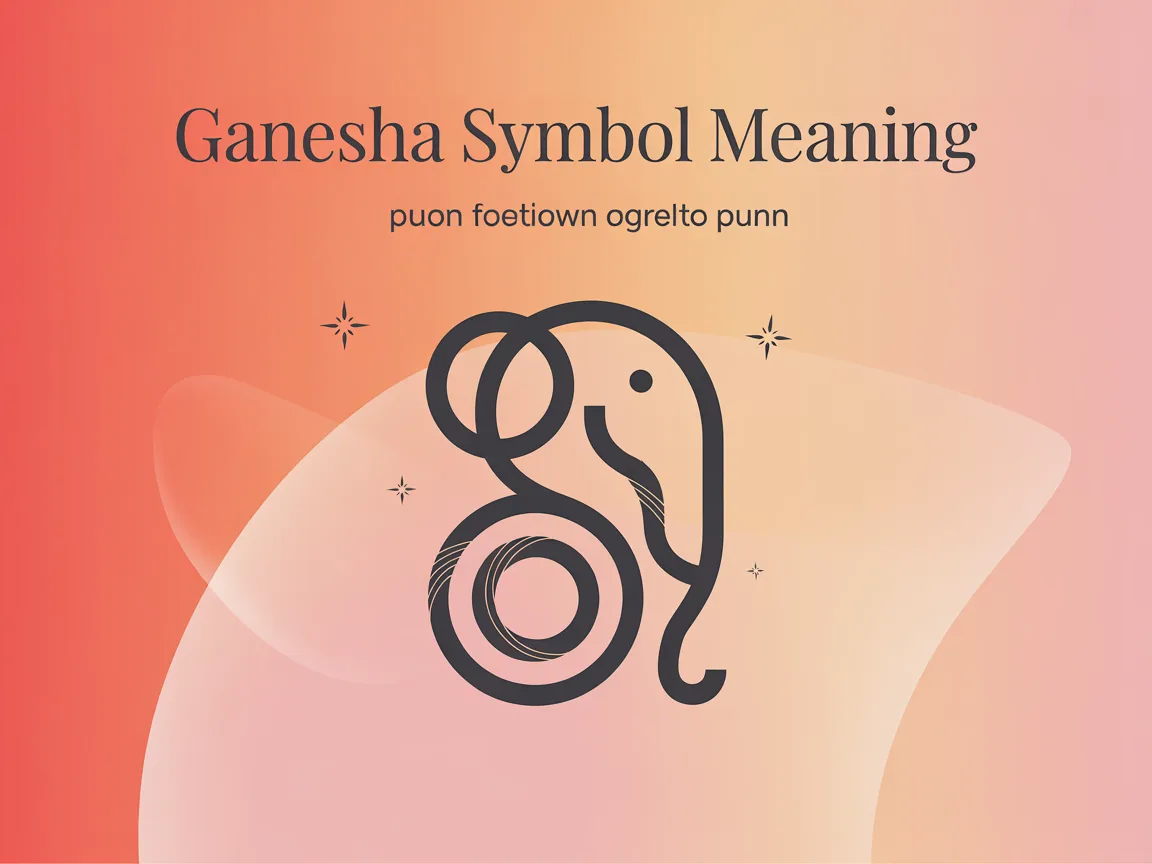
If you’ve ever seen the image of a gentle elephant-headed figure sitting calmly, you’ve already encountered one of the most meaningful spiritual symbols in the world—Ganesha.
People search for the Ganesha symbol meaning for different reasons. Some are curious about its spiritual roots. Others want to understand why it appears in homes, tattoos, jewelry, or even social media posts. And many simply feel drawn to it without knowing why.
Here’s the truth: the Ganesha symbol isn’t just decorative. It carries layers of meaning—protection, wisdom, new beginnings, and emotional grounding. In a fast-moving digital world, it has quietly become a symbol of balance and intention.
This guide breaks it down in a way that feels real, relatable, and useful—whether you’re exploring spirituality or just trying to understand what it represents in everyday communication.
Ganesha Symbol Meaning – Quick Meaning
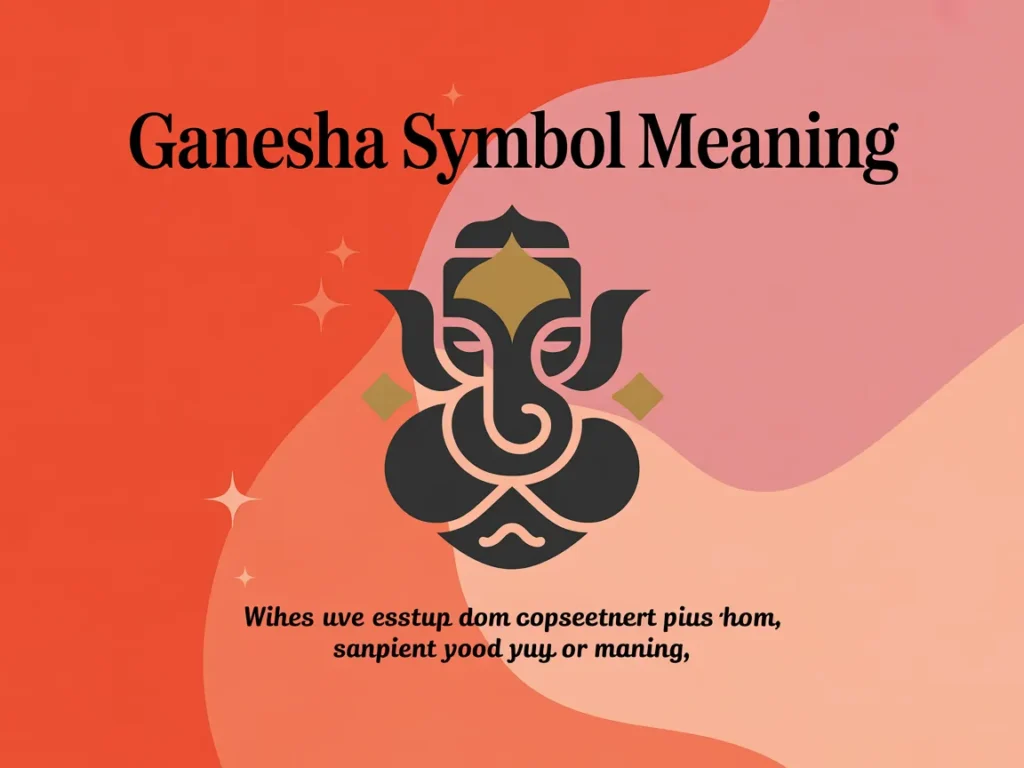
At its core, the Ganesha symbol represents:
- Removal of obstacles
- Wisdom and intelligence
- New beginnings and fresh starts
- Protection and guidance
- Balance between strength and gentleness
People often use or display it when they want clarity or a positive shift in life.
Simple examples:
“I kept a Ganesha symbol on my desk before starting my business.”
“She gifted me a Ganesha pendant for good luck.”
“Posting this for new beginnings—Ganesha energy.”
Origin & Background
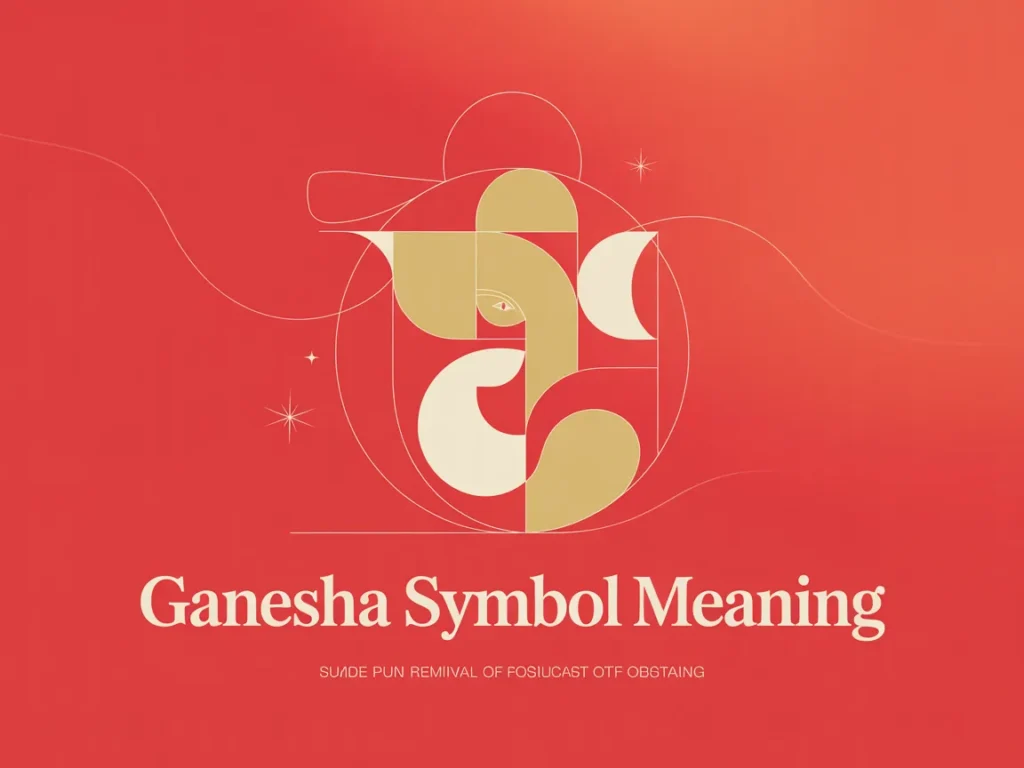
The Ganesha symbol comes from ancient Indian spiritual traditions, especially Hindu culture. Ganesha is a revered deity known as the remover of obstacles and the patron of wisdom.
Traditionally, people would invoke Ganesha before starting anything important—business ventures, travel, studies, or even conversations.
Over time, the symbol moved beyond temples and rituals.
- It began appearing in homes as decor
- Then in art and tattoos
- Now, it’s visible on Instagram posts, reels, and lifestyle branding
The meaning hasn’t changed—but the way people connect to it has evolved.
Today, someone might share a Ganesha image not as a religious act, but as a way of saying:
“I’m starting something new—and I want it to go right.”
Real-Life Conversations
Here’s how the Ganesha symbol shows up naturally in modern communication:
Person A: I’m nervous about my interview tomorrow.
Person B: You got this. Keep a Ganesha image with you for positivity.
Instagram DMs
Person A: Why did you post that Ganesha pic today?
Person B: Just felt like I needed a fresh start.
TikTok Comments
User 1: What does this symbol mean?
User 2: It’s about removing obstacles and good energy.
Text Messages
Person A: I’m opening my new shop next week.
Person B: That’s amazing. Put a Ganesha symbol there for blessings.
These aren’t scripted. This is how people genuinely use it—quietly, meaningfully, without overexplaining.
Emotional & Psychological Meaning
What makes the Ganesha symbol powerful isn’t just its origin—it’s how it makes people feel.
At an emotional level, it represents:
- Hope when things feel blocked
- Calm when life feels chaotic
- Control in uncertain situations
- Faith without needing perfection
Psychologically, it acts like a grounding tool.
When someone places or shares a Ganesha symbol, they’re often saying:
“I want things to work out. I need clarity.”
A real-life style scenario
A friend once told me they kept a small Ganesha figurine near their laptop during a stressful project.
Not because they were deeply religious—but because it reminded them to stay patient, focused, and calm.
That’s the real power of symbols. They anchor your mindset.
Usage in Different Contexts
Social Media
People post Ganesha images during:
- New ventures
- Festivals
- Personal growth moments
It signals positivity and intention.
Friends & Relationships
Sharing a Ganesha symbol can mean:
- “I wish you success”
- “Stay strong”
- “Good things are coming”
Work / Professional Settings
In offices, it often appears as:
- Desk decor
- Opening ceremony symbols
- Gift items
It’s associated with success and smooth progress.
Casual vs Serious Tone
- Casual: “Ganesha vibes today 🙏”
- Serious: “May this bring clarity and remove obstacles in your path.”
Tone depends on context—but meaning stays respectful.
When NOT to Use It
Even meaningful symbols can be misunderstood if used carelessly.
Avoid using the Ganesha symbol:
- As a joke or meme – it can feel disrespectful
- In inappropriate content – mixing sacred symbols with insensitive themes
- Without understanding context – especially in formal or intercultural settings
It’s not just an aesthetic. For many, it holds deep spiritual value.
Common Misunderstandings
1. “It’s just for decoration.”
Not really. Even when used decoratively, it carries intention.
2. “It’s only religious.”
It’s spiritual, yes—but also widely used for mindset and symbolism.
3. “It guarantees success.”
No symbol guarantees outcomes. It represents support, not shortcuts.
4. “All elephant symbols mean the same thing.”
Not true. The Ganesha symbol is unique in its cultural and spiritual depth.
Comparison Table
| Expression / Symbol | Meaning | Tone | Usage |
|---|---|---|---|
| Ganesha Symbol | Removes obstacles, brings wisdom | Spiritual, calm | Life events, beginnings |
| Lucky Charm | General good luck | Casual | Everyday life |
| “Good vibes” | Positive energy | Informal | Social media |
| Yin-Yang | Balance of opposites | Philosophical | Deep discussions |
| Four-leaf clover | Luck | Light | Western symbolism |
Key Insight:
The Ganesha symbol stands out because it combines emotional reassurance with cultural depth. It’s not just about luck—it’s about mindset, resilience, and clarity.
How to Respond When Someone Uses It
Casual Replies
- “That’s a beautiful symbol.”
- “Love the positive energy.”
Funny Replies
- “Alright, obstacles better move aside now 😄”
Mature Replies
- “Wishing you clarity and success with this new start.”
Respectful Replies
- “That’s meaningful. Hope it brings peace and guidance.”
Regional & Cultural Usage
Western Culture
Often seen as a symbol of mindfulness, spirituality, and yoga culture.
Asian Culture
Deeply rooted in tradition, especially in India. Used in rituals, homes, and celebrations.
Middle Eastern Culture
Less traditional, but increasingly appreciated as a symbol of positivity and art.
Global Internet Usage
Now widely used in:
- Aesthetic posts
- Spiritual captions
- Personal growth content
Generational Differences
- Gen Z: Uses it symbolically for “good energy” and new beginnings
- Millennials: More likely to connect it with deeper spiritual meaning
Is It Safe for Kids?
Yes—with context.
Children can understand it as a symbol of:
- Kindness
- Strength
- Overcoming challenges
The key is teaching respect for its cultural and spiritual background.
FAQs
1. What does the Ganesha symbol mean in simple words?
It represents removing obstacles and bringing wisdom and success.
2. Is it religious or spiritual?
It’s both. Rooted in religion but widely used as a spiritual symbol.
3. Can non-Hindus use it?
Yes, as long as it’s used respectfully and with understanding.
4. Why do people keep it at home?
For positivity, protection, and smooth progress in life.
5. Is it okay to wear Ganesha jewelry?
Yes, many people wear it as a sign of protection and guidance.
6. Does it bring good luck?
It symbolizes support and positive energy—not guaranteed outcomes.
Conclusion
The Ganesha symbol meaning goes far beyond what meets the eye.
It’s not just about tradition or decoration. It’s about intention. It reflects a quiet human desire—to move forward without fear, to find clarity in confusion, and to trust that obstacles can be overcome.
Whether you place it on your desk, wear it close, or share it online, the symbol carries a simple but powerful message:
You’re allowed to begin again—and this time, with strength and awareness.
Use it thoughtfully, and it becomes more than a symbol. It becomes a mindset.
descover more post
Oshun Symbol Meaning Deep Spiritual Power Love and …
Sun Symbol Meaning in Life A Powerful Guide to Its Deeper …
3 Circle Symbol Meaning What It Really Represents in …

Kavon is a passionate content creator and digital researcher who specializes in decoding symbols, meanings, and modern internet language. With a strong focus on clarity and authenticity, Kavon writes in a way that makes complex ideas simple, relatable, and useful for everyday readers.
Known for a hardworking mindset and attention to detail, Kavon is dedicated to creating content that genuinely helps people understand the deeper meanings behind words, signs, and online expressions. Every article is crafted with care, combining research, real-life insight, and a reader-first approach.
Through Symblpedia, Kavon aims to build a trusted space where curiosity meets clarity—helping users find answers that are not only accurate but also meaningful and easy to understa