The Faravahar symbol is one of those powerful images you’ve probably seen—but may not fully understand.
It appears on jewelry, tattoos, historical carvings, and even social media profiles. Some people wear it with pride. Others admire its design without knowing what it truly represents.
So what does it actually mean?
At its core, the Faravahar is more than just a symbol. It reflects identity, purpose, and the idea of living a meaningful life. Many people search for its meaning because they feel drawn to it—almost instinctively—but want clarity before using it.
This article clears that confusion.
You’ll understand not just what the Faravahar symbolizes, but why it still matters today—emotionally, culturally, and even psychologically.
Faravahar Symbol – Quick Meaning
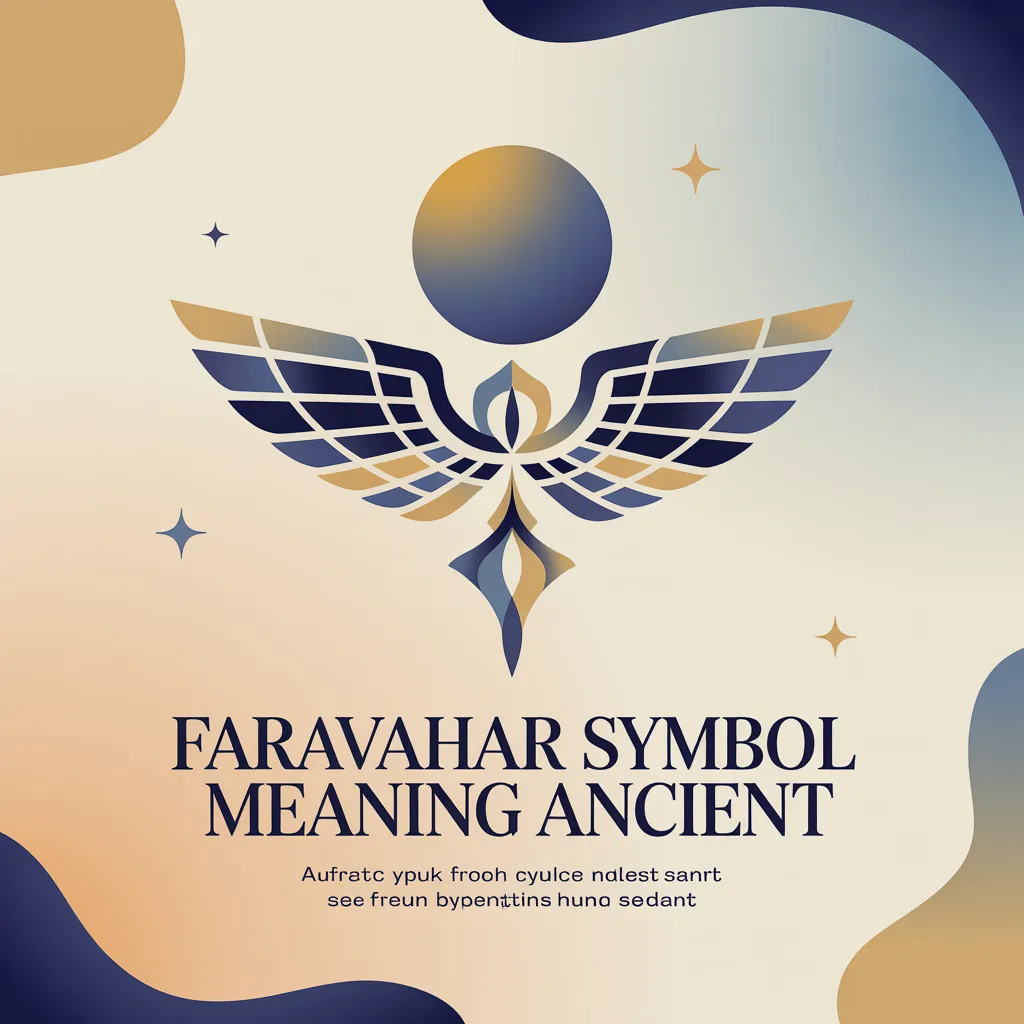
The Faravahar is an ancient symbol representing the human soul and the journey toward spiritual growth.
Key meanings:
- The human figure = your higher self or soul
- The wings = progress and striving forward
- The circle = eternity and the cycle of life
- The two hanging lines = good and bad choices
- The raised hand = guidance and blessing
Simple interpretations:
“It’s a reminder to choose good thoughts, words, and actions.”
“It represents becoming the best version of yourself.”
“It’s about moving forward with purpose and integrity.”
Origin & Background
The Faravahar comes from ancient Persia and is deeply connected to Zoroastrianism—one of the world’s oldest monotheistic religions.
It dates back over 2,500 years, especially during the time of the Achaemenid Empire.
You’ll often see it carved into stone reliefs at Persepolis, where it symbolized divine guidance and royal authority.
How its meaning evolved:
- Ancient times: A sacred representation of divine protection and the soul
- Medieval period: Preserved within Zoroastrian communities
- Modern era: A symbol of Persian identity and cultural pride
- Today: Widely used in tattoos, jewelry, and social media bios
Interestingly, social media has given the Faravahar a new life.
People now use it not just for religious reasons—but for self-expression, spirituality, and even aesthetic identity.
Real-Life Conversations
WhatsApp Chat
Person A:
Hey, what’s that symbol in your DP?
Person B:
It’s the Faravahar. It basically reminds me to stay on the right path in life.
Instagram DMs
Person A:
Your necklace looks amazing. What does it mean?
Person B:
Thank you! It’s a Faravahar—kind of like a symbol of personal growth and good choices.
TikTok Comments
User1:
Why do people tattoo this symbol?
User2:
Because it stands for living with purpose. It’s deeper than it looks.
Text Message
Person A:
I’ve been seeing that winged symbol everywhere lately.
Person B:
Yeah, it’s the Faravahar. It’s about becoming your best self.
Emotional & Psychological Meaning
What makes the Faravahar so powerful is not just its history—but how it feels.
At an emotional level, it represents:
- Direction in life
- Moral clarity
- Personal responsibility
- Growth and self-improvement
In a world where people often feel lost or overwhelmed, this symbol offers something simple but profound:
You are responsible for your path.
Why people connect with it:
- It gives a sense of control
- It reflects inner values
- It serves as a daily reminder to improve
A real-life scenario
A friend once told me he got a Faravahar tattoo after a difficult phase in life.
Not for religion.
But because he wanted a constant reminder:
“No matter what happens, I choose how I move forward.”
That’s the psychological power of the symbol—it turns abstract values into something visible and personal.
Usage in Different Contexts
1. Social Media
- Used in bios to express identity or spirituality
- Often paired with quotes about growth or purpose
- Signals depth and cultural awareness
2. Friends & Relationships
- Can represent shared values
- Sometimes gifted as meaningful jewelry
- Symbolizes loyalty and moral alignment
3. Work / Professional Settings
- Rarely used directly
- May appear subtly in accessories
- Seen as a symbol of integrity and discipline
4. Casual vs Serious Tone
- Casual: Aesthetic or symbolic use
- Serious: Deep spiritual or cultural meaning
When NOT to Use It
While the Faravahar is beautiful, it’s not always appropriate.
Avoid using it:
- Without understanding its meaning
- In a disrespectful or trendy-only way
- In culturally sensitive contexts where it may seem appropriative
- As a joke or meme
This symbol carries historical and spiritual weight, especially for people connected to Persian heritage.
Common Misunderstandings
1. “It’s just a decorative symbol”
Not true. It has deep philosophical roots.
2. “It represents a specific god”
It actually represents the human soul and moral journey, not a deity.
3. “It’s only religious”
While rooted in religion, many people use it in a personal, non-religious way today.
4. “It’s the same as other winged symbols”
It has a very specific structure and meaning—different from general angelic or mythological imagery.
Comparison Table
| Expression / Symbol | Meaning | Tone | Use Case |
|---|---|---|---|
| Faravahar | Moral growth, life direction | Deep, spiritual | Identity, self-reflection |
| Yin-Yang | Balance of opposites | Philosophical | Harmony, duality |
| Angel Wings | Protection, purity | Emotional | Comfort, remembrance |
| Compass Symbol | Direction, guidance | Practical | Life decisions |
| Opposite: Chaos Symbol | Disorder, unpredictability | Abstract | Artistic expression |
Key Insight
The Faravahar stands out because it combines ethics, identity, and action—it’s not just about balance or protection, but conscious personal choice.
How to Respond When Someone Uses It
Casual Replies
- “That’s a meaningful symbol.”
- “I’ve seen that before—it looks powerful.”
Funny Replies
- “So basically… life GPS?”
- “Ancient wisdom unlocked 😄”
Mature Replies
- “I respect what that represents—living with intention.”
- “It’s a strong reminder of personal responsibility.”
Respectful Replies
- “That symbol carries deep meaning. I appreciate you sharing it.”
- “It reflects a beautiful philosophy.”
Regional & Cultural Usage
Western Culture
- Seen as a spiritual or philosophical symbol
- Often used in tattoos and jewelry
Asian Culture
- Interpreted similarly to balance or karma concepts
- Appreciated for its deeper meaning
Middle Eastern Culture
- Strong cultural and historical significance
- Represents Persian identity and heritage
Global Internet Usage
- Used in bios, art, and aesthetic posts
- Sometimes misunderstood or simplified
Generational Differences
- Gen Z: Uses it for identity and aesthetic meaning
- Millennials: More likely to explore its deeper philosophy
Is It Safe for Kids?
Yes—with context.
The Faravahar promotes positive values like:
- Good thinking
- Kind actions
- Personal growth
However, it’s important to explain its meaning so children don’t see it as just a random symbol.
FAQs
1. What does the Faravahar symbol stand for?
It represents the human soul, moral choices, and the journey toward a better life.
2. Is the Faravahar religious?
It comes from Zoroastrianism but is also used in a non-religious, personal way today.
3. Can anyone wear the Faravahar?
Yes—but it’s important to understand and respect its meaning.
4. Why do people tattoo the Faravahar?
As a reminder to live with purpose, integrity, and self-awareness.
5. Is it similar to angel symbols?
Not exactly. It focuses more on human choice and moral growth.
6. What do the wings represent?
Progress, movement, and striving toward a better life.
Conclusion
The Faravahar symbol isn’t just an ancient design—it’s a quiet guide.
It reminds you that life isn’t random. Your thoughts, your choices, your actions—they all shape who you become.
That’s why people across cultures and generations still connect with it.
Not because it looks beautiful.
But because it means something real.
If you choose to use it, wear it, or share it—do it with understanding. That’s what gives the symbol its true power.

Orvian is a passionate researcher and dedicated content creator focused on exploring the deeper meanings behind symbols, signs, and cultural interpretations. With a strong interest in symbolism and human psychology, Orvian simplifies complex ideas into clear, engaging, and easy-to-understand content for readers around the world.
Through consistent research and thoughtful writing, Orvian aims to provide accurate, insightful, and meaningful information that helps users connect with symbols on a deeper level—whether for personal growth, curiosity, or knowledge.
Known for a hardworking mindset and attention to detail, Orvian believes that every symbol carries a story, and every story deserves to be understood.